
30 Other Ways to Say “Hope All Is Well” With Examples
You open an email and type, “Hope all is well.”
Then you stop.
You have used the same line many times. It sounds polite, but it may also feel plain.
The good news is that you have many better choices.
Some phrases sound professional. Others feel warm, casual, or caring.
The best choice depends on the person and situation.
This guide shares 30 other ways to say “Hope all is well.” Each phrase includes its meaning, tone, best use, and a clear example.
Quick Answer
Instead of saying “Hope all is well,” you can write:
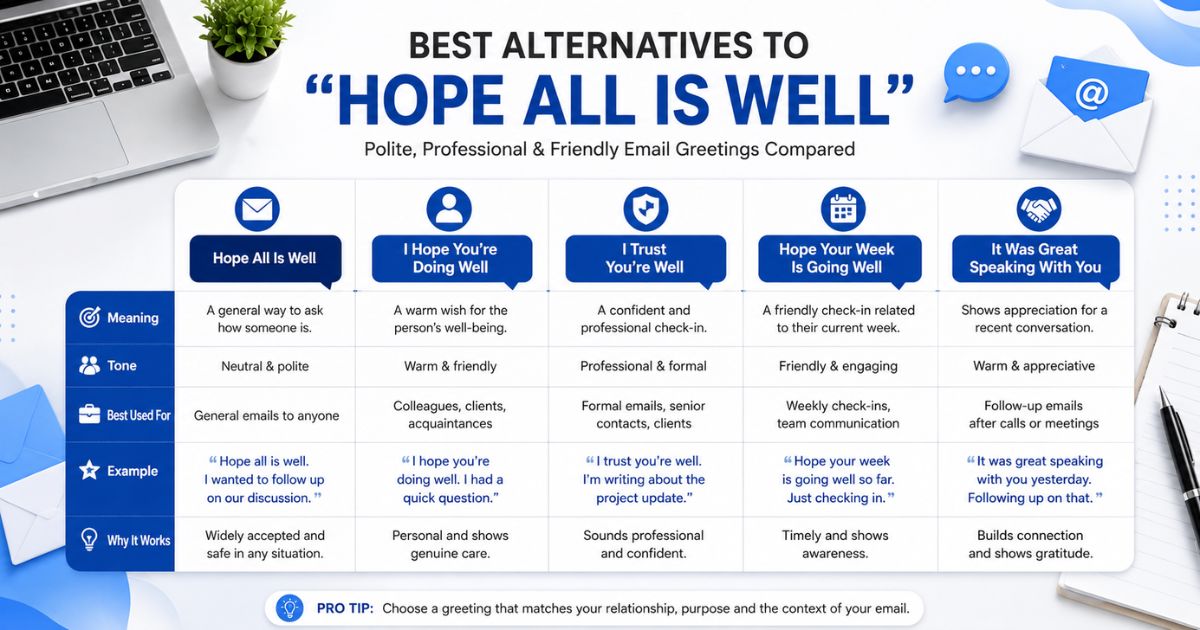
- I hope you’re doing well.
- I trust you’re keeping well.
- I hope your week is going smoothly.
- I hope things are going well on your end.
- I hope you’re having a good day.
- It’s great to connect with you.
- I hope the project is progressing well.
- I’ve been thinking of you.
- I hope you and your family are well.
- I hope this message reaches you at a good time.
Choose a phrase that matches your relationship and message.
TL;DR
“Hope all is well” is a polite greeting.
However, it can sound common or automatic.
Use a more specific phrase when possible.
For work emails, choose a professional opening.
For friends, use a warmer and more personal line.
For follow-ups, mention the project, meeting, or last conversation.
What Does “Hope All Is Well” Mean?
“Hope all is well” is a polite way to check on someone.
It means you hope the person is healthy, safe, and doing well.
People often use it at the start of an email.
It creates a friendly tone before the main message.
For example:
Hope all is well. I wanted to follow up about our meeting.
The phrase works in many situations.
Still, it can feel less personal when used too often.
A specific greeting usually sounds more natural.
Is “Hope All Is Well” Professional?
Yes, “Hope all is well” is professional.
You can use it in emails to clients, coworkers, managers, or teachers.
However, it may sound too general.
A stronger opening often connects with the real situation.
For example:
I hope your week is going well.
Or:
I hope the new project is progressing smoothly.
These phrases feel more thoughtful.
They also show that you understand the reader’s situation.
Formal and Casual Alternatives
| Situation | Better Phrase |
| Formal email | I trust you are well |
| Client email | I hope things are going smoothly on your end |
| Coworker message | Hope your week is going well |
| Follow-up email | It was great speaking with you |
| Friendly message | Hope you’re having a lovely day |
| Caring message | I’ve been thinking of you |
| Difficult time | I hope you’re taking care of yourself |
| Family message | I hope you and your family are well |
Other Ways to Say “Hope All Is Well”
1. I Hope You’re Doing Well
Meaning: You wish the person health and happiness.
Tone: Polite, warm, and neutral.
Best use: Emails, texts, and work messages.
Example:
I hope you’re doing well. I wanted to ask about the report.
This is one of the safest alternatives.
It works in both formal and casual messages.
It sounds natural without being too personal.
Use it when you do not know much about the person’s current situation.
2. I Trust You’re Well
Meaning: You believe the person is doing well.
Tone: Formal and confident.
Best use: Business emails and official messages.
Example:
I trust you’re well. I am writing about our upcoming meeting.
This phrase sounds more formal than “I hope you’re well.”
The word “trust” gives it a calm and professional tone.
It works well when writing to managers, clients, or senior staff.
Avoid using it with close friends.
It may sound too formal in casual chats.
3. Hope You’re Having a Good Day
Meaning: You wish the person a pleasant day.
Tone: Friendly and positive.
Best use: Short emails, texts, and team messages.
Example:
Hope you’re having a good day. Could you review this file?
This phrase feels fresh and cheerful.
It is useful when sending a message during the day.
It sounds friendly without becoming too personal.
You can use “great day” for a more upbeat tone.
4. I Hope Your Week Is Going Well
Meaning: You hope the person’s week is positive.
Tone: Friendly and professional.
Best use: Work emails and follow-up messages.
Example:
I hope your week is going well. I wanted to check the project status.
This phrase feels more specific than “Hope all is well.”
It works especially well from Monday to Thursday.
It shows care while staying professional.
Avoid using it late on Friday.
At that point, “I hope you had a good week” sounds better.
5. I Hope Things Are Going Well on Your End
Meaning: You hope everything is fine for the other person.
Tone: Conversational and polite.
Best use: Clients, coworkers, and remote teams.
Example:
I hope things are going well on your end. We are ready to begin the next step.
This phrase works well when two people manage different tasks.
It can refer to work, plans, or general life.
The wording sounds natural in business emails.
It is also useful when speaking with someone in another office or city.
6. I Hope Everything Is Going Smoothly
Meaning: You hope there are no problems.
Tone: Supportive and professional.
Best use: Projects, events, travel, and work tasks.
Example:
I hope everything is going smoothly with the product launch.
This phrase works best when you know what the person is doing.
It shows interest in their progress.
It is more useful than a general greeting.
Add the task or event after the phrase.
That makes the message feel personal.
7. I Hope You’re Keeping Well
Meaning: You hope the person remains healthy and happy.
Tone: Polite and slightly traditional.
Best use: Formal emails and messages to acquaintances.
Example:
I hope you’re keeping well. It has been some time since we last spoke.
This phrase is common in British English.
It also appears in formal international emails.
It sounds calm, respectful, and caring.
It is a good choice when reconnecting after a long time.
8. It’s Great to Connect With You
Meaning: You are pleased to speak with the person.
Tone: Positive and professional.
Best use: New contacts, networking, and introductions.
Example:
It’s great to connect with you. I enjoyed learning about your company.
This is stronger than a general health greeting.
It focuses on the purpose of the message.
Use it when meeting someone online or by email.
It also works after a LinkedIn connection.
9. It Was Great Speaking With You
Meaning: You enjoyed a recent conversation.
Tone: Warm and professional.
Best use: Follow-up emails after calls or meetings.
Example:
It was great speaking with you yesterday. I have attached the details we discussed.
This opening gives the reader clear context.
It also makes the email feel personal.
Use it after a phone call, interview, or meeting.
It helps create a smooth link between the last conversation and the new message.
10. I Hope This Message Reaches You at a Good Time
Meaning: You hope the person is available to read your message.
Tone: Considerate and professional.
Best use: Requests, follow-ups, and sensitive emails.
11. Wishing You Well
Meaning: A simple way to express care and good wishes.
Tone: Warm, kind, and thoughtful.
Best Use: Personal emails, farewell messages, and supportive notes.
Example:
Wishing you well as you begin your new position.
Explanation:
This phrase is short but meaningful. It works when someone is starting a new job, moving to another city, or beginning a new chapter in life. It feels sincere without being overly emotional.
12. Sending My Best Wishes
Meaning: A polite way to wish someone success or happiness.
Tone: Professional and supportive.
Best Use: Business emails, congratulations, and special occasions.
Example:
Sending my best wishes for your presentation tomorrow.
Explanation:
This greeting is ideal when someone has an important event. It shows encouragement and positivity while remaining professional.
13. I Hope Life Is Treating You Well
Meaning: You hope everything in the person’s life is going positively.
Tone: Warm and conversational.
Best Use: Friends, family, and reconnecting with old contacts.
Example:
I hope life is treating you well since we last spoke.
Explanation:
Unlike “Hope all is well,” this phrase sounds more personal. It works best when reconnecting after weeks or months.
14. I Hope You’re in Good Spirits
Meaning: You hope the person feels happy and positive.
Tone: Encouraging and caring.
Best Use: Supportive conversations and friendly emails.
Example:
I hope you’re in good spirits and enjoying your new role.
Explanation:
This phrase focuses on emotional well-being rather than physical health. It’s useful when someone has been busy or facing challenges.
15. Hope Everything Is Going Smoothly
Meaning: You hope everything is progressing without problems.
Tone: Professional and thoughtful.
Best Use: Projects, events, and business communication.
Example:
Hope everything is going smoothly with the product launch.
Explanation:
This greeting feels much more personal because it refers to something specific the person is working on.
16. I Hope You’re Thriving
Meaning: You hope the person is succeeding and growing.
Tone: Positive and motivational.
Best Use: Career updates, networking, and congratulations.
Example:
I hope you’re thriving in your new position.
Explanation:
“Thriving” suggests more than simply doing well. It means succeeding, growing, and enjoying life.
17. Thinking of You and Hoping You’re Well
Meaning: You want someone to know they’re on your mind.
Tone: Emotional and heartfelt.
Best Use: Friends, family, and supportive messages.
Example:
Thinking of you and hoping you’re well during this busy time.
Explanation:
This phrase feels much warmer than “Hope all is well.” It shows genuine care instead of sounding like a routine greeting.
18. Hope You’re Safe and Well
Meaning: You care about someone’s safety and health.
Tone: Caring and compassionate.
Best Use: Bad weather, travel, emergencies, or stressful situations.
Example:
Hope you’re safe and well after the storm.
Explanation:
This phrase became common during difficult times because it shows concern without asking personal questions.
19. I Hope You’re Feeling Great
Meaning: You hope the person feels healthy and energetic.
Tone: Friendly and positive.
Best Use: Friends, coworkers, and casual emails.
Example:
I hope you’re feeling great today.
Explanation:
This greeting is cheerful and uplifting. It works well when you already know the person.
20. Hope Your Day Is Going Well
Meaning: You hope the person’s day is pleasant.
Tone: Casual and friendly.
Best Use: Quick emails and text messages.
Example:
Hope your day is going well. I just wanted to check in.
Explanation:
This phrase sounds fresh because it refers to today instead of life in general.
Best Alternatives by Situation
Choosing the right greeting depends on who you’re writing to.
| Situation | Best Alternative |
| Client | I trust you’re well |
| Boss | I hope your week is going well |
| Coworker | Hope your day is going well |
| Friend | Hope you’re having a great day |
| Family | Thinking of you and hoping you’re well |
| Networking | It’s great to connect with you |
| Follow-up Email | It was great speaking with you |
| Job Application | I hope this message reaches you at a good time |
| Difficult Situation | Hope you’re safe and well |
| Congratulations | Wishing you well |
Common Mistakes to Avoid
Many people use greetings that sound unnatural or outdated.
Avoid these mistakes:
❌ Using “Hope all is well” in every email.
✔ Change your greeting based on the situation.
❌ Being too formal with friends.
Instead of:
I trust you’re well.
Use:
Hope you’re having a great day!
❌ Being too casual with clients.
Instead of:
Hey! Hope everything’s awesome!
Use:
I hope your week is going well.
❌ Using the same greeting every time.
Repeating one phrase makes your emails feel copied and less personal.
Rotate between different greetings to keep your writing fresh.
Which Alternative Sounds Most Professional?
If you’re writing business emails every day, these are excellent choices:
- I trust you’re well.
- I hope your week is going well.
- I hope everything is going smoothly.
- I hope this message reaches you at a good time.
- It was great speaking with you.
21. I Hope You’re Doing Okay These Days
Meaning: A gentle way to check on someone’s well-being.
Tone: Caring and empathetic.
Best Use: Friends, family, or someone going through a difficult time.
Example:
I hope you’re doing okay these days. I wanted to see how you’ve been.
Explanation:
This phrase shows genuine concern without being too personal. It works well when you know someone has been busy, stressed, or facing challenges.
22. I Hope You’re in a Good Place
Meaning: You hope the person feels emotionally and mentally well.
Tone: Thoughtful and supportive.
Best Use: Personal conversations and reconnecting.
Example:
I hope you’re in a good place and enjoying life.
Explanation:
This greeting focuses more on emotional well-being than physical health. It feels sincere and meaningful.
23. Hope All Is Going Wonderfully
Meaning: You hope everything is going extremely well.
Tone: Cheerful and optimistic.
Best Use: Friends, coworkers, and celebration messages.
Example:
Hope all is going wonderfully with your new business.
Explanation:
This version sounds brighter than “Hope all is well” and adds more enthusiasm.
24. Wishing You Peace and Well-Being
Meaning: A heartfelt wish for happiness and calm.
Tone: Compassionate and thoughtful.
Best Use: Sympathy cards, personal messages, and wellness-related conversations.
Example:
Wishing you peace and well-being during this difficult time.
Explanation:
This phrase is especially suitable when someone needs emotional support. It sounds warm without being overly dramatic.
25. Wishing You Strength and Positivity
Meaning: You hope someone stays strong and optimistic.
Tone: Encouraging and supportive.
Best Use: Illness, difficult situations, career challenges, or personal struggles.
Example:
Wishing you strength and positivity throughout your recovery.
Explanation:
Instead of simply asking how someone is doing, this phrase actively offers encouragement.
26. Hope You’re Surrounded by Good Things
Meaning: You hope positive people and experiences are around them.
Tone: Warm and uplifting.
Best Use: Friends and family.
Example:
Hope you’re surrounded by good things this week.
Explanation:
This sounds modern, cheerful, and positive. It feels less formal than many traditional greetings.
27. I Hope Life Is Smiling on You
Meaning: You hope life is bringing good fortune.
Tone: Poetic and friendly.
Best Use: Greeting cards, personal letters, and close friends.
Example:
I hope life is smiling on you these days.
Explanation:
This phrase uses imagery to create a memorable greeting. It feels unique without sounding unnatural.
Read More: What Does LMY Mean in Text? Meaning, Uses & Examples
28. Hoping Everything Is Falling Into Place
Meaning: You hope everything is working out well.
Tone: Encouraging and optimistic.
Best Use: Career changes, moving, weddings, and major life events.
Example:
Hoping everything is falling into place with your move.
Explanation:
This greeting is perfect when someone is going through an important life transition.
29. I Hope Everything Is Going Your Way
Meaning: You hope life is bringing positive results.
Tone: Friendly and supportive.
Best Use: Friends, coworkers, and casual emails.
Example:
I hope everything is going your way lately.
Explanation:
This phrase sounds natural in everyday English and feels more conversational than “Hope all is well.”
30. It’s Always Great Hearing From You
Meaning: You’re happy to reconnect.
Tone: Friendly and welcoming.
Best Use: Reply emails, returning customers, old friends, and networking.
Example:
It’s always great hearing from you. Thanks for reaching out.
Explanation:
Instead of checking on someone’s well-being, this greeting immediately creates a positive connection. It works especially well when replying to an email.
Which Greeting Should You Choose?
Choosing the right greeting depends on your relationship with the reader.
| Situation | Best Greeting |
| Business Email | I trust you’re well |
| Client | I hope your week is going well |
| Job Application | I hope this message reaches you at a good time |
| Networking | It’s great to connect with you |
| Follow-Up | It was great speaking with you |
| Coworker | Hope your day is going well |
| Friend | Hope you’re having a great day |
| Family | Thinking of you and hoping you’re well |
| Sympathy | Wishing you peace and well-being |
| Congratulations | Wishing you well |
Sample Email Templates
Professional Email
Subject: Project Update
Hi Sarah,
I hope your week is going well.
I wanted to share a quick update on the project. We have completed the first phase and expect to finish the remaining tasks by Friday.
Please let me know if you have any questions.
Best regards,
Michael
Friendly Email
Hi Emma,
Hope you’re having a wonderful day!
I just wanted to check in and see how everything has been going. It’s been a while since we last talked.
Looking forward to hearing from you.
Take care!
Follow-Up Email
Hello David,
It was great speaking with you yesterday.
As promised, I’ve attached the proposal for your review. Please let me know if you’d like to discuss any changes.
Thank you for your time.
Frequently Asked Questions
What can I say instead of “Hope all is well”?
You can use phrases like “I hope you’re doing well,” “I trust you’re well,” “Hope your week is going well,” or “It was great speaking with you.” Choose one that matches your relationship with the reader and the purpose of your message.
Is “Hope all is well” too formal?
No. It’s polite and professional, but it has become very common. Using a more specific greeting often sounds more thoughtful and personal.
Which greeting is best for business emails?
For professional communication, use phrases such as “I trust you’re well,” “I hope your week is going well,” or “I hope everything is going smoothly.” These sound respectful without feeling overly formal.
Should I use different greetings in every email?
Yes. Rotating your greetings keeps your writing fresh and avoids sounding repetitive. Choosing a greeting that fits the situation also makes your message feel more genuine.
Can I use these alternatives in text messages?
Absolutely. Many of these greetings work well in texts, chats, and social media messages. For close friends or family, casual options like “Hope you’re having a great day” or “Thinking of you” sound warm and natural.
Conclusion
Using the same email greeting every time can make your messages feel routine. Choosing a thoughtful alternative to “Hope all is well” helps your communication sound more personal, professional, and engaging.
Whether you’re writing to a client, coworker, friend, or family member, the right opening sets a positive tone before the main message begins. By matching your greeting to the situation, you’ll build stronger relationships and make every email feel more genuine.

Muhammad Shoaib is a passionate content writer and symbolism researcher at TrendyMegzine.com, where he explores the hidden meanings behind symbols, spiritual signs, ancient traditions, dream interpretations, and cultural symbolism.