71+ Mental Health Symbols: 50+ Powerful Meanings (2026)
Mental health symbols speak when words get stuck. A small picture can hold a big feeling.
You have seen these symbols before. Maybe on a tattoo. Maybe on a ribbon pin. Maybe on a friend’s phone case. But what do they really mean?
This guide breaks down over 50 mental health symbols in simple words. You will learn where they came from, what they mean, and how people use them today. No hard words. No confusing terms. Just clear answers about mental health symbols, one symbol at a time.
Quick Answer Box
- The semicolon is the most well-known mental health symbol. It means “keep going.”
- The green ribbon stands for mental health awareness.
- The lotus flower and butterfly both mean growth after hard times.
- Mental health symbols show up in tattoos, art, emojis, and dreams.
- These symbols come from many cultures, not just one place.
- You can use a symbol to support yourself or someone you love.
What Are Mental Health Symbols?
Mental health symbols are small pictures or marks. They stand for feelings, struggles, or healing. People use them when talking feels too hard.
A symbol can be a shape, a flower, or even a punctuation mark. Each one carries a message. That message is often about hope, growth, or staying strong.
You will find these symbols in many places. They show up in tattoos and jewelry. They appear on t-shirts and posters. They pop up as emojis in text messages too.
Why do people use symbols instead of words? Words can feel too big or too scary to say out loud. A symbol lets someone share a feeling without a long explanation. It says “I understand” without needing to explain everything.
Mental health symbols also build community. When two people wear the same symbol, they feel connected. They know they are not alone in their struggle. This is one reason these symbols keep growing in popularity.
Some symbols are old. Some are new. But all of them share one goal. They help people feel seen, supported, and understood during hard times.
Mental Health Symbols — History and Origin
Symbols are not new. Humans have used them for thousands of years. Ancient people carved pictures on cave walls to share ideas.
Long ago, symbols showed things like life, death, and nature. Over time, some symbols began to focus on feelings and the mind. This shift happened slowly, across many cultures.
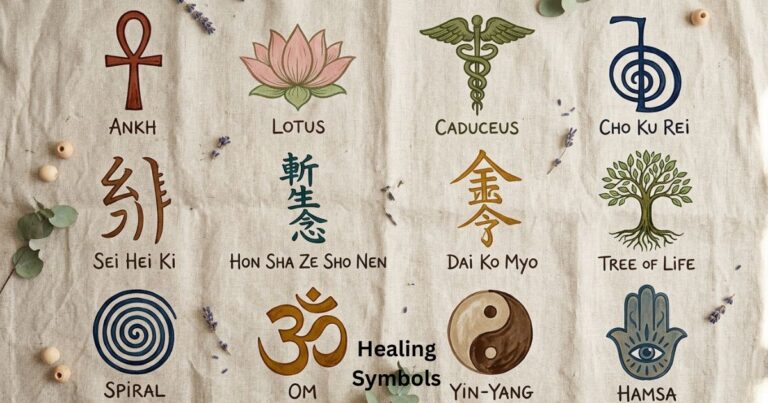
The ankh in Ancient Egypt is one early example. It stood for life and balance. It was not made just for mental health. But it touched on ideas like harmony, which matter for emotional well-being.
In Eastern cultures, the lotus flower has deep roots. Buddhist and Hindu traditions used it for spiritual growth. It later became linked to healing the mind as well as the soul.
Modern mental health symbols grew fast in the last 20 years. The green ribbon became popular in mental health awareness campaigns. The semicolon spread through a project called Project Semicolon in 2013. It aimed to support people thinking about suicide.
Social media helped these symbols spread quickly. People started sharing symbols online to show support. Tattoo artists began designing pieces based on these meanings. Today, new symbols keep appearing as more people speak openly about mental health.
This history shows something important. Mental health symbols are not just trends. They come from a long line of human need. People have always looked for ways to share pain and hope without using words.
Top 12 Meanings of Mental Health Symbols
Each symbol below carries its own story. Read through these top meanings to find one that fits you.
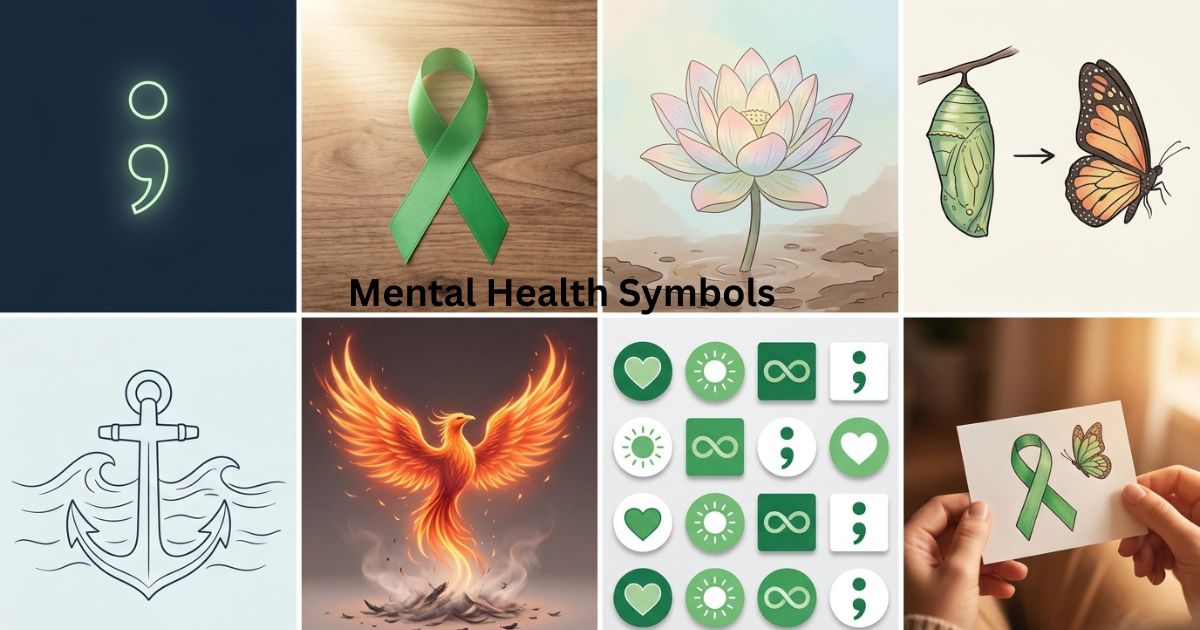
1. Semicolon
A semicolon connects two parts of a sentence. The writer could stop there, but chooses not to. In mental health, it means the same thing for a life story. It says “my story is not over yet.”
This symbol became famous through suicide prevention awareness. Many people get it as a small tattoo. It reminds them to keep going, even on hard days.
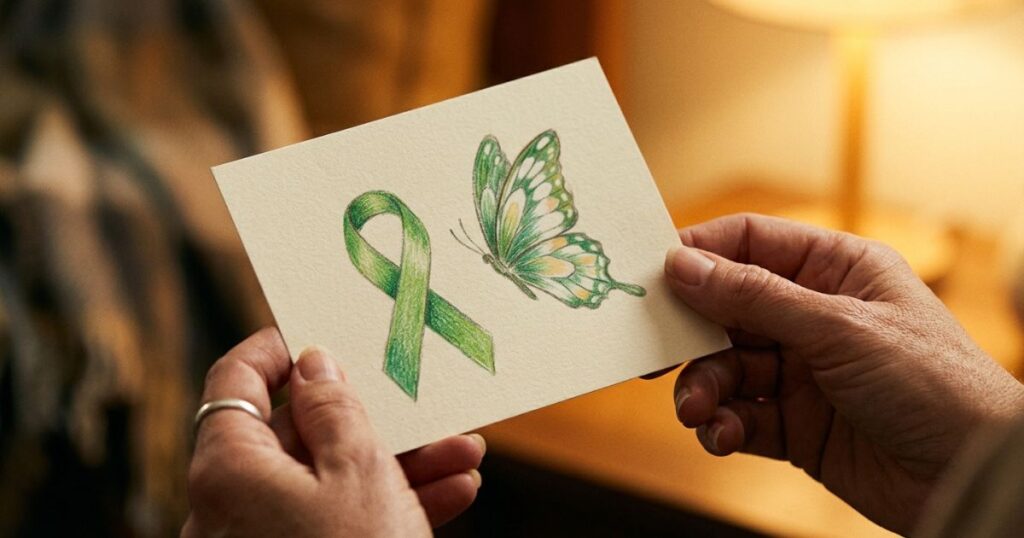
2. Green Ribbon
The green ribbon is the main symbol for mental health awareness. Green stands for growth, balance, and new beginnings. People wear this ribbon during awareness events and campaigns.
It also shows support for someone going through a hard time. Wearing it can start a conversation about mental health.
3. Lotus Flower
A lotus grows up through muddy water. Yet it blooms clean and beautiful above the surface. This makes it a strong symbol for healing.
It means a person can rise above pain and still find peace. Many people choose this symbol for tattoos or jewelry.
4. Butterfly
A butterfly starts as a caterpillar, then changes completely. This change is called transformation. It fits perfectly with the mental health healing journey.
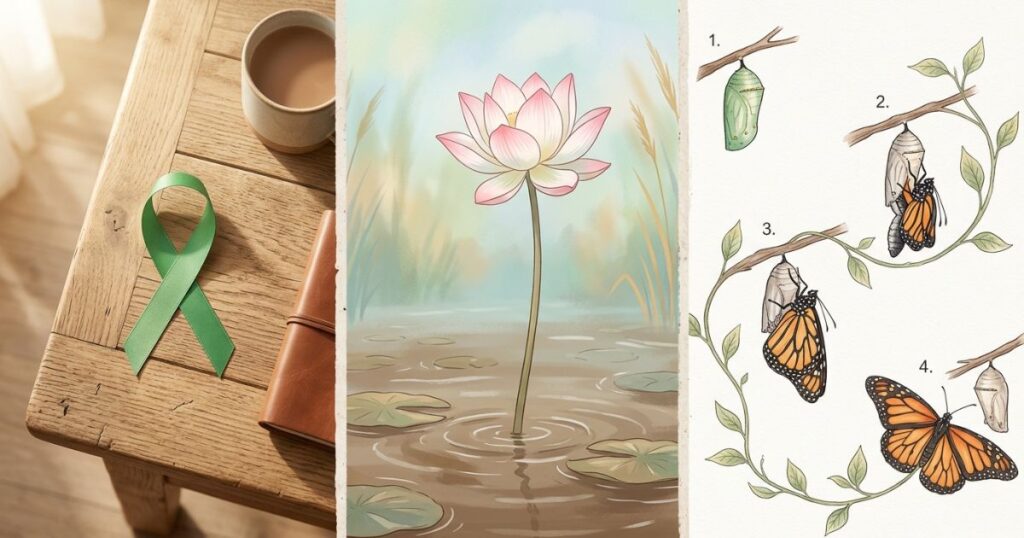
The butterfly reminds people that change takes time. It also promises something beautiful can come after a hard stage of life.
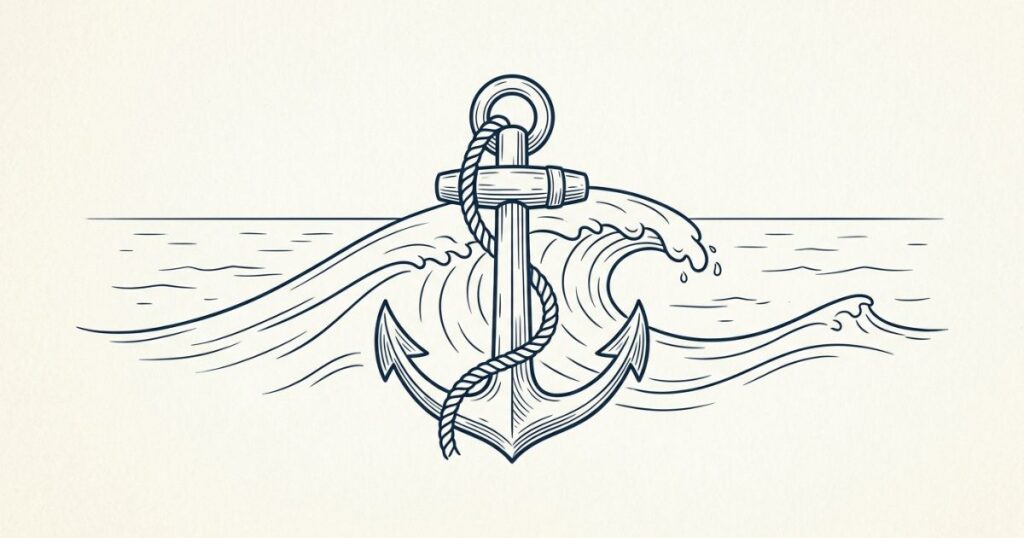
5. Anchor
An anchor keeps a ship steady during a storm. As a symbol, it means staying grounded when emotions feel too big.
People often choose this symbol during recovery. It reminds them they have something solid to hold onto, even when life feels shaky.
6. Phoenix
A phoenix is a mythical bird that burns up, then rises again from its ashes. This story matches the idea of rebuilding after a hard time.
The phoenix says that even total loss can lead to a new beginning. It is a bold symbol for people who have faced deep struggles.
7. Infinity Symbol
The infinity symbol looks like a sideways number eight. It has no beginning and no end. This shape reminds people that healing is not a one-time event.
Instead, healing is an ongoing path. The infinity symbol tells people it is okay to keep working on their mental health for life.
8. Sunflower
A sunflower always turns to face the sun. As a symbol, it means choosing to look toward hope, even during dark days.
This flower also represents warmth and strength. Many people use it to represent staying positive through hard seasons.
9. Open Circle
An open circle is not fully closed. It leaves room for growth and change. This makes it a gentle symbol for mental health.
It reminds people that their story is still being written. Nothing is fixed or finished yet.
10. Broken Chain
A broken chain shows freedom from something that once held a person back. This could be fear, sadness, or old pain.
People use this symbol to mark a moment of release. It shows they have let go of something heavy.
11. Rising Sun
A rising sun means a new day and a fresh start. Many people choose it after finishing therapy or a hard chapter in life.
It stands for hope after darkness. Each sunrise is proof that things can get better.
12. Heart with a Crack
A heart with a small crack or line through it shows pain that has healed. It does not hide the hurt. Instead, it shows strength through it.
This symbol reminds people that healing does not erase pain. It simply shows they survived it.
Mental Health Symbols in Different Cultures
Mental health symbols look different around the world. Here is how a few cultures use symbols connected to emotional healing.
| Culture | Symbol | Meaning |
| Ancient Egypt | Ankh | Life, balance, harmony |
| Buddhism and Hinduism | Lotus flower | Spiritual growth, purity |
| Greek Mythology | Phoenix | Rebirth after suffering |
| Indigenous Traditions | Circle | Balance, connection to nature |
| Modern Western Culture | Semicolon, green ribbon | Awareness, survival, support |
Ancient Egyptians carved the ankh into temples and tombs. It stood for eternal life and balance between mind and body.
Buddhist and Hindu traditions gave deep meaning to the lotus flower. Monks used it during meditation to guide inner peace.
Greek stories told of the phoenix rising from ashes. This tale later became a symbol for anyone rebuilding their life.
Many Indigenous cultures use circles in art and ceremony. A circle shows that health is connected to nature, family, and community, not just one person alone.
Today, Western culture leans on newer symbols. The semicolon and green ribbon now lead most awareness campaigns. But these newer symbols still carry the same old message. Healing is possible, and no one has to face it alone.
Mental Health Symbols in Dreams — What Does It Mean?
Sometimes these symbols show up in dreams. Many people wonder what this means.
Seeing a butterfly in a dream often points to change coming in your life. It may mean you are ready to grow past a hard time.
A lotus flower in a dream can mean your mind is finding peace. It may also point to spiritual growth happening quietly inside you.
Dreaming about an anchor often means you need more stability. Your mind may be asking for more structure or support in waking life.
A phoenix in a dream usually means a big change is coming. It can point to rebuilding after loss or failure.
Why do these symbols show up in dreams at all? The subconscious mind often speaks in pictures instead of words. A symbol can carry a feeling that is too complex to put into a sentence.
If you dream about one of these symbols, take a moment to reflect. Ask what part of your life might be changing. The answer may already be inside you.
Spiritual Meaning of Mental Health Symbols
Beyond dreams, these symbols carry spiritual weight for many people. They speak to something deeper than daily life.
The lotus is often seen as a sign of the soul rising above suffering. Spiritual teachers use it to explain how peace can grow even in painful conditions.
The phoenix speaks to spiritual rebirth. Many belief systems teach that loss can lead to a stronger, wiser version of a person.
The semicolon has taken on a spiritual role too. It reminds people that their life still has purpose, even during the darkest moments.
Some people see these symbols as gentle messages from within. Others view them as signs from a higher power or the universe. Either way, the core message stays the same. Struggle is not the end of the story.
Wearing or keeping one of these symbols nearby can offer quiet comfort. It becomes a small, steady reminder during hard seasons of life.
Mental Health Symbols — Common Myths vs Real Facts
Many myths surround mental health symbols. Here is a clear list to set things straight.
Myth: These symbols are only for people with severe mental illness. Fact: Anyone can use these symbols. They fit people going through everyday stress too, not only serious conditions.
Myth: Getting a mental health tattoo means you are still struggling. Fact: Many people get these tattoos after healing. The symbol becomes a proud reminder of how far they have come.
Myth: All mental health symbols mean the same thing. Fact: Each symbol carries its own message. A semicolon and a lotus flower do not mean the exact same thing.
Myth: These symbols are a new trend with no real meaning. Fact: Most symbols come from old traditions or meaningful projects. They carry real history, not just style.
Myth: Wearing a symbol replaces getting real support. Fact: A symbol is a reminder, not a treatment. It works best alongside real support from people you trust.
How to Use This Symbol in Your Life
You do not need a tattoo to use a mental health symbol. There are many simple ways to bring one into your daily life.
Draw the symbol somewhere you will see it often. A sticky note on your mirror works well. Seeing it each morning can shift your mindset.
Wear jewelry with the symbol, like a small necklace or ring. This keeps the message close without saying a word to anyone.
Use the symbol as a phone or laptop background. It becomes a quiet reminder every time you check your device.
Share the symbol with a friend who needs support. Sending a green ribbon or butterfly emoji can show you care.
Journal about what the symbol means to you. Writing down your own story helps the symbol feel personal and real.
Whatever method you choose, let the symbol serve you. It should offer comfort, not pressure. There is no wrong way to connect with it.
Read More: Nature Symbols: 75+ Powerful Meanings Revealed (2026)
FAQ — Mental Health Symbols
What is the most common mental health symbol?
The semicolon is the most recognized symbol. It stands for choosing to continue, even during hard times.
Why is green the color for mental health awareness?
Green stands for growth, balance, and renewal. These ideas match the goals of mental health awareness well.
Can a symbol really help with healing?
Yes, many people find comfort in symbols. They act as small daily reminders of strength and hope.
Do mental health symbols mean the same thing in every country?
No, meanings can shift across cultures. But most symbols still point to healing, hope, or resilience.
Why do people choose mental health tattoos?
People often choose these tattoos to mark a personal journey. It becomes a lasting reminder of survival and growth.
Is it okay to use these symbols even if I have not faced serious struggles?
Yes, anyone can use these symbols. They apply to everyday stress and small struggles too, not only major ones.
What does a butterfly mean in mental health symbolism?
A butterfly means change and growth. It shows how a hard stage of life can lead to something beautiful.
Can these symbols appear in dreams for a reason?
Yes, dreams often use symbols to share hidden feelings. A dream symbol may point to something your mind is working through.
Conclusion
Mental health symbols carry more meaning than most people realize. Each one tells a quiet story of struggle, hope, and growth. From the semicolon to the lotus flower, these symbols give people a way to express feelings without words.
You do not need a tattoo or a big statement to use one. A small drawing, a ribbon pin, or even an emoji can carry the same weight. Pick the symbol that speaks to your journey, and let it remind you that healing continues, one day at a time.

Muhammad Shoaib is a passionate content writer and symbolism researcher at TrendyMegzine.com, where he explores the hidden meanings behind symbols, spiritual signs, ancient traditions, dream interpretations, and cultural symbolism.