45+ Legendary Leadership Symbols From History That Still Guide Leaders Today
Before a single word is spoken, a leader has already communicated.
Through the height of a throne. Through the weight of a crown. Through the particular angle of a torch held above a crowd. Humans read leadership in images before they read it in actions — and they have been doing this for as long as civilization has existed. The visual language of authority is older than writing, older than law, older than most of the institutions we now take for granted.
Leadership symbols are not decoration. They are the architecture of trust. They answer, in a single image, the questions every human group must answer before it can function: Who holds responsibility here? Who has the authority to decide? Who is accountable when things go wrong?
This guide explores 45+ of those symbols — from ancient Egyptian ceremonial objects to modern corporate logos — and explains not just what they represent, but why they still work on the human mind in 2026 the same way they worked in 3000 BCE.
What Are Leadership Symbols?
Leadership symbols are visual, cultural, and psychological representations of authority, guidance, and legitimate power. They signal — without words — who holds responsibility within a group, who is accountable for outcomes, and who carries the weight of decisions that affect everyone.
The oldest leadership symbols emerged from direct observation of nature and human hierarchy. Ancient peoples noticed that certain animals dominated others — lions, eagles, bears — and transferred those natural authority structures into their own social symbolism. They also used objects — staffs, crowns, thrones — to make authority visible, portable, and transferable across generations.
What makes leadership symbols remarkable is their durability. The specific shapes change across cultures. The underlying psychological function — creating instant recognition of legitimate authority — does not. A Roman emperor’s golden laurel wreath and a modern CEO’s tailored suit are separated by two thousand years of history and occupy exactly the same psychological space in the minds of those who observe them.
Understanding symbols of leadership with meaning means understanding something fundamental about human social organization: authority that cannot be seen cannot be trusted, followed, or challenged. Symbols make leadership real.
The 10 Most Powerful Leadership Symbols — Full Breakdown
| Symbol | Visual | Core Meaning | Cultural Origin |
| Crown | Circular gold headpiece | Sovereignty, legitimacy, ultimate authority | Universal — monarchies worldwide |
| Eagle | Soaring bird with spread wings | Vision, dominance, higher perspective | Roman Empire, USA, Germany |
| Lion | Powerful big cat | Courage, strength, natural authority | Africa, medieval heraldry, England |
| Throne | Elevated ceremonial seat | Stability, judgment, fixed authority | All ancient royal cultures |
| Staff / Scepter | Rod topped with a symbol | Guidance, command, moral authority | Ancient Egypt, Greece, medieval Europe |
| Laurel Wreath | Circle of bay leaves | Earned leadership, victory through merit | Ancient Greece and Rome |
| Compass | Navigation instrument | Vision, direction, strategic leadership | Maritime, Freemasonry, modern |
| Torch | Flame on a handle | Inspiration, illumination, passed authority | Greece, Enlightenment, modern |
| Dragon | Scaled mythological creature | Imperial power, wisdom, cosmic order | China, Wales, Norse tradition |
| Crook and Flail | Shepherd’s hook and threshing tool | Dual authority — shepherding and discipline | Ancient Egypt |
1. The Crown — The Symbol That Made Power Visible
Of all leadership symbols in human history, none has been replicated across more cultures, more centuries, and more contexts than the crown.
It appears in ancient Egypt, ancient Mesopotamia, ancient China, medieval Europe, and modern fantasy fiction. Cultures that had no contact with each other independently arrived at the same object — a circular headpiece, elevated above ordinary head coverings — to mark their highest authority.
The circular shape is not arbitrary. Circles have no beginning and no end. They represent completeness, eternity, and the absence of weakness. Placing that shape on a head — the seat of thought and decision — says something precise: this person’s authority is complete, continuous, and without gap.
The crown also accomplishes something psychologically complex: it is simultaneously worn by the person and larger than the person. A king who removes his crown is just a person. The crown outlasts the individual. It is the office itself, made visible. When a sovereign dies and a new ruler is crowned, the crown does not change — only the head beneath it does. The symbol carries continuity across human mortality.
Today, the crown appears in corporate logos, sports team emblems, tattoos, and brand identities precisely because this psychological effect is intact. It still signals authority without requiring explanation.
2. The Eagle — Symbol of the Leader Who Sees What Others Cannot
The eagle as a leadership symbol begins with a biological fact: eagles see approximately four to eight times more sharply than humans, can spot prey from two miles away, and rise higher than almost any other bird in flight.
Ancient cultures noticed this and made the logical leap: a leader needs exactly these qualities. The ability to see clearly what others cannot. The ability to rise above immediate chaos and perceive the larger pattern. The ability to act from that elevated perspective with precision and speed.
The Roman Empire adopted the eagle as its primary symbol of imperial power — the Aquila standard that legions carried into battle was not just a flag but a sacred object representing the empire’s authority and divine protection. When the eagle was captured in battle, it was treated as a catastrophe of the highest order, because the symbol and the power it represented were understood as inseparable.
The United States, Germany, Russia, Mexico, and dozens of other nations carry eagle imagery in their official symbolism. These are not copycat decisions — they reflect independent recognition of the same qualities. Leadership that sees further and acts from above.
3. The Lion — The Courage That Doesn’t Flinch
No animal appears more consistently across the leadership symbols of human civilization than the lion. England’s royal arms. The tribal symbols of dozens of African cultures. The heraldic emblems of medieval European kingdoms. The national symbols of more than a dozen countries.
The lion’s leadership symbolism is built on an observed behavioral fact: lions do not hesitate. They assess, they commit, and they act — fully and without reservation. That quality of decisive engagement, unclouded by second-guessing, is exactly what human groups need from their leaders in moments of crisis.
The lioness in leadership symbolism adds a specific dimension: she is the operational power behind the pride. She hunts, protects, raises young, and makes daily survival decisions — without ceremony and without the mane that makes the male lion famous. Many cultures have recognized both aspects of leonine leadership: the bold, public courage of the male and the sustained, practical authority of the female.
In heraldry — the medieval system of visual identification for noble houses and kingdoms — the lion appears more frequently than any other animal. It was the shorthand for everything a ruler was supposed to embody: courage, strength, decisiveness, and the willingness to face whatever threatened the group.
4. The Staff and Scepter — The Symbol of Authority Extended
A staff is a practical object — it helps you walk, helps you navigate terrain, helps you move through difficult ground. As a leadership symbol, it carries that practical meaning into the metaphorical: the leader is the guide who helps the community navigate terrain it cannot navigate alone.
The scepter — a staff elevated into ceremony, often topped with an orb, a crystal, or an animal figure — transforms this practical meaning into pure authority. The scepter is held, not used for walking. It is a staff that has become entirely symbolic, which is precisely the point: this leader no longer needs to prove utility. Their authority has been confirmed and formalized.
The crook and flail of ancient Egyptian pharaohs are the most precise deployment of this symbol system in history. The crook — a shepherd’s hook — represented the pharaoh’s duty to guide and protect the people. The flail — a threshing tool — represented the pharaoh’s authority to discipline and demand productivity. Both together said: I shepherd you with care and I hold you accountable for results. Two faces of the same leadership responsibility.
5. The Laurel Wreath — The Only Leadership Symbol You Earn
Every other major leadership symbol — the crown, the throne, the scepter — represents authority that is inherited, appointed, or seized. The laurel wreath is different. In ancient Greek and Roman culture, the laurel was awarded specifically for earned achievement. You could not be born to it. You could not buy it. You had to win it.

Greek athletic victors, Roman military generals who had achieved decisive victories, poets whose work was judged exceptional — these were the recipients of the laurel. The symbol said: this person has done something that required extraordinary effort and has been recognized by their peers as having succeeded.
As a leadership symbol, the laurel wreath represents meritocratic authority — leadership earned rather than inherited. It is the ancient world’s answer to the question of legitimacy through performance rather than bloodline. Its enduring presence in academic graduation imagery (the mortarboard’s tassel, the doctorate’s hood) reflects the same logic: this authority is earned through demonstrated achievement in a defined domain.
6. The Compass — The Modern Leader’s Essential Symbol
The compass does not appear in ancient royal imagery. It became a leadership symbol during the age of exploration — when the ability to navigate unknown territory became the defining quality of consequential leadership.
A compass does not tell you where to go. It tells you where you are in relation to true north. From that knowledge, you can plot a course anywhere. The compass as a leadership symbol represents exactly this: not the arrogance of already knowing the answer, but the discipline of always knowing your orientation, so that decisions can be made from a position of reliable awareness.
In modern leadership culture, the compass appears in coaching, corporate branding, military insignia, and personal tattoos precisely because it captures something the crown and the scepter do not: navigational intelligence. Leadership in complex environments where the destination is not always visible but the direction must always be clear.
7. The Torch — Authority as Illumination
The torch is the leadership symbol of fire made portable and purposeful.
In Greek mythology, Prometheus stole fire from the gods and gave it to humanity — an act of leadership that cost him everything and changed everything. The torch carries that legacy: it represents authority used in service of illumination, of making visible what darkness hides, of leading others toward light they cannot yet see for themselves.

The Olympic torch relay — a tradition that connects every modern Games to ancient Greek athletic and civic life — is the most globally witnessed deployment of this symbol. The torch is passed from hand to hand across nations, each carrier briefly holding the authority of illumination before passing it forward. The symbol encodes its meaning in the gesture: leadership is not permanent possession. It is a flame that must be kept alive and responsibly transferred.
In educational imagery, the torch appears constantly as a symbol of teaching and mentorship — the specific kind of leadership that passes knowledge forward rather than hoarding it as a source of power.
Leadership Symbols Across Ancient Civilizations
Every major civilization developed its own visual language for authority. The remarkable pattern is not the differences — it is the convergences.
Ancient Egypt — Pharaohs were understood as living gods, and their leadership symbols reflected this: the double crown combining the white crown of Upper Egypt with the red crown of Lower Egypt, the crook and flail carried in formal ceremony, and the uraeus — a rearing cobra on the royal headdress representing divine protection and the authority to strike.
Ancient Rome — Roman leadership symbolism was specifically designed to express divine right without the theocratic directness of Egypt. The laurel wreath earned through military victory, the fasces — a bundle of rods surrounding an axe, representing the magistrate’s authority to bind and to punish — and the imperial eagle all created a visual vocabulary of earned and legitimate power.
The fasces is one of history’s most instructive leadership symbols because of what happened to it. Adopted by Mussolini’s movement in the 1920s (giving the word “fascism” its name), the symbol that had represented Roman republican governance — the magistrate accountable to the Senate — was hijacked to represent totalitarian control. The same symbol. Opposite leadership philosophy. Identical visual form.
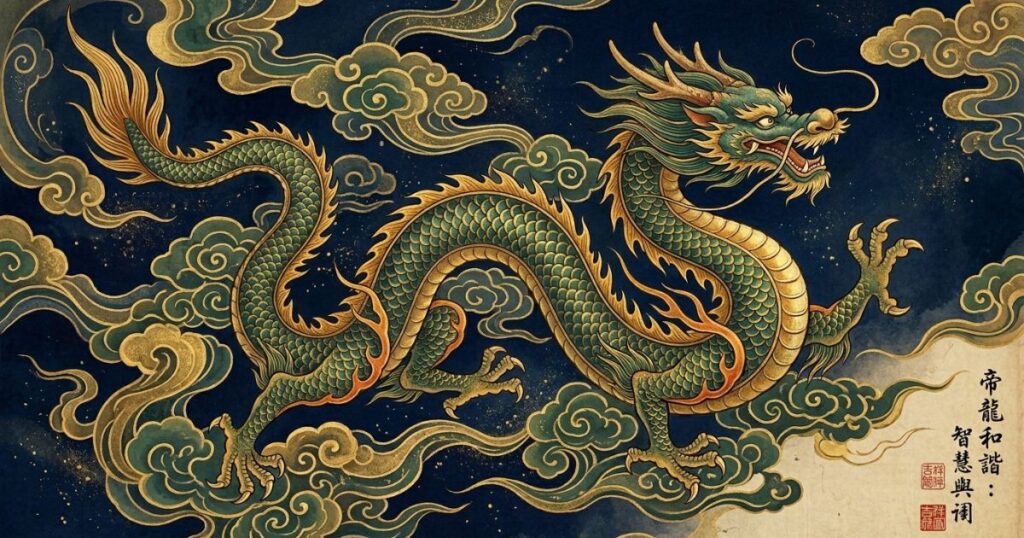
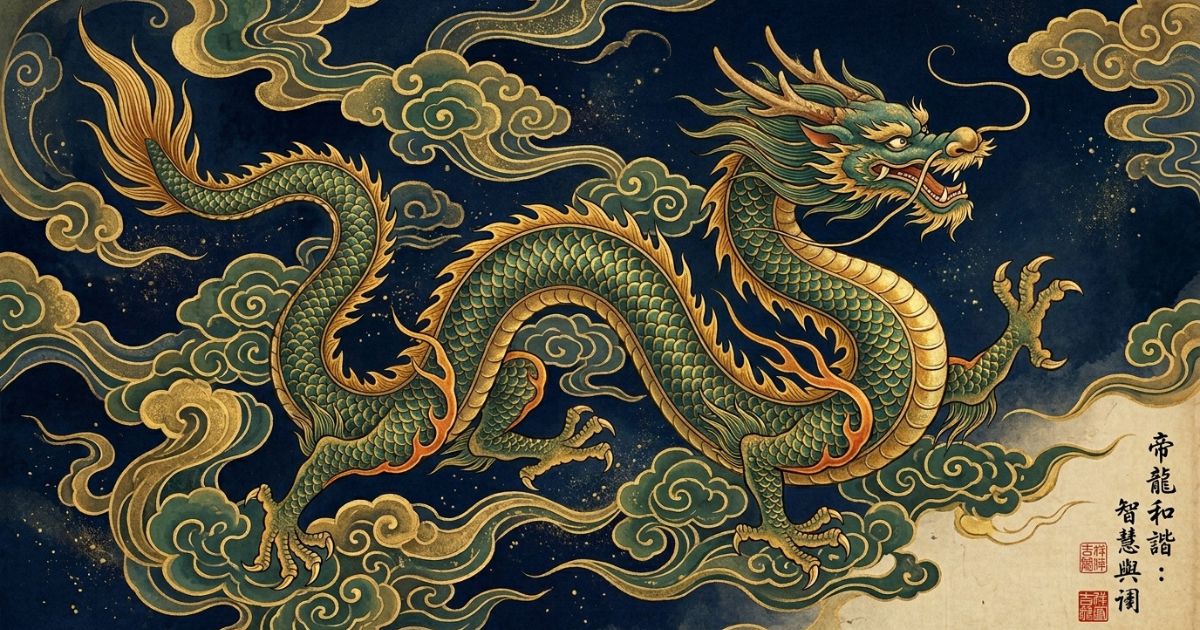
Imperial China — The dragon (imperial) in Chinese leadership symbolism bears no resemblance to the malevolent creature of European mythology. The Chinese imperial dragon represents cosmic wisdom, benevolent power, and the harmonization of heaven and earth through righteous leadership. Emperors were called Sons of Heaven and wore dragon imagery on their robes — not to signal power over people, but to signal alignment with the cosmic order that made righteous leadership legitimate.
Medieval Europe — The coat of arms system created a visual database of noble identity and authority. Every element of a heraldic design carried meaning: the animal in the center, the colors, the supporting figures, the motto beneath. Reading a coat of arms was reading a compressed biography of a family’s leadership history, values, and claims. It was leadership symbolism as information design.
Modern Leadership Symbols — How Authority Adapted
Leadership symbols did not disappear when crowns and thrones became anachronistic. They transformed.
The modern CEO’s corner office, the general’s stars on a uniform collar, the judge’s black robe, the surgeon’s white coat — all of these are leadership symbols operating through exactly the same psychological mechanism as their ancient counterparts. They make authority visible, recognizable, and legible without requiring verbal explanation.
Military leadership symbols are among the most precisely engineered of all modern authority signals. Rank insignia on a uniform communicate an entire hierarchy of authority at a glance — who commands whom, who is accountable to whom, who has the right to give orders and who has the responsibility to follow them. Stars, eagles, stripes, bars: each increment of symbol represents an increment of earned authority.
Corporate logos have become the coats of arms of the modern world. Apple’s bitten apple, Nike’s swoosh, Goldman Sachs’s clean typography — each communicates a specific kind of authority and identity that makes the organization instantly recognizable as occupying a particular position in its domain. These are not random aesthetic choices. They are the modern exercise of the same impulse that put lions on medieval shields and eagles on Roman standards.
The Psychology Behind Leadership Symbols
Why do leadership symbols work? The answer comes from neuroscience, not aesthetics.
The human brain processes visual information approximately 60,000 times faster than text. In environments of uncertainty or threat — the situations where leadership matters most — the brain searches urgently for rapid, reliable signals about who is in charge and what that means for safety. Leadership symbols provide those signals in the fastest possible form.
Psychologically, leadership symbols reduce what researchers call “authority ambiguity” — the state of uncertainty about who has the right to make decisions. Studies in organizational psychology consistently show that groups with clear authority signals make faster decisions, maintain higher morale under pressure, and recover more effectively from setbacks than groups where leadership is unclear. The symbol does not just represent authority. The symbol creates the conditions in which authority can be exercised effectively.
The neuroscience adds another dimension: symbols activate emotional responses in the brain’s limbic system before the prefrontal cortex — the rational, analytical part — has time to evaluate them. A crown or a uniform or an eagle badge creates a felt response of trust or deference before a conscious decision is made. This is why leadership symbols designed with psychological sophistication work so powerfully — and why leadership symbols in the hands of demagogues are so dangerous.
Read More: 110+ Bold Woman Symbols of Strength and Courage That Inspire Fearless Living
Servant Leadership Symbols — The Other Kind of Power
Not all leadership symbols represent authority over others. Some represent authority in service of others — and these deserve their own recognition.
The shepherd’s crook — separate from its royal ceremonial use — represents the specific leadership of someone who walks with the flock, who stays behind to protect stragglers, who uses the hook to rescue rather than to command. The metaphor of the shepherd as a leader who serves the led is one of the oldest in human spiritual and cultural tradition. Moses was a shepherd. The Psalms describe divine leadership as shepherding. The image endures because it describes something true: the deepest authority comes from genuine care for those in your charge.

The bridge as a servant leadership symbol represents the leader who connects separated groups, who makes passage possible for people who cannot cross on their own, and who bears the weight of others’ journeys. A bridge does not demand that people use it. It simply makes crossing possible and bears the load without complaint.
The hands — open, extended, palms up — appear in numerous servant leadership frameworks as the symbol of leadership through giving rather than taking. Where the closed fist represents control and the pointing finger represents command, open hands represent offering, support, and the transfer of resources and authority to others.
The oak tree as a leadership symbol captures something specific: deep roots that hold the ground, wide branches that provide shelter, and the generosity of giving shade to everyone beneath without asking anything in return. The oak is the symbol of leadership that creates conditions for others to grow.
Leadership Symbols in Tattoos, Logos, and Personal Expression
The global market for leadership-themed personal expression — in tattoos, jewelry, art, and design — has grown dramatically as people seek visual anchors for their own values and aspirations.
Most chosen leadership symbol tattoos:
- Lion — chosen by people claiming courage, decisiveness, and the commitment to lead without hesitation
- Crown — representing personal sovereignty, the reclamation of authority over one’s own life
- Eagle — for people who lead through vision and the ability to see clearly in complex situations
- Compass — for those who lead through navigation, orientation, and clarity of direction in uncertain territory
- Torch — for teachers, mentors, and anyone who understands their leadership as the act of illuminating others’ paths
In corporate logo design, the choice of leadership symbol is rarely accidental. Organizations that use eagle imagery signal ambition, vision, and dominance of their field. Those that use compass imagery signal strategic sophistication and navigational reliability. Those that use torch imagery signal knowledge transfer and illumination. Understanding leadership symbols makes you a more sophisticated reader of the visual world around you.
Conclusion
There is a reason you felt something when you saw your first crown, your first eagle on a national emblem, your first torch lifted above a crowd.
That response was not accidental and it was not naive. It was the activation of something deeply embedded in how human minds have organized social life for the entirety of recorded history. Leadership symbols are not decorations of authority. They are the mechanism by which authority becomes real, recognizable, and trustworthy in the minds of those who must follow it.
From the pharaoh’s crook and flail to the modern general’s stars to the compass tattooed on the wrist of someone who has decided to stop drifting and start leading their own life — these symbols carry a truth that has not changed across forty-five centuries of human civilization: leadership is a visible thing. It must be seen to be followed. It must be believed to be effective. And the symbols that make it visible have always been more powerful than the words used to describe it.
Explore the leadership symbols that speak to your own sense of authority and responsibility. Study them. Choose the ones that reflect the leader you are choosing to become. And remember that every symbol in this guide was originally created by someone who needed to make power legible — not for their own glory, but because the group needed to know who to trust when the stakes were highest.

Muhammad Shoaib is a passionate content writer and symbolism researcher at TrendyMegzine.com, where he explores the hidden meanings behind symbols, spiritual signs, ancient traditions, dream interpretations, and cultural symbolism.