110+ Bold Woman Symbols of Strength and Courage That Inspire Fearless Living
Nobody talks about the kind of strength women carry most of the time.
Not the dramatic, fist-raised kind. The other kind. The strength of showing up anyway when showing up costs everything. The strength of holding things together when they are falling apart — sometimes for years — without being asked and without being seen. The strength of deciding, quietly, on an ordinary Tuesday, that you are not done yet.
Woman symbols of strength and courage exist because that kind of strength needed a language. Not words — words are too easily dismissed, too easy to argue with. Images. Shapes. The kind of visual truth that bypasses the intellect and lands directly in the body, in the chest, in the place where certainty lives before language arrives.
This guide explores 110+ of those symbols — where they come from, what they carry, and why they still move people across every culture on earth. Some are famous. Some are hidden in plain sight. All of them were made by people who understood something essential about feminine power and needed to put a shape to it.
What Are Woman Symbols of Strength and Courage?
Woman symbols of strength and courage are visual, mythological, and cultural representations of feminine resilience — the specific kind of power that carries, endures, creates, protects, and rises.
They are not simply symbols of generic strength with a feminine label attached. The best of them capture something distinct: the particular courage of a woman who has been underestimated and kept going anyway. The particular wisdom of someone who holds two contradictory things — tenderness and ferocity — simultaneously. The particular force of divine feminine energy, which is simultaneously creative and destructive, nurturing and unbreakable.
These symbols appear in ancient Egyptian temple carvings, in Norse mythology, in Celtic stonework, in Hindu sacred art, in Greek philosophy, and now in tattoo studios, jewelry collections, and the phone wallpapers of women who found something in an image that they could not find in a sentence.
They matter because they tell the truth. And the truth they tell is this: feminine strength has always been here. It was never the absence of power. It was a different expression of it.
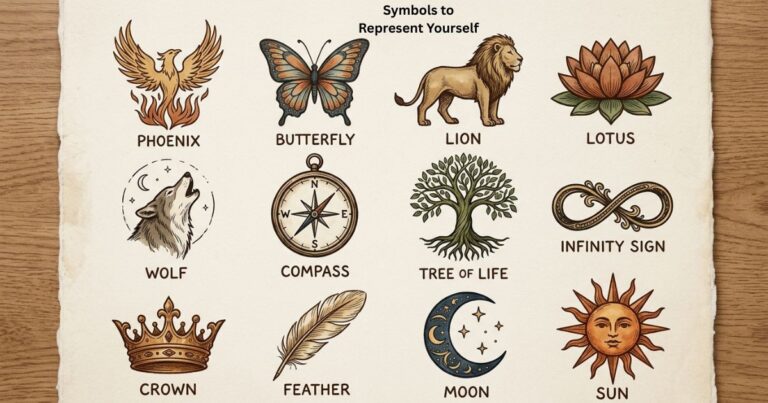
The 10 Most Powerful Woman Symbols of Strength and Courage
| Symbol | Visual | Core Meaning | Cultural Origin |
| Phoenix | Bird rising from flames | Resurrection after destruction | Greece, Egypt, China |
| Lotus Flower | Bloom from muddy water | Growth through adversity, purity | Buddhism, Hinduism, Egypt |
| Lioness | Female lion in motion | Fierce protection, leadership | Africa, ancient Egypt |
| Valkyrie | Armored female warrior | Destiny, bravery, warrior power | Norse mythology |
| Athena | Helmeted goddess with owl | Wisdom, strategic courage | Ancient Greece |
| Isis | Winged goddess with crown | Healing, motherhood, resilience | Ancient Egypt |
| Butterfly | Wings from chrysalis | Transformation, identity renewal | Universal |
| Triple Goddess | Three moon phases as figure | Maiden, Mother, Crone — full feminine power | Pagan / Wiccan tradition |
| Medusa | Serpent-haired female face | Reclaimed power, boundary, rage transformed | Greek mythology |
| The Arrow | Single arrow pointing forward | Direction, intention, moving through pain | Indigenous, universal |
1. The Phoenix — Because Sometimes Strength Looks Like Ashes
The phoenix does not survive the fire. It dies in it. Completely. And then it rises.
That distinction matters enormously when we talk about woman symbols of strength and courage. The Phoenix does not represent avoiding devastation or being resilient enough to avoid breaking. It represents having been completely broken — reduced to ash — and still coming back. The fire was real. The destruction was total. And somehow, impossibly, what rose from it was more itself than what came before.
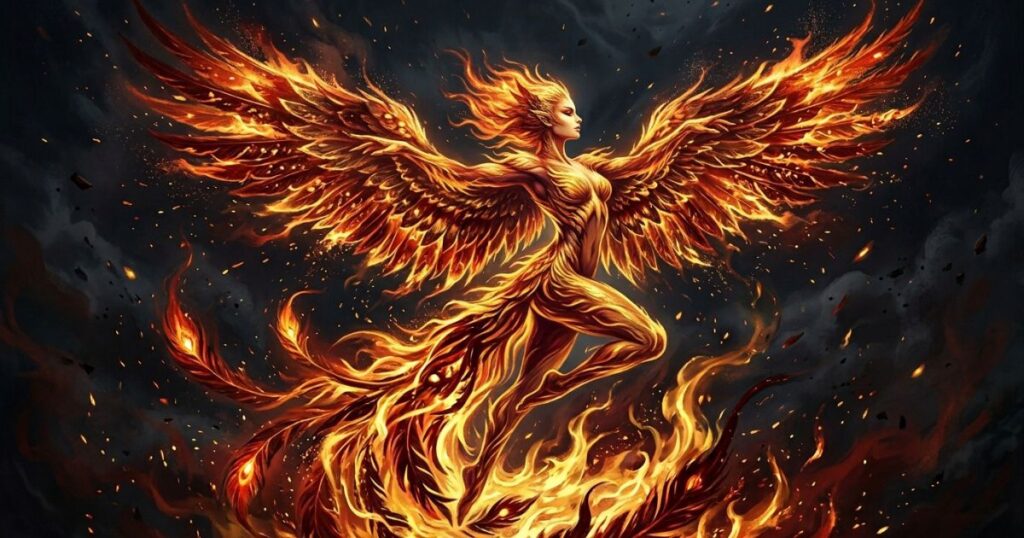
For women who have lived through loss, illness, abuse, the collapse of an identity they built for years — the Phoenix does not feel like mythology. It feels like a description.
As a symbol of feminine resilience, the Phoenix carries:
- Destruction as a stage of becoming, not an ending
- The specific courage of beginning again when beginning feels impossible
- The understanding that your previous self did not fail — it transformed
In tattoos, the Phoenix is the most chosen of all woman symbols of strength and courage. People choose it to mark the year they got out, the year they survived, the year they finally became who they had been trying to become for decades.
2. The Lotus Flower — Growing From What Should Have Stopped You
The lotus flower roots itself in the darkest, murkiest water at the bottom of a pond and produces one of the most extraordinary blooms in the natural world. The mud is not the obstacle. The mud is the condition. Without the darkness at the bottom, the flower does not have what it needs to become what it is.
This is why the lotus has been a central symbol in Buddhist and Hindu traditions for thousands of years — not as a symbol of escaping difficulty but as a symbol of what difficulty makes possible.
As a woman symbol of strength and courage, the lotus carries a particular emotional precision. It does not say your suffering was necessary in some abstract cosmic sense. It says: you grew from exactly this. The specific muddy water of your specific life produced the specific bloom you are becoming.
In modern wellness culture, the lotus appears in meditation spaces, journal covers, and tattoos on wrists and collarbones worldwide. Its appeal is its honesty — it does not promise to remove the mud. It promises that the bloom is possible anyway.
3. The Lioness — The Strength That Doesn’t Announce Itself
People always talk about the lion. Rarely the lioness.
The lioness does most of the hunting. She raises the cubs. She defends the territory. She makes decisions about the pride’s survival. She is the one who actually holds the structure together — and she does it without the mane, without the drama, without the roar that makes the lion famous.
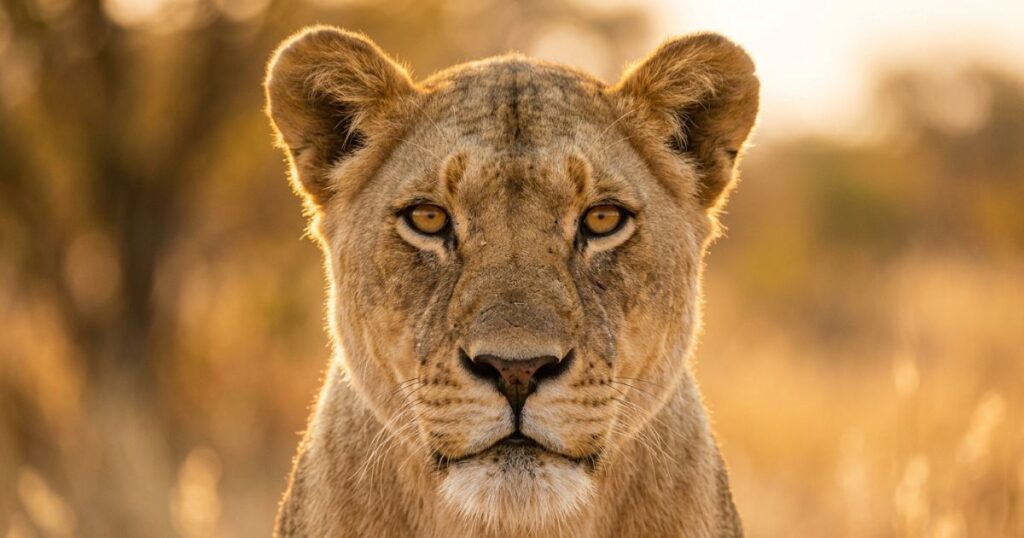
She is one of the most perfectly accurate of all woman symbols of strength and courage because she describes something many women recognize immediately: the experience of being essential while being overlooked. Of being the operational power behind something while someone else gets the credit for looking powerful.
In African cultures, the lioness represents motherhood as a form of fierce courage. In ancient Egyptian iconography, the goddess Sekhmet — the lioness-headed deity — was simultaneously the goddess of healing and the goddess of war. Destruction and restoration. In the same body. Without contradiction.
As a woman symbol, the lioness says: my strength does not require your recognition to be real.
4. The Valkyrie — The Symbol of Destiny Claimed
In Norse mythology, Valkyries were female warriors who rode across battlefields deciding who lived and who died, choosing which fallen warriors were worthy of entering Valhalla. They were not passive observers. They were the agents of fate itself.
The Valkyrie as a woman symbol of strength and courage represents something specific that most other symbols do not: the power of decision. Not just endurance, not just survival — but the authority to choose. To assess. To determine what matters and act accordingly.
In a cultural moment where women are increasingly asserting their right to define their own lives on their own terms, the Valkyrie resonates with extraordinary force. She is armored but not defensive. She moves through chaos not to escape it but to exert her will within it.
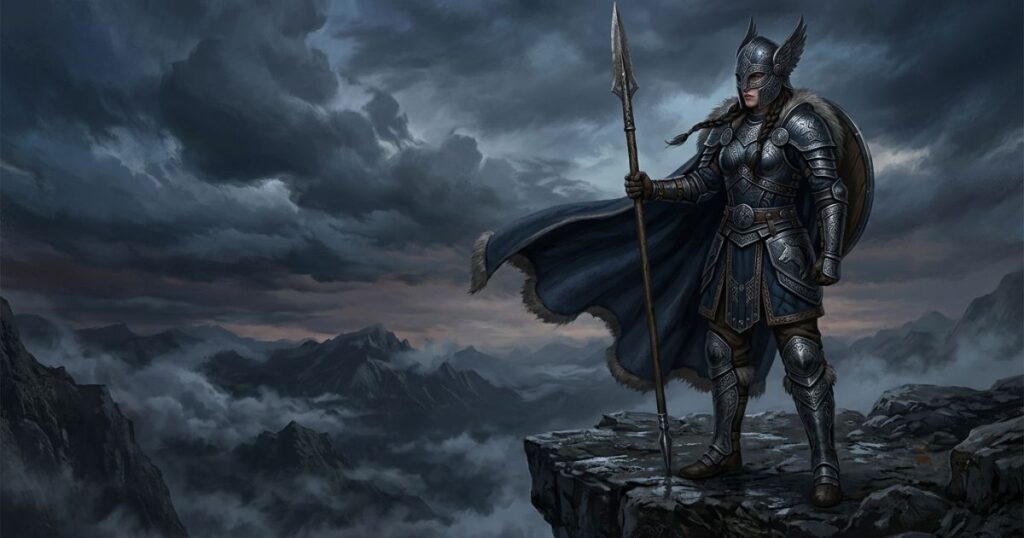
Valkyrie-inspired imagery appears in tattoos, jewelry, and modern pop culture with growing frequency. She represents the warrior goddess archetype — a woman who has claimed her power not in spite of the difficulty of her world but fully inside it.
5. Athena — Wisdom as the Ultimate Courage
Athena, the Greek goddess of wisdom and strategic war, was born fully armored from the mind of Zeus — a mythological statement about the relationship between intelligence and power that ancient Greeks understood completely.
She was not the goddess of violent war. She was the goddess of strategic war — the intelligence that prevents unnecessary conflict, the wisdom that finds solutions where brute force creates only larger problems. Her symbol, the owl, represents the ability to see clearly in the dark — to perceive truth when others see only shadow.
As a woman symbol of strength and courage, Athena represents a form of courage that is not often celebrated: intellectual courage. The courage of thinking clearly under pressure. Of choosing strategy over reaction. Of leading with the mind even when emotion would be more satisfying.
In ancient Athens, she was also the patron of crafts and domestic skill — recognizing that the intelligence required to create beautiful things from raw material is the same intelligence that wins wars. Everything is the same intelligence. Applied differently.
6. Isis — The Egyptian Goddess Who Rebuilt What Was Destroyed
Isis is one of the most complete of all ancient woman symbols of strength and courage, because her mythology is specifically about what happens after catastrophic loss.
Her husband Osiris was murdered and his body scattered across Egypt in pieces. Isis searched the entire country, gathered every piece, and used her magic to restore him — not because it was possible, but because she refused to accept that it was not. She then conceived and raised Horus alone, protecting him from his father’s murderer with fierce intelligence and power.
The symbol of Isis — typically depicted with outspread wings, sometimes with a throne crown — represents the specific strength of a woman who has been through destruction and chosen reconstruction. Not because reconstruction is easy. Not because loss is not real. But because the love that drives the search is stronger than the despair that says the search is pointless.
In tattoos, the Isis imagery carries particular resonance for women who have experienced loss — of a person, of a version of themselves, of a future they had planned. She is the symbol that says: I will find the pieces. I will put it back together. Even this.
[IMAGE ALT: Isis Egyptian goddess woman symbol of strength — winged figure with throne crown in ancient Egyptian art style representing protective power, healing resilience, and the courage to rebuild after destruction]
7. The Triple Goddess — The Complete Woman
The Triple Goddess represents femininity not as a single static state but as a complete cycle: the Maiden (youth, potential, new beginnings), the Mother (creative power, nurturing strength, fullness), and the Crone (wisdom, elderhood, transformative power beyond social pressure).
This symbol is one of the most radical of all woman symbols of strength and courage because it refuses the cultural insistence that women’s strength and value belongs only to youth and beauty. The Crone — the old woman who has lived through everything and accumulated wisdom that youth cannot possess — is not diminished in this symbol. She is the most powerful figure in it.
The Triple Goddess is depicted as three moon phases: waxing, full, and waning — the complete cycle rather than the arrested moment. It says: all of this is you. All of this is worthy. All of this is power.
8. Medusa — The Most Misunderstood Woman Symbol of Courage
Medusa is having a cultural moment — and for good reason.
The traditional reading of the Medusa myth frames her as a monster to be defeated. But the original mythological context tells a different story: Medusa was a priestess of Athena who was assaulted by Poseidon in Athena’s temple and then punished by Athena for it. Transformed against her will. Made into something terrifying not by her own choice but by others’ violence.
Contemporary feminist readings of Medusa have reclaimed her as a symbol of the specific rage that follows injustice — the power of a woman who has survived what tried to destroy her and emerged with a gaze so direct, so unflinching, that it turns the cruelty of others to stone. Not monster. Survivor. With power she did not ask for but learned to use.
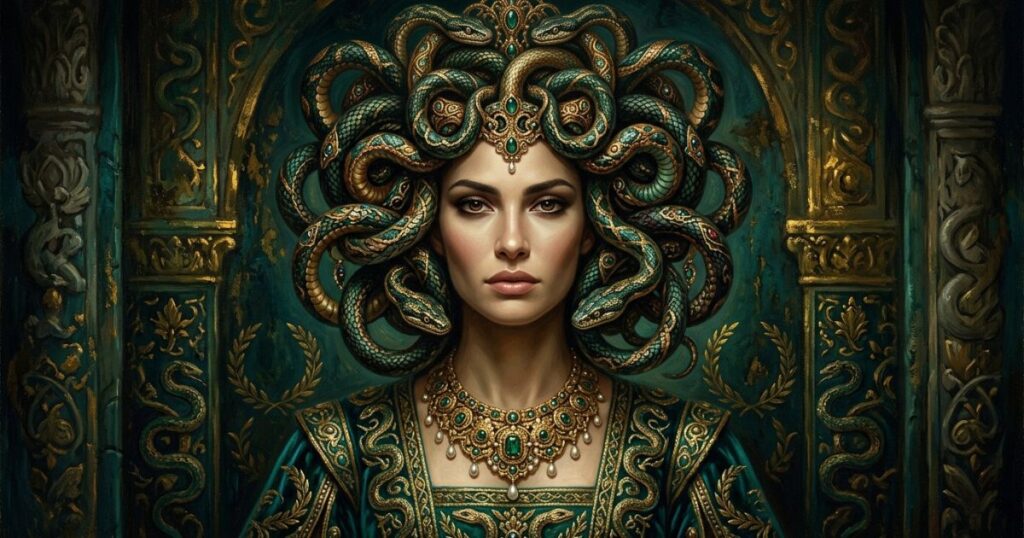
In modern tattoos, Medusa imagery has become one of the fastest-growing woman symbols of strength and courage, chosen specifically by women who have experienced assault, who have had their pain dismissed or punished, who have reclaimed their own story and their own power from a narrative that tried to make them the villain.
9. The Butterfly — The Courage of Complete Change
The butterfly undergoes one of nature’s most extreme transformations — not gradual change but complete dissolution and reorganization. Inside the chrysalis, the caterpillar’s body largely dissolves before reconstituting into something entirely different.
As a woman symbol of strength and courage, the butterfly captures the specific courage of identity transformation — the kind that requires releasing the previous version of yourself so completely that you cannot go back even if you wanted to. The kind of change that is not additive but structural. The person who emerges is not the person who entered. And that is not loss. That is the point.
10. The Arrow — Moving Forward Deliberately
An arrow can only move forward by first being pulled backward.
The arrow as a woman symbol of strength and courage represents exactly this: the pulling back — the period of tension, difficulty, or constraint — is not the opposite of moving forward. It is the mechanism of it. The further you draw the string, the further the arrow flies.
Arrows appear as symbols of intention, direction, and purposeful movement across Indigenous traditions, ancient hunting cultures, and modern minimalist tattoo design. As a feminine strength symbol, the arrow represents the decision to move — not reactively, not desperately, but with aim.
Celtic Woman Symbols of Strength and Courage
Celtic visual culture produced some of the most enduring and beautiful of all woman symbols of strength and courage.
The Celtic knot — an interwoven pattern with no beginning and no end — represents the eternal nature of strength. It cannot be broken because it has no weak point. Every strand is supported by every other strand. This perfectly describes the interconnected nature of feminine strength: the way it draws from community, from ancestry, from the body of knowledge passed between women across generations.
The Triskelion (triple spiral) represents the three stages of feminine life — mirroring the Triple Goddess concept — and the idea that strength is not static but cyclical. You do not have strength and then lose it. You move through it, lose it, find it again, deeper.
The Sheela na Gig — a raw, unapologetic stone carving of a female figure found on medieval Irish church walls — is one of the most ancient and honest of all Celtic woman symbols. She is direct. She is powerful. She is completely uninterested in your discomfort. She has been carved into sacred buildings for a thousand years.
The Psychology Behind Woman Symbols of Strength and Courage
Why do these specific images move people so deeply? The answer comes from Carl Jung’s theory of archetypes — universal patterns embedded in the shared unconscious of all humanity.
Jung identified the divine feminine as an archetype — an image pattern so deeply embedded in human psychology that it carries emotional charge before conscious interpretation. The goddess figure, the warrior woman, the wise elder — these are not invented. They are recognized. They feel familiar because they are structurally embedded in how human minds organize meaning.
When someone sees an image of Isis with her wings outspread and feels something shift inside their chest before they can name why — that is the archetype activating. The symbol bypasses cognition and connects directly to the layer of psychological experience where the deepest truths live.
This is why woman symbols of strength and courage function so powerfully as tattoos, as jewelry, as objects kept on bedside tables or carried in pockets. They are not reminders. They are activations. They call forward something that was already there, waiting to be named.
Read More: 20+ Hidden Symbols of Rebirth You See Every Day but Never Notice
Woman Symbols of Strength and Courage in Tattoos, Jewelry, and Art
The global surge in women choosing strength symbols as permanent body art is not a fashion trend. It is a psychological one — a generation of women using the oldest visual language available to mark the moments that mattered.
Most meaningful woman symbols of strength and courage tattoo choices:
- Phoenix — survival of what felt unsurvivable; the fire was real, the rising was realer
- Lotus — beauty that emerged specifically because of difficulty, not despite it
- Lioness — the claim of power that does not require recognition
- Medusa — the reclamation of narrative from a story that tried to make you the monster
- Arrow — the decision to move forward with intention after being pulled back
- Celtic knot — connection to ancestry, to the women who came before, to a strength that predates you
- Triple Goddess — the wholeness of all phases, refusing to be reduced to one
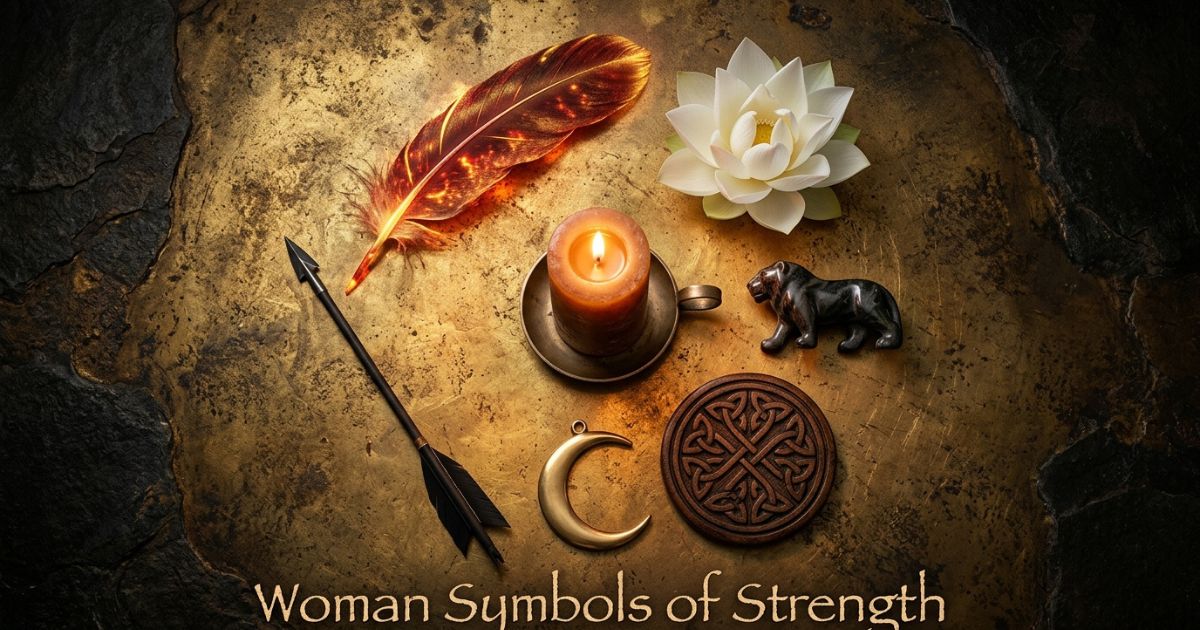
In jewelry, woman symbols of strength appear most frequently as: lioness pendants, lotus rings, crescent moon earrings (Triple Goddess), Celtic knot bracelets, and phoenix charm necklaces. Women wear them not as decoration but as portable talismans — physical reminders that the strength they need is already present.
In art, female strength symbols have been central since the earliest recorded human image-making. The Venus figurines — fertility goddess sculptures dating back 35,000 years — are among the oldest known human artworks. The impulse to put feminine power into visual form is as old as the impulse to make art at all.
[INTERNAL LINK: Celtic symbols and their meanings — complete guide] [INTERNAL LINK: Symbols of strength — cross-cultural guide] [EXTERNAL LINK: Smithsonian — The History of the Goddess in Human Civilization]
Spiritual and Dream Meaning of Woman Symbols of Strength
When woman symbols of strength and courage appear in dreams or meditation, they carry specific messages from the unconscious.
Dreaming of the Phoenix — You are in the fire right now. The dream is telling you: this is not the end. The rising is coming.
Dreaming of a lioness — Something in your life needs your fierce protection. Or something in you needs to stop apologizing for how powerful it is.
Dreaming of Medusa — Your anger is not monstrous. It is information. It is power that has not found its direction yet.
Dreaming of a butterfly or chrysalis — The transformation has begun, whether you feel ready or not. The dissolving is happening. Trust the process.
Dreaming of an arrow — A decision is waiting. You have been pulled back long enough. It is time to aim and release.
Spiritually, these symbols function as messengers from the parts of the self that already know what the thinking mind is still working through.
Conclusion
The women who came before you — thousands of years of them — looked at the world around them and found shapes for what they knew to be true about themselves.
They found it in fire and in birds that rise from fire. In flowers that bloom from mud. In goddesses with wings and with weapons. In spirals carved into stone. In the phases of the moon that disappear and return and disappear and return. In the lioness who hunts in silence and the Valkyrie who decides fates.
These woman symbols of strength and courage are not just history. They are a living inheritance — a visual language passed forward through thousands of years by women who needed the world to understand something that words kept failing to convey.
You are the next person to receive it. And you get to decide which symbols you carry, which ones you mark permanently on your skin or hang from your neck or keep on your nightstand for the mornings when the strength feels distant.
They are not just images. They are proof. That women have always been this. That this has always been honored. That the strength you are trying to find words for — the kind that shows up on ordinary Tuesdays and holds things together without applause — has had a name, and a face, and a shape, for longer than you can imagine.
Explore the woman symbols of strength and courage that speak to your specific story. Carry them. Study them. Let them remind you what you have always been.

Muhammad Shoaib is a passionate content writer and symbolism researcher at TrendyMegzine.com, where he explores the hidden meanings behind symbols, spiritual signs, ancient traditions, dream interpretations, and cultural symbolism.