25 Powerful Winter Symbols and Their Deep Spiritual Meanings
There is a moment in deep winter when everything goes completely still.
No wind. No sound. Just white silence spreading across the world like a held breath.
Most people call it cold. Ancient cultures called it sacred. And once you understand winter symbols the way they understood them — as a living language of the soul — you will never experience the season the same way again.
Winter symbols carry meanings that stretch back thousands of years. They appear in Norse mythology, Japanese poetry, Celtic ritual, and modern psychology alike. They show up in your dreams, in the films that move you, in the tattoos people choose to mark the hardest chapters of their lives.
This article explores 25 of the most powerful winter symbols, their spiritual meanings, cultural roots, psychological weight, and why they still speak to something deep inside us in 2026.
What Are Winter Symbols?
Winter symbols are natural images, elements, and seasonal signs that carry emotional, spiritual, cultural, and psychological meaning beyond their physical form.
A snowflake is not just frozen water. A bare tree silhouette is not just a dead branch. These are images that have carried human meaning for millennia — coded with ideas about endings, endurance, purity, silence, and the promise of return.
Winter symbols developed because survival once depended on reading the season correctly. Ancient peoples watched the sun grow weak, the land go hard, the animals disappear. They needed frameworks to understand what was happening — not just physically, but spiritually.
Over time, every culture developed its own vocabulary of winter symbols. And despite the distance between those cultures, the meanings overlap in ways that feel almost universal. Cold means clarity. Darkness means introspection. Snow means a fresh beginning pressing up beneath the surface.
The Spiritual Meaning of Winter Symbols
Stillness is the first spiritual message of winter.
In a world that rewards constant movement, winter arrives like a counter-instruction. Stop. Go inward. Let the surface become quiet so something deeper can speak.
Spiritually, winter symbols point toward three things above all else:
- Inner transformation — the kind that only happens in darkness and silence
- Spiritual cleansing — releasing what no longer serves before the new cycle begins
- Rebirth — the truth that dormancy is not death but preparation
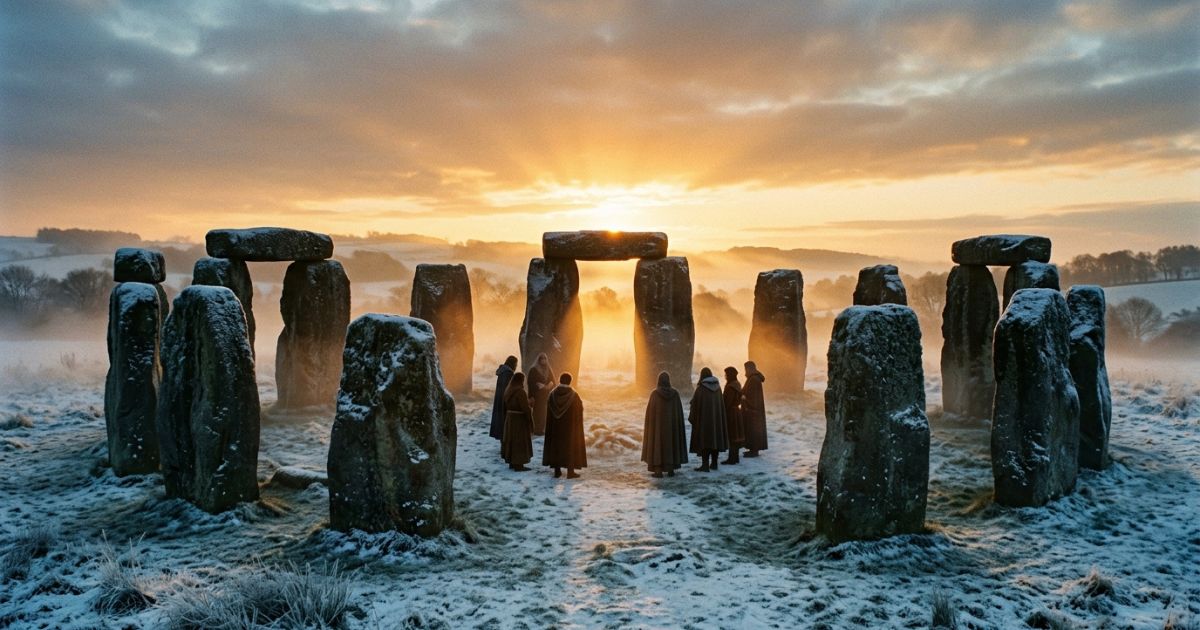
Many spiritual traditions treat the winter solstice as one of the most sacred points of the year. It is the longest night — the furthest point from light — and yet it marks the exact moment the sun begins its return. That paradox is at the heart of winter spirituality: the darkest point is also the turning point.
Winter does not ask you to be productive. It asks you to be honest.
Snow Symbolism — Purity, Peace, and Hidden Depth
Snow is one of the oldest and most universal of all winter symbols.
Watch fresh snowfall and you feel it immediately — a quieting, a softening, a sense that the world is being covered and made new. That feeling is not accidental. It is encoded in the symbol itself.
Snow symbolism carries several layers of meaning that have remained consistent across cultures and centuries:
Purity — White snow represents a clean slate. The landscape before snowfall carries the marks of everything that happened. After snowfall, it is unmarked. Many cultures see snow as a visual metaphor for forgiveness, new beginnings, and the erasure of old wounds.
Silence — Snow absorbs sound. A heavy snowfall genuinely quiets the world. Spiritually, this silence is understood as an invitation to listen — to oneself, to the divine, to the deeper rhythms of life that noise normally drowns out.
Hidden depth — Snow covers what lies beneath. This duality gives snow its psychological complexity. It can represent both concealment (emotions suppressed, truths buried) and protection (a soft covering that preserves life underneath through the coldest months).
Emotional numbness vs peace — In literature and psychology, snow can swing between two meanings depending on context. It can represent emotional numbness, the absence of feeling after trauma. Or it can represent genuine peace — the kind that comes after the storm has passed and everything is finally, completely still.
25 Winter Symbols and What They Really Mean
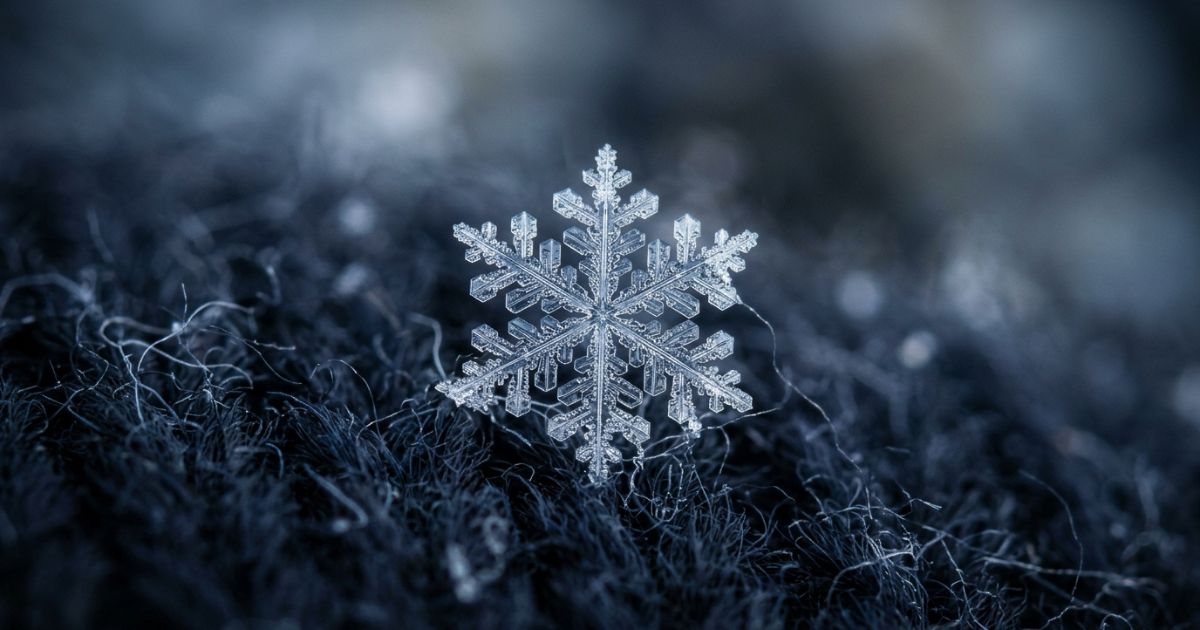
1. Snowflake ❄
The snowflake symbol represents uniqueness, delicacy, and the beauty of impermanence. Each snowflake is structurally unique — a mathematical miracle that melts the moment it touches warmth. Spiritually, snowflakes remind us that beautiful things do not need to last forever to matter.
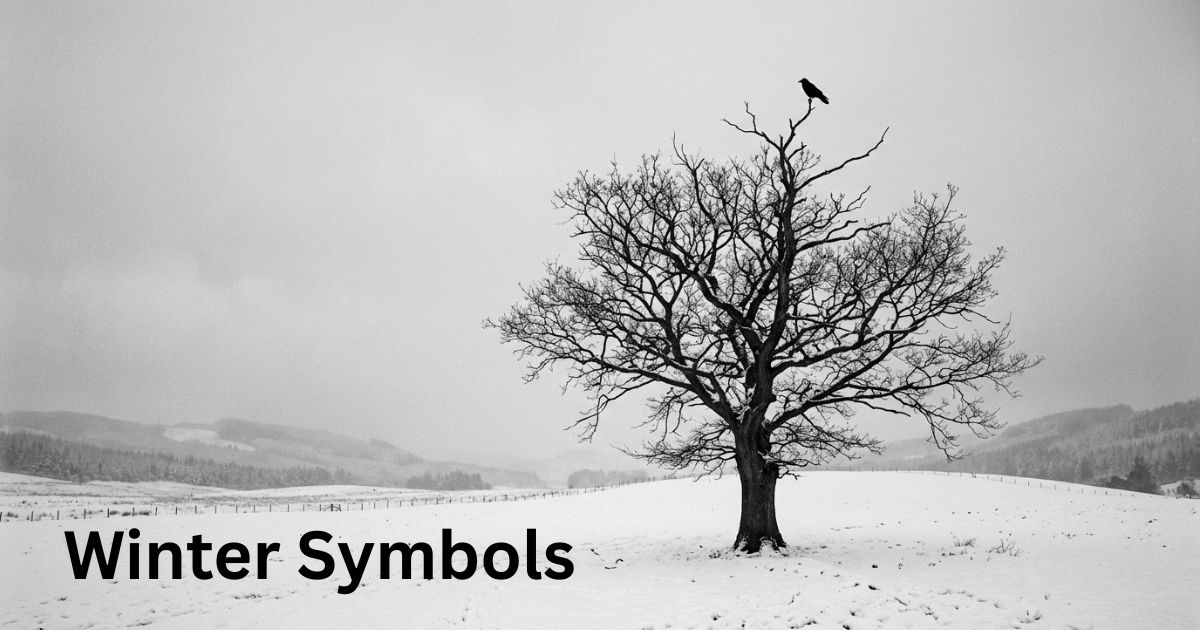
2. Bare Trees
Bare trees against a winter sky are among the most honest images in nature. Every leaf is gone. Every branch is exposed. Spiritually, bare trees represent vulnerability, authenticity, and the quiet dignity of showing up exactly as you are — stripped of performance, stripped of protection.
3. Ice
Ice represents emotional barriers, preservation, and dangerous clarity. Frost on a window distorts the view — a powerful metaphor for how emotional distance changes perception. Ice also preserves. Things trapped in ice do not decay. They wait.
4. Winter Night
The long darkness and light contrast of winter nights holds enormous symbolic weight. Darkness in winter symbolizes the shadow self — the parts of the human psyche that only reveal themselves when the distractions of light and warmth are removed.
5. Cold Wind
Cold wind is invisible but undeniable. In spiritual symbolism, cold wind represents unavoidable truth — the kind that arrives without warning and cuts through pretense. You cannot negotiate with the cold wind. You can only face it or turn away from it.
6. Fire
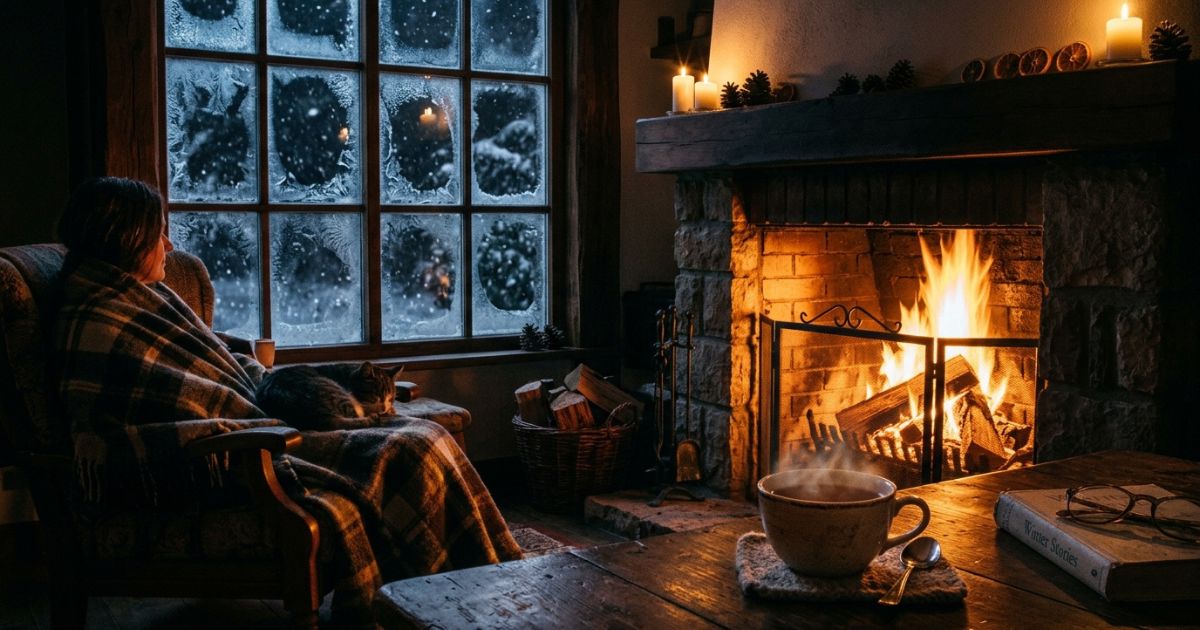
Fire in winter is the symbol of hope, survival, and human will. The hearth fire was the center of winter life for thousands of years — not just warmth but community, story, memory. Fire in winter says: we endure. We gather. We survive the dark together.
7. Evergreen Trees
Evergreen trees hold their color through winter when everything else loses its green. This makes them the oldest symbol of enduring life in the coldest season. Ancient peoples brought evergreen branches indoors specifically to remind themselves that life persists even in the harshest conditions.
8. Frost
Frost represents the threshold between life and stillness. It appears at the edges — on glass, on leaves, on the surface of standing water — tracing the boundary of cold with extraordinary geometric precision. Symbolically, frost represents the beautiful order that exists even at the margins of survival.
9. Winter Moon
The winter moon is larger, colder, and brighter than its summer counterpart. Spiritually, the winter moon governs introspection, emotional honesty, and the kind of clarity that only arrives when the warmth of self-deception has been stripped away.
10. Silence
Silence is perhaps the most underestimated of all winter symbols. It is not emptiness. It is fullness of a different kind — the sound of everything that has been paused, resting, waiting. Many meditation traditions deliberately invoke winter silence as a gateway to deeper awareness.
11. Snowstorm
A snowstorm represents overwhelm, crisis, and the disorientation of being caught in forces larger than yourself. But it also represents transformation — because nothing emerges from a snowstorm unchanged, and the world it reveals afterward is always different from the one that entered it.
12. Icicle
Icicles represent time made visible. They grow slowly, drip by drip, degree by degree. Spiritually, icicles symbolize patience, the accumulation of small moments into something substantial, and the fragility of things built through slow and careful time.
13. Winter Animals — Wolf, Bear, Deer
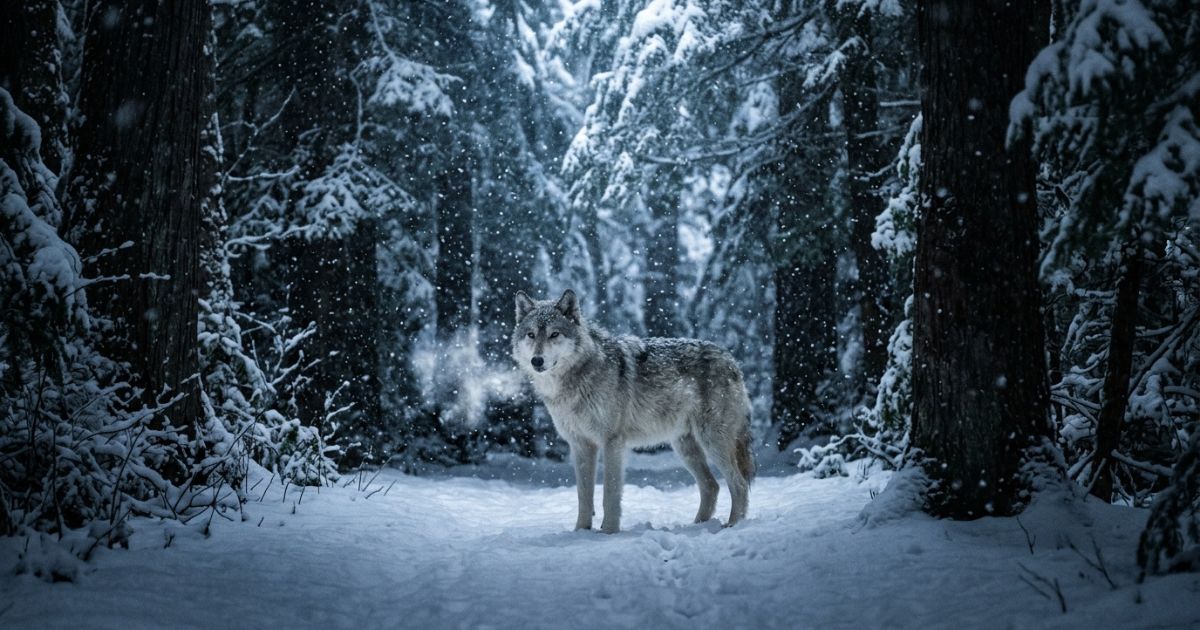
Winter animals carry deep symbolic weight. The wolf represents survival intelligence and community. The bear represents dormancy — the wisdom of deep rest. The deer represents grace under vulnerability, moving silently through a world stripped bare.
14. Crow/Raven in Winter
Ravens and crows against white winter landscapes are among the most striking images in nature. They represent mystery, intelligence, and the presence of spiritual messages delivered through the ordinary world.
15. Frozen River
A frozen river represents emotions that have been stopped in their tracks — not destroyed but suspended. There is life beneath the ice. The current still moves. But on the surface, everything appears still.
16. Footprints in Snow
Footprints in fresh snow represent the mark of passage — proof that someone was here, that something happened, that the journey continues even when the path behind you grows cold and quiet.
17. Hot Drink (Tea, Coffee, Cocoa)
The steaming cup in winter hands is a modern symbol of impermanence and presence. It demands you hold it — stay here, stay warm, stay conscious of this moment before it cools.
18. Hearth/Fireplace
The fireplace is the ancestor of the modern home — the original center point. In winter symbolism, the hearth represents belonging, protection, and the sacred circle of those you choose to keep warm with.
19. Bare Ground Under Snow
What lies beneath the snow is alive and waiting. Bare ground under a winter covering represents the truth beneath the surface — the life, the potential, the plans forming in the dark before they are ready to be seen.
20. Winter Stars
Winter skies are clearer than any other season. The cold air holds less moisture, which means stars appear sharper, closer, more real. Winter stars symbolize perspective — the view that only becomes possible when you step away from warmth and comfort long enough for your eyes to adjust.
21. Dead Leaves
Dead leaves in winter represent release. They were once full of life, color, and function. Their falling is not failure — it is completion. Spiritually, dead leaves remind us that letting go is part of the cycle, not the end of it.
22. Gray Sky
The flat gray of a winter sky represents creative potential — the blank canvas, the unwritten chapter, the quiet before the story begins. In Scandinavian cultures, the gray winter sky was not depressing. It was contemplative.
23. Mittens and Scarves
Warm clothing in winter represents care — the instinct to protect what is fragile. In symbolic language, mittens and scarves represent the small acts of love that keep the vulnerable parts of ourselves alive through difficult seasons.
24. Winter Solstice Sun
The returning sun at solstice is one of the most ancient symbols of hope in human history. It represents the proof that light always returns — that darkness is seasonal, not permanent.
25. The Empty Branch
One bare branch, one bird, one sky. This image — common in Japanese and Chinese winter art — represents Yin energy: the productive power of emptiness, the eloquence of what is absent, the beauty of what has been reduced to its essential form.
[IMAGE ALT: Bare winter tree branch with single crow against pale gray sky representing winter symbols of solitude and wisdom]
Winter Symbols Across Cultures
Different cultures developed their own winter symbol systems — but the themes overlap in ways that suggest a shared human truth.
Norse Culture
Winter in Norse mythology was governed by Skadi, goddess of winter, hunting, and mountains. Winter symbols represented Ragnarök — cosmic destruction that precedes renewal. Harsh winter was not punishment but purification.
Celtic Traditions
Samhain marked the beginning of the Celtic winter — the moment when the veil between the living and the dead grew thin. Winter was the season of ancestors, memory, and spiritual communication.
Japanese Culture
Japanese winter aesthetics are governed by impermanence — the concept of mono not awareness, the bittersweet awareness of transience. Snow, bare plum branches, and the cry of a winter bird are all symbols of beauty made more beautiful by its fragility.
Ancient Chinese Philosophy
Winter aligned with Yin energy in Chinese cosmology — receptive, inward, dark, quiet, feminine, deep. Winter was not the absence of power. It was power turned inward, conserving itself for what comes next.
Christian Symbolism
Christian tradition transformed winter into a season of waiting — Advent — in which darkness is endured with faith because light is coming. Winter became a spiritual posture: humble, patient, expectant.
Positive vs Negative Meanings of Winter Symbols
| Symbol | Positive Meaning | Negative Meaning |
| Snow | Purity, renewal, peace | Emotional numbness, isolation |
| Ice | Clarity, preservation | Emotional coldness, barriers |
| Bare Trees | Honesty, vulnerability | Loss, exposure, grief |
| Cold Wind | Truth, awakening | Harsh change, unavoidable pain |
| Winter Night | Introspection, wisdom | Depression, fear, shadow |
| Fire | Hope, community, survival | Consumption, destruction |
| Silence | Peace, spiritual depth | Loneliness, abandonment |
| Frost | Beauty, precise order | The edge of survival, fragility |
The most important truth about winter symbols is this: the positive and negative meanings are not opposites. They are the same experience seen from two different places inside yourself.
Winter Symbols in Dreams — What Your Mind Is Telling You
When winter symbols appear in dreams, they almost always point toward an inner season rather than an outer one.
Dreaming of snow often indicates emotional processing — either the peaceful end of a storm or the quiet suppression of feelings that need expression. Pay attention to whether the snow in your dream feels welcoming or threatening.
Dreaming of ice frequently signals emotional distance — either your own guardedness or someone else’s. A frozen river in a dream can represent emotions that have been stopped, relationships that have gone cold, or decisions suspended in a kind of internal winter.
Dreaming of bare trees often accompanies periods of personal honesty — transitions when old identities are being shed before new ones form.
Dreaming of fire in winter is almost universally positive — the psyche’s reassurance that warmth, community, and hope are present even in the darkest personal season.
Read More: 45+ Stunning Fall Symbols | The Hidden Meanings of Autumn That Speak to the Human Soul
Winter Symbols in Art, Literature and Tattoos
Winter has given artists their most emotionally complex material across every medium.
In literature, winter scenes mark turning points. Think of the frozen moors in Wuthering Heights, the perpetual winter of Narnia under the White Witch, or the first snow in The Kite Runner — each using winter symbols to signal internal transformation, entrapment, or the frozen quality of grief.
In film, winter is cinematically used to represent isolation, moral clarity, and emotional exposure. The stripped-down visual language of a winter landscape mirrors the stripped-down psychological state of a character at a crucial moment.
In tattoo culture, winter symbols are chosen to represent survival. The bare tree with roots intact. The snowflake in geometric form. The winter wolf. These images say: I went through the cold season. I did not break. I am still here.
In fashion and aesthetic design, winter symbols evoke minimalism, elegance, and emotional depth — the visual opposite of summer’s abundance. There is a reason winter fashion leans toward charcoal, ivory, and deep blue: these are the colors of the inner season.
FAQ — Winter Symbols
What do winter symbols represent spiritually? Winter symbols represent the sacred pause between cycles — rest, purification, introspection, and preparation for renewal. Spiritually, they teach that stillness is not the absence of progress but its deepest form.
Is winter symbolism always negative? No. While winter symbols include hardship and loss, they equally represent resilience, inner wisdom, spiritual cleansing, and the promise of return. Every winter symbol carries both shadow and light.
What does snow symbolize emotionally? Snow can symbolize emotional peace, a fresh start, or suppressed feelings depending on context. In most spiritual traditions, fresh snow represents cleansing and the possibility of beginning again.
Why is winter associated with both death and rebirth? Because nature models the complete cycle. Winter is not the end of the story — it is the chapter where the story prepares to begin again. Seeds that will bloom in spring are alive beneath the snow all winter long.
What does dreaming of winter mean? It typically reflects an inner season of transition — emotional processing, a period of solitude or grief, or the psyche’s invitation to rest before a new phase begins.
Are winter symbols common in tattoos? Yes. Bare trees, snowflakes, wolves, and winter moons are among the most chosen tattoo symbols for people marking chapters of personal endurance and transformation.
What does cold symbolize in spiritual traditions? Cold symbolizes clarity, truth, and the stripping away of illusion. The cold wind does not lie. Many spiritual traditions see cold as a purifying force — uncomfortable but honest.
What are pagan winter symbols? Pagan winter symbols include the evergreen tree, the Yule log, the sun wheel, holly, mistletoe, and candlelight — all representing the endurance of life and the return of light through the darkest season.
Winter Symbols Carry the Language Your Soul Already Speaks
You have felt winter inside yourself before. Maybe it was grief. Maybe it was burnout. Maybe it was the particular silence that arrives after a relationship ends or a chapter closes — when everything that used to fill your days goes quiet and you are left alone with the bare branches of who you actually are.
Winter symbols do not judge that silence. They honor it.
They have been honoring it — in every culture, in every era, across every language — because the inner winter is one of the most universal human experiences there is. And the deepest truth of every winter symbol is the same truth that makes spring possible: this season will not last forever, and everything that survives it grows back stronger, more honest, and more alive.
Explore more winter symbols and seasonal symbolism at Symbolefy — where ancient meanings meet modern understanding.

Muhammad Shoaib is a passionate content writer and symbolism researcher at TrendyMegzine.com, where he explores the hidden meanings behind symbols, spiritual signs, ancient traditions, dream interpretations, and cultural symbolism.