100+ Hobo Symbols — Secret Meanings, History & Complete Chart 2026
🔍 Quick Answer Box
- Hobo symbols are secret chalk signs used by traveling workers in 1800s-1930s America
- They warned about danger, police, dogs, food, shelter, and kind people
- Most famous: Cat symbol (kind woman), Cross (free food), Circle + Arrows (leave fast)
- Used heavily during the Great Depression when millions traveled for work
- Today they appear in tattoos, art, TV shows (Mad Men), video games (COD Zombies)
- The NSA actually published an official hobo symbols document — that is how real they
Imagine walking alone on a cold night with no money, no phone, and no idea if the next town is safe or dangerous. You have not eaten in two days. You hop off a freight train and start walking down a dirt road.
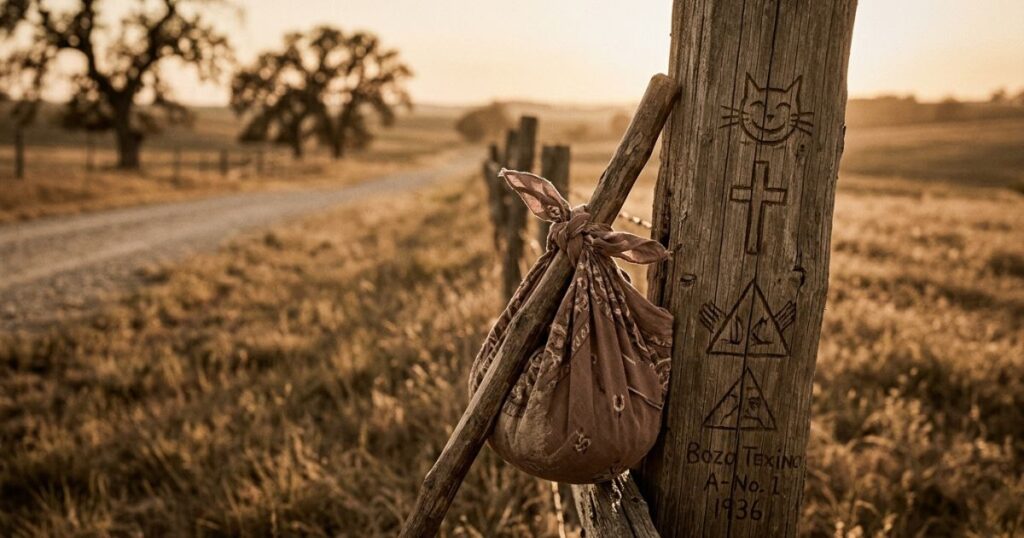
Then you see it. A small chalk mark scratched on a fence post. Just a simple drawing — a cat’s face. And suddenly, everything changes. That tiny symbol tells you: a kind woman lives nearby. She will help you. You are safe.
That is the power of hobo symbols. These secret chalk marks were the internet of the 1930s. They carried life-saving information between strangers who would never even meet face to face. From railroad tracks to fence posts, from city alleyways to country roads — hobo symbols created an invisible communication network that helped thousands of desperate people survive.
This guide reveals 100+ hobo symbols, their meanings, their history, and why people are still fascinated by them today.
What Are Hobo Symbols?
Hobo symbols are simple drawn or carved marks that traveling workers used as a secret communication system. Think of them as a secret language — but instead of words, they used small pictures and shapes.
The word hobo itself has an interesting history. Most historians believe it comes from “hoe boy” — a term for traveling farm workers who carried their tools with them. Others suggest it came from “homeward bound” — referring to workers trying to get home after working far away.
Whatever the origin of the name, hobo symbols served one clear purpose: to share survival information with other travelers quickly and secretly.
Here is what made hobo symbols so brilliant. They were:
- Simple — anyone could draw them with chalk or a stick
- Fast — you could read them in seconds
- Secret — most people who were not hobos had no idea what they meant
- Universal — they worked across language barriers
- Free — they cost nothing to make
A few scratches on a fence post could tell the next traveler whether a place was safe or dangerous, whether food was available, whether police were watching, or whether a kind person lived nearby. In a world without smartphones, radios, or reliable communication — this was revolutionary.
Hobo symbols were not written in any official book. They spread organically through the traveler community — passed from person to person, taught along railroad routes, shared around campfires. They were the original crowd-sourced survival guide.
Hobo Symbols — History and Origin
The story of hobo symbols cannot be separated from the story of American history. To understand the symbols, you first need to understand the desperate world that created them.
The Industrial Revolution and Railroad Expansion (1860s–1900s)
After the American Civil War ended in 1865, the United States entered a period of explosive industrial growth. Railroads spread across the entire country. Factories opened in cities. New industries needed workers constantly.
But this growth was uneven. Jobs appeared and disappeared quickly. A factory might hire hundreds of workers one month and lay them all off the next. A construction project might employ thousands of men for two years, then suddenly end.
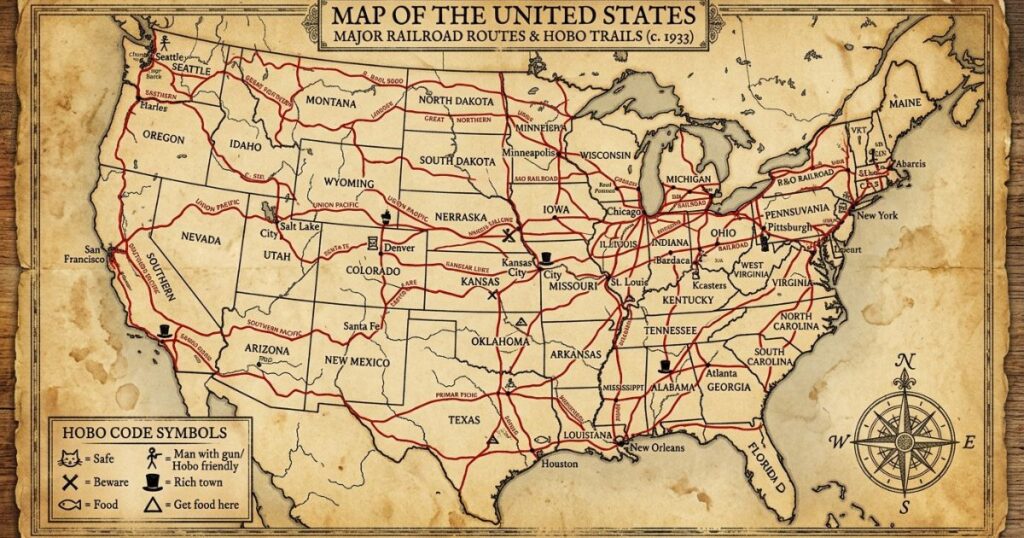
This created a massive population of migrant workers — people who had to keep moving to follow available jobs. They were not homeless by choice. They were workers following work wherever it went.
The railroad became their highway. Freight trains traveled across the entire country. Workers learned to “hop” freight trains — jumping on board without paying — to travel from one job to the next. It was illegal, dangerous, and absolutely necessary for survival.
These travelers needed a way to share information. Which towns were friendly? Where could you find food? Which railroad yards had police who would arrest you? Which houses had generous owners who would offer a meal?
Hobo symbols were born from this urgent need.
The Great Depression — Peak of Hobo Culture (1929–1939)
The Great Depression changed everything. When the stock market crashed in October 1929, the American economy collapsed almost overnight. Banks failed. Businesses closed. Factories shut down. Farms went bankrupt.
Within a few years, one in four American workers had no job. Millions of families lost their homes. People who had been respectable, employed citizens suddenly found themselves homeless and desperate.
The number of people riding freight trains skyrocketed. By 1932, an estimated two million Americans were traveling the country by freight train looking for work, food, or simply survival. These were not criminals or lazy people — they were ordinary Americans caught in an extraordinary catastrophe.
Among these millions of travelers, hobo symbols became absolutely essential. The more travelers used the roads and railroads, the more valuable the symbol system became. More symbols were added. Meanings became more standardized. The invisible communication network grew stronger.
Soup kitchens, churches, and charitable homes that offered help to travelers became known through symbols scratched on nearby fences. Towns with aggressive police or violent residents were marked with warning symbols. Safe camping spots were identified. Water sources were noted.
The symbols literally saved lives.
The NSA and Official Documentation
Here is a surprising fact. The National Security Agency — yes, the United States government intelligence organization — actually published an official document about hobo symbols. This document, available on the NSA website, lists dozens of hobo signs with their meanings. The NSA’s interest in hobo symbols shows how significant this secret communication system actually was in American history.
Decline and Cultural Legacy (1940s–Present)
When World War II began in 1941, the American economy recovered rapidly. Millions of men joined the military. Factories opened again to produce war materials. Jobs became available. The mass migration of the Depression era ended.
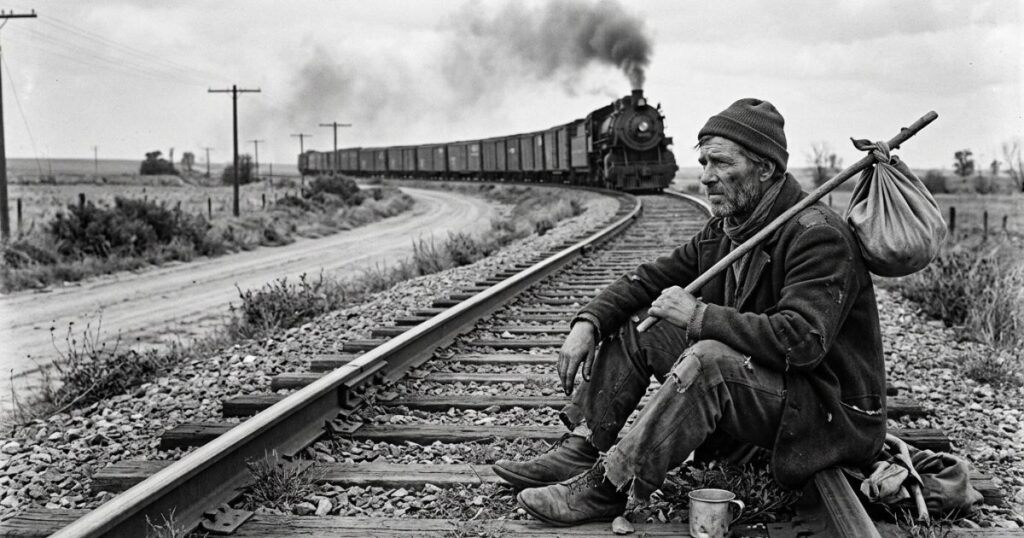
Hobo culture faded as an economic necessity. But it never disappeared completely from the American imagination. Books, films, songs, and stories kept the culture alive. The image of the wandering hobo — free, independent, wise in the ways of the road — became a romantic figure in American folklore.
Today, hobo symbols appear in museums, history books, television shows, video games, and tattoo parlors. They fascinate people precisely because they represent something rare — a genuine secret language created by ordinary people under extraordinary circumstances.
100+ Hobo Symbols and Their Meanings
Now let us explore the actual symbols. Here is the most complete guide to hobo symbols and what they meant.
🐱 People and Personality Symbols
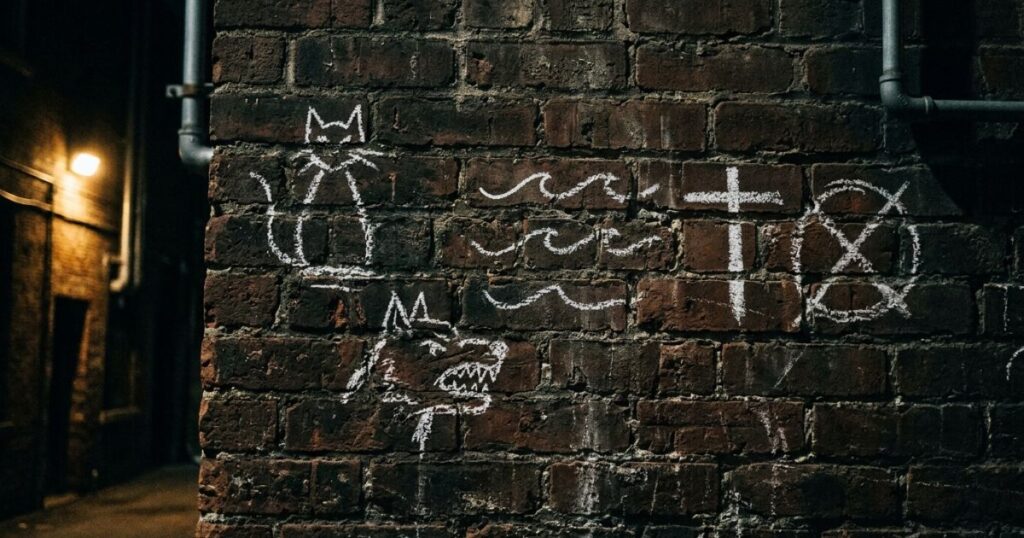
Cat Symbol
Shape: A simple cat face or cat outline drawn with a few strokes
Meaning: A kind woman lives here. She will probably give you food or help.
This was one of the most beloved symbols in the entire hobo code. Finding a cat symbol meant warmth, food, and safety were nearby. Many hobos said this was the symbol they hoped to see most.
Dog Symbol (Angry)
Shape: A rough drawing of a barking or aggressive-looking dog
Meaning: Dangerous dog on property. Stay away or approach very carefully.
This was an important safety warning. Dogs could injure or even kill a traveler, especially at night.
Dog Symbol (Friendly)
Shape: A simple friendly-looking dog drawing
Meaning: A dog lives here but it is not dangerous. You can approach safely.
The difference between the angry dog and friendly dog symbol could literally determine whether a traveler was bitten.
Gentleman Symbol
Shape: A simple top hat or gentleman’s figure
Meaning: A gentleman lives here. He may give you money or good treatment.
This symbol identified homes where the owner was generous and wealthy enough to help travelers.
Kind Lady Symbol
Shape: A curved or feminine symbol
Meaning: A kindhearted woman lives here. She will help if you ask politely.
Similar to the cat symbol but more specific — this indicated a woman who was known for generosity toward travelers.
Tell a Sad Story Symbol
Shape: A circle with a small mark inside
Meaning: If you tell this person a sad story, they will probably help you more.
This was a clever psychological tip. Some homeowners were more generous when they heard a moving personal story. This symbol identified those emotionally generous people.
Rich Person Symbol
Shape: Money bag or wealth indicator
Meaning: Rich people live here. They may give more than average.
A wealthy person might offer more food, money, or supplies than an average household.
Coward Symbol
Shape: Triangle or specific marking
Meaning: The person here is easily frightened or intimidated.
This was sometimes used to identify homeowners who would not resist if a traveler pushed for more help.
Bad Man Symbol
Shape: X or harsh angular marks
Meaning: A dangerous or cruel person lives here. Avoid this property.
This protected travelers from people who might harm, rob, or report them.
🍞 Food and Water Symbols
Cross Symbol
Shape: A simple plus sign or cross (+)
Meaning: Free food available here. This place gives charity.
This was one of the most important survival symbols. Churches, missions, and generous homes were marked with this sign. A traveler who saw this cross knew they would not go hungry.
Wavy Lines Symbol
Shape: Two or three horizontal wavy lines (like water waves)
Meaning: Safe drinking water can be found nearby.
Finding safe water was a constant survival challenge for travelers. This symbol pointed toward wells, pumps, rivers, or other reliable water sources.
Bread Symbol
Shape: Simple rectangle or bread loaf shape
Meaning: Fresh bread or baked goods available here.
More specific than the general cross symbol — this indicated that fresh-baked food specifically could be obtained.
Half-Circle Symbol
Shape: A semicircle
Meaning: A partial meal will be given here — not a full meal, but something.
Not every generous homeowner could afford a full meal, but many would share what they had. This symbol set realistic expectations.
Good Food Symbol
Shape: Circle with lines
Meaning: Very good food available here. Worth stopping.
Some places were known for exceptional generosity with food. This symbol marked those special spots.
🏠 Shelter and Safety Symbols
Safe Camp Symbol
Shape: A square or tent-like drawing
Meaning: This is a safe place to sleep overnight.
Finding safe shelter was as important as finding food. This symbol marked locations where travelers could sleep without being disturbed, arrested, or robbed.
Safe House Symbol
Shape: Triangle with a dot or simple house shape
Meaning: This house is a safe place. You will be treated well here.
More permanent than a camping spot — this indicated a household that regularly welcomed travelers.
Good Place to Sleep Symbol
Shape: A simple bed or sleeping figure
Meaning: You can sleep here safely. The area is protected.
This might indicate a barn, shed, or outdoor shelter where travelers had slept safely before.
Doctor Nearby Symbol
Shape: Medical cross or simple doctor figure
Meaning: A doctor or medical help is available nearby.
For sick or injured travelers, this was potentially life-saving information.
Religion Help Symbol
Shape: Cross inside a circle or church shape
Meaning: A religious organization nearby offers help.
Churches, missions, and religious charities were important sources of food, shelter, and medicine for traveling workers.
⚠️ Warning and Danger Symbols
Circle with Two Arrows Symbol
Shape: A circle with arrows pointing outward in multiple directions
Meaning: Leave immediately. Danger is present. Get out fast.
This was the most urgent warning in the entire hobo code. Seeing this symbol meant a traveler needed to move on without delay — police, violent people, or other serious danger was present.
Police Symbol
Shape: Badge shape or specific marking associated with law enforcement
Meaning: Police are active here. They will arrest vagrants (homeless travelers).
Traveling by freight train was technically illegal. Police in some towns actively arrested travelers and threw them in jail. This symbol saved many people from arrest.
Jail Symbol
Shape: Bars or cage-like drawing
Meaning: People have been arrested in this town for being travelers. Be very careful.
Some towns were notorious for arresting hobos. This warning symbol prevented travelers from unknowingly walking into trouble.
Dangerous Neighborhood Symbol
Shape: X or skull-like marking
Meaning: This area is genuinely dangerous. Violence, robbery, or other serious threats exist.
Not all danger came from police. Some neighborhoods had criminals who specifically targeted vulnerable travelers.
Crooked Police Symbol
Shape: Modified police symbol with additional marks
Meaning: Police here are corrupt or dishonest. They may rob or harm you even if you do nothing wrong.
Some officers took advantage of travelers’ vulnerability. This symbol was a crucial warning against places where even innocent behavior could lead to harm.
Thieves Symbol
Shape: Specific marking indicating theft risk
Meaning: Thieves operate in this area. Guard your belongings carefully.
Theft was a constant danger for travelers who carried everything they owned.
Vicious Dog Here Symbol
Shape: Exaggerated angry dog drawing
Meaning: An extremely dangerous dog is on this property. Do not approach at all.
More severe than the regular angry dog symbol — this warned of a dog that would definitely attack.
🔄 Direction and Navigation Symbols
This Way Symbol
Shape: Arrow pointing in a specific direction
Meaning: Go in this direction. Something useful or safe is that way.
Navigation was difficult without maps or smartphones. Arrow symbols guided travelers toward food, water, shelter, or safe roads.
Turn Here Symbol
Shape: Curved arrow
Meaning: Turn in this direction. The indicated route leads somewhere helpful.
Road Ahead Good Symbol
Shape: Lines indicating a clear path
Meaning: The road ahead is safe and passable. Continue this way.
Road Dangerous Symbol
Shape: X over a path or broken lines
Meaning: The road ahead has problems. Consider an alternate route.
Washed-out roads, dangerous areas, or police checkpoints might prompt this warning.
Short Distance Symbol
Shape: Short horizontal line
Meaning: What you are looking for is nearby — not far at all.
Long Distance Symbol
Shape: Long horizontal line
Meaning: What you are looking for is far away. Be prepared for a long journey.
💼 Work and Money Symbols
Work Available Symbol
Shape: Hammer, shovel, or tool drawing
Meaning: Work can be found here. Ask about job opportunities.
Finding work was the primary goal for most traveling workers. This symbol was enormously valuable because it identified places where a traveler could earn money rather than just receiving charity.
Hard Work Symbol
Shape: Double tool drawing or specific marking
Meaning: Work is available here but it is physically difficult.
This set realistic expectations — travelers who were hungry or exhausted might avoid extremely hard labor.
Easy Work Symbol
Shape: Simple tool or lighter mark
Meaning: Work available here is relatively easy and fair.
Good news for tired travelers — manageable work for reasonable pay.
Work Done for Food Symbol
Shape: Tool with plate or food symbol
Meaning: This place will give you food in exchange for work.
Many homeowners and farmers offered meals in exchange for a few hours of labor — chopping wood, cleaning, or farm work. This symbol identified those opportunities.
No Work Here Symbol
Shape: X over tool symbol
Meaning: Do not ask for work here. None is available, or asking will cause problems.
Wealthy Farmer Symbol
Shape: Farm-related drawing
Meaning: A prosperous farmer lives here who may have work and pay well.
🔒 Legal and Authority Symbols
Officers Here Symbol
Shape: Badge or authority figure
Meaning: Law enforcement is present and active in this area.
This Talk Gets Jail Symbol
Shape: Specific marking related to speech or conversation
Meaning: If you talk too much or say the wrong things here, you will be arrested.
Some areas had informants who reported travelers to police. This warned hobos to be careful about what they said.
Town Doesn’t Want You Symbol
Shape: Arrow pointing away from a specific area
Meaning: This town is hostile to travelers. Move through quickly or avoid completely.
Some towns had official policies of arresting or running off any travelers. This crucial symbol saved many people hours of wasted time and potential arrest.
Can Sleep in Barn Symbol
Shape: Barn or farm building drawing
Meaning: The farmer here will let travelers sleep in the barn.
Many farmers allowed this even if they could not offer indoor shelter — it was a safe, warm, dry option.
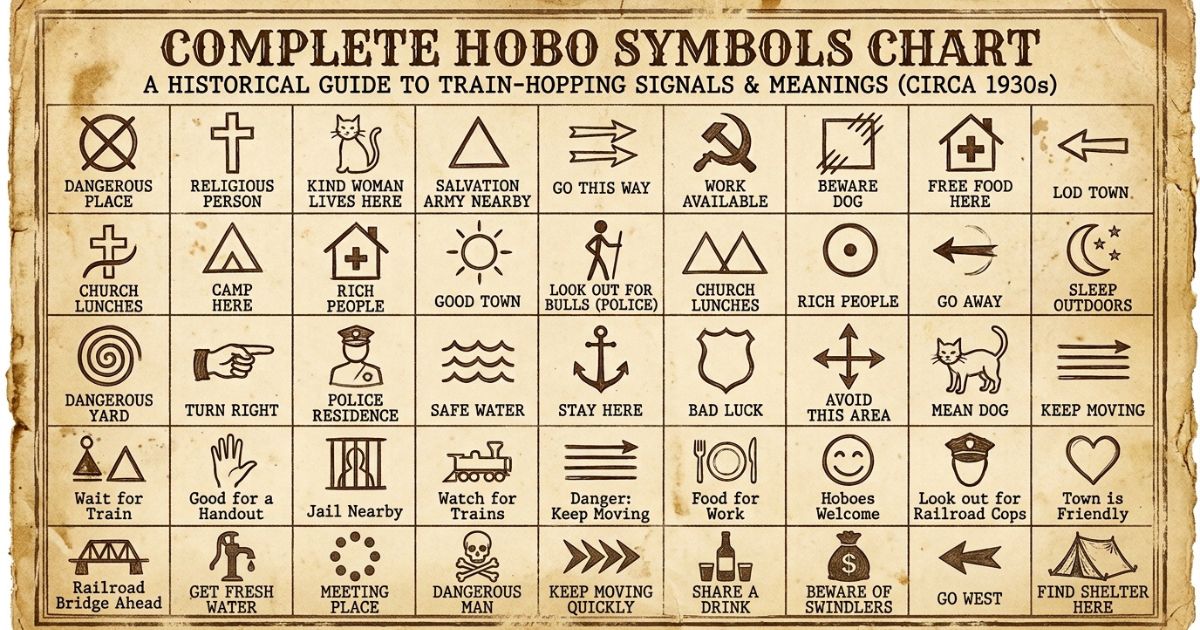
Complete Hobo Symbols Chart
| Symbol | Shape | Meaning | Category |
| Cat face | Simple cat drawing | Kind woman lives here | People |
| Angry dog | Barking dog sketch | Dangerous dog — stay away | Warning |
| Cross (+) | Plus sign | Free food available | Food |
| Wavy lines (~~~) | Three waves | Safe water nearby | Survival |
| Circle + arrows (⊕→) | Circle with outward arrows | Leave immediately, danger | Warning |
| Top hat | Simple hat drawing | Gentleman, may give money | People |
| Hammer | Tool drawing | Work available here | Work |
| X | Crossing lines | Bad/dangerous place | Warning |
| Triangle + dot | Triangle with center mark | Safe place to sleep | Shelter |
| Curved arrow | Turning arrow | Turn this direction | Navigation |
| Double cross (++) | Two crosses | Religious help available | Food/Shelter |
| Bars | Grid lines | Jail risk in this town | Warning |
| House shape | Simple building | Safe house | Shelter |
| Zigzag line | Horizontal zigzag | Barking dog on road | Warning |
| Circle (○) | Empty circle | Nothing here, move on | Navigation |
| Long arrow | Extended arrow | Long distance to destination | Navigation |
| Short arrow | Short arrow | Close distance | Navigation |
| Bread rectangle | Rectangular shape | Bread available here | Food |
| Dollar sign ($) | Currency mark | Rich person lives here | People |
| Shovel | Garden tool drawing | Hard work available | Work |
Hobo Symbols in Different Cultures
Hobo symbols are American in their specific form, but the idea behind them is universal. Humans throughout history have always created secret communication systems when survival depended on it.
Medieval Europe — Pilgrim and Beggar Marks
In medieval Europe, travelers and pilgrims carved or chalked symbols on walls, churches, and inns along major travel routes. These marks served similar purposes to hobo symbols — identifying safe places, warning about dangers, and pointing toward food and shelter.
Beggars in medieval cities also developed their own secret marking systems. They identified charitable households with specific scratches near doorways. They warned each other about households that gave nothing or called the authorities. This medieval “beggar code” predates American hobo symbols by hundreds of years.
Indigenous Trail Markings — America’s First Trail Signs
Long before European settlers arrived, Indigenous peoples across North America used sophisticated trail marking systems. Stacked rocks (cairns), bent tree branches, scratched bark, and arranged stones all communicated information to other travelers.
These markings indicated water sources, hunting grounds, dangerous areas, and directions. They were designed to blend naturally into the landscape — invisible to those who did not know what to look for, but instantly meaningful to those who did.
This system shares the same core philosophy as hobo symbols: share survival knowledge with others who need it.
World War II — Resistance Symbols
During World War II, resistance fighters in Nazi-occupied countries used secret symbol systems to communicate without being detected. These marks on walls, trees, and buildings guided fighters, warned of patrols, and identified safe houses.
The V for Victory symbol spread across occupied Europe through chalk marks, scratched surfaces, and spray paint. This was the same concept as hobo symbols — secret communication using simple marks that could be left anonymously and read by those who knew their meaning.
Prison Culture — Gang and Survival Signs
Inside prison systems worldwide, inmates develop sophisticated symbol systems to communicate across language barriers, warn about dangers, and identify allies. These symbols appear as tattoos, scratched on walls, folded into objects, and arranged in coded patterns.
Like hobo symbols, prison symbols emerge from environments where survival depends on information and where conventional communication is impossible or dangerous.
Modern Digital Culture — The New Hobo Code
Today’s internet culture has recreated hobo symbols in digital form. Emoji combinations carry secret meanings within specific communities. Discord server symbols identify different types of communities. Reddit flair systems communicate information about users instantly.
Even the simple ✅ and ❌ emoji function exactly like hobo symbols — conveying complex meaning through simple, universal visual marks. The instinct that created hobo symbols never went away. It just moved online.
Hobo Symbols in Dreams — What Does It Mean?
People who dream about hobo symbols are often processing feelings of uncertainty, transition, or the need for guidance during difficult times.
Dreaming of Finding a Hobo Symbol
When you dream of discovering a hobo symbol — especially a positive one like the cat or the cross — it often means you are searching for guidance in your waking life. Your mind is looking for signs that will tell you which path is safe. You may be facing a decision without enough information, and your subconscious is expressing that need.
Dreaming of Drawing a Hobo Symbol
Drawing or leaving a hobo symbol in a dream represents your desire to help others. You have knowledge or experience that could benefit someone else. Your subconscious is telling you to share what you know — to leave guidance for those who come after you.
Dreaming of Warning Hobo Symbols
Warning symbols in dreams — the circle with arrows, the dangerous dog, the jail symbol — often reflect anxiety about a real situation in your life. Something feels threatening or uncertain. Your mind is processing that fear through the language of danger symbols.
Dreaming of Railroad Tracks and Chalk Marks
A broader dream about traveling along railroad tracks and seeing hobo marks along the way often represents a life transition. You are moving from one phase to another. The symbols represent the wisdom and experience you need to navigate this change successfully.
Dreaming of Decoding Secret Symbols
If you dream of trying to decode or understand hobo symbols you cannot read, this often represents a real situation where you feel you are missing important information. Someone may not be telling you the full truth. Or a situation in your life has hidden elements you have not yet uncovered.
Spiritual Meaning of Hobo Symbols
On a deeper level, hobo symbols carry spiritual meaning that goes far beyond their practical survival function.
The Spirit of Collective Compassion
The most profound spiritual aspect of hobo symbols is what they represent about human nature. In a time of extreme hardship and competition for scarce resources, thousands of strangers chose to help each other. They left messages that would benefit travelers they would never meet.
This is not just historical curiosity. It is a demonstration of something spiritually significant: human beings naturally extend compassion to strangers when they recognize shared suffering.
The cat symbol that directed a hungry traveler toward a kind woman’s door represents something beautiful. An anonymous person who received help at that house left a gift for the next traveler — the gift of knowledge and connection.
Wayfinding as a Spiritual Journey
In many spiritual traditions, the physical journey is a metaphor for the soul’s journey through life. The wandering hobo — moving from place to place, never quite belonging, always seeking — mirrors the soul’s search for home, meaning, and belonging.
Hobo symbols become, in this reading, spiritual guideposts. They mark moments of grace on a difficult journey. The cross that indicates free food becomes a symbol of divine provision. The cat that means a kind woman lives here becomes a symbol of unexpected mercy from strangers.
The Wisdom of Simple Signs
There is a spiritual lesson in the simplicity of hobo symbols. A single chalk cat — a few strokes on a fence — carried enormous life-saving power. The spiritual world often works the same way. Small, simple signs carry enormous meaning for those who are paying attention.
Many spiritual traditions teach that guidance comes to us in simple, easily overlooked forms. A dream. A chance encounter. A book that falls off a shelf. A word from a stranger. Hobo symbols teach us to pay attention to small signs because small signs can save lives.
Brotherhood Without Borders
Hobo symbols created a community among people who had nothing in common except their desperate circumstances. They crossed racial barriers, language barriers, and social barriers. A symbol scratched on a fence by a Black traveler in Georgia might protect a white traveler from Poland who came through six months later.
This spiritual brotherhood — created not through shared beliefs or shared identity but through shared suffering and shared generosity — reflects something profound about human capacity for connection.
Hobo Symbols — Common Myths vs Real Facts
Many misconceptions surround hobo symbols. Let us separate fact from fiction.
| Myth | Real Fact |
| Hobo symbols were a fully organized, official code | They were informal and varied by region — no single standardized code existed |
| Every hobo knew all the symbols | Knowledge varied — some travelers knew dozens, others only a few |
| Hobo symbols are purely fictional folklore | The NSA has an official document listing real hobo signs — they absolutely existed |
| Hobos were lazy criminals avoiding work | Most hobos were workers desperately seeking employment during economic collapse |
| The symbols were always in chalk | They were made with chalk, charcoal, coal, carved wood, scratched stone, and any available material |
| Hobo symbols only existed in America | Similar traveler symbol systems existed in Europe, Asia, and among Indigenous peoples worldwide |
| Hobo symbols completely disappeared after the Depression | Small communities of train travelers still reference and use these symbols today |
| All the symbols had exactly one meaning | Many symbols had slightly different meanings in different regions and communities |
| Hobos were all men | Women also traveled and used hobo routes, though less commonly than men |
| Hobo culture was only about poverty | It also developed a genuine philosophy of freedom, brotherhood, and self-reliance |
How to Use Hobo Symbols Knowledge Today
Understanding hobo symbols has surprising practical value in the modern world. Here is how this knowledge remains relevant.
Emergency Preparedness and Survival
The core principles behind hobo symbols — create simple visual communication systems that share survival information quickly — are directly applicable to modern emergency situations.
If you ever face a disaster where communication systems fail, knowing how to create simple symbol-based messages could help coordinate with others. Mark safe water sources. Indicate dangerous areas. Guide rescue workers toward survivors.
Historical Research and Education
Hobo symbols provide a fascinating window into American history. Teachers, students, historians, and documentary filmmakers use these symbols to explore the human story of the Great Depression — not through statistics and policy, but through the intimate, human-scale story of ordinary people surviving extraordinary hardship.
Understanding Visual Communication
Studying hobo symbols deepens your understanding of how visual communication works. How do simple images convey complex meaning? How do symbols become shared language without formal instruction? These questions are directly relevant to modern design, branding, user experience design, and communication strategy.
Tattoo and Art Inspiration
Hobo symbols have become popular in tattoo culture because they carry authentic historical meaning combined with visually interesting simple shapes. If you choose a hobo symbol tattoo, understanding its actual meaning allows you to choose one that genuinely reflects your personal story.
Creative Writing and Worldbuilding
Writers, game designers, and filmmakers use hobo symbols extensively. Understanding the real symbols makes fictional portrayals more authentic and emotionally resonant. COD Zombies, Mad Men, The Walking Dead, and many other creative works have used hobo symbols — knowing the real history makes these references even more interesting.
Connecting with History’s Forgotten People
Perhaps most importantly, learning about hobo symbols is an act of historical respect. The people who created and used these symbols were largely forgotten by mainstream history. They left no monuments, no famous names, no official records. They left only chalk marks on fence posts.
Learning their symbols is a way of honoring their lives, their suffering, their creativity, and their remarkable capacity for compassion even in the darkest circumstances.
Read More: 100+ Cute Heart Symbols — Meanings, Copy & Paste Guide 2026
FAQ — Hobo Symbols
What are hobo symbols?
Hobo symbols are simple chalk or carved drawings that traveling workers in America used as a secret communication system from the late 1800s through the 1930s. Each symbol carried a specific meaning about safety, food, water, shelter, work, or danger. They helped travelers survive dangerous conditions by sharing information with strangers they would never meet.
Are hobo symbols real or just folklore?
They are real. The National Security Agency (NSA) has an official document on their website listing authentic hobo signs and their meanings. Historians have documented their existence through oral histories, period accounts, and physical evidence. However, some popular lists of hobo symbols have been exaggerated or invented, so not every symbol you see online is historically verified.
Who is the most famous hobo?
Several people are known as famous hobos. Jeff Davis founded the International Brotherhood Welfare Association and is sometimes called the “King of the Hobos.” Leon Ray Livingston, who wrote books about hobo life under the name A-No. 1, is another well-known figure. Steamtrain Maury Graham, who died in 2006, was perhaps the most famous modern hobo and was featured in documentaries and books.
What does “hobo” actually mean?
The exact origin of the word “hobo” is debated. Most likely theories include: it came from “hoe boy” (a term for wandering farm workers), from “homeward bound” (workers trying to get home), or from the greeting “Ho, boy!” used among travelers. It is distinct from “tramp” (someone who travels but refuses to work) and “bum” (someone who neither travels nor works).
What does the cat symbol mean in hobo code?
The cat symbol meant that a kind-hearted woman lived nearby who would probably provide food, shelter, or help to a traveler. This was one of the most positive and hopeful symbols in the entire hobo code — finding a cat mark on a fence could mean the difference between going hungry or getting a warm meal.
Are hobo symbols still used today?
True historical hobo symbols in their original form are rarely used today. However, small communities of modern train travelers and “rail riders” still reference them as tradition. The symbols also appear constantly in popular culture — TV shows, video games, tattoos, and art regularly reference hobo symbols. And the underlying concept — creating visual symbol systems for rapid secret communication — lives on in modern emoji, internet slang, and digital communication codes.
What were the most important hobo symbols to know?
The most important survival symbols were: the circle with arrows (leave immediately — danger), the cross (free food available), the cat face (kind woman who will help), the wavy lines (safe water nearby), the angry dog (dangerous dog on property), the police badge (police are active here), and the safe camp symbol (safe place to sleep). These seven covered the most critical survival needs: safety, food, water, and shelter.
Why did hobos use chalk specifically?
Chalk was ideal for several reasons. It was cheap and easily available at general stores. It made clear, visible marks. Crucially, chalk marks were semi-permanent — they lasted long enough for the next traveler to see, but rain eventually washed them away. This prevented the marks from becoming permanently embarrassing to the homeowners who helped travelers, which kept those homeowners willing to continue helping.
Final Thoughts
Hobo symbols are one of the most remarkable human stories hiding in plain sight throughout American history. A few chalk scratches on a fence post. Rough carved marks on a railroad timber. Simple drawn shapes on a brick wall.
These were not art. They were not decoration. They were survival. They were compassion. They were strangers reaching across time and space to protect people they would never see.
Every hobo symbol tells a story. The story of a hungry person who found help and wanted to make sure the next hungry person could find it too. The story of someone who faced danger and wanted to warn the stranger who would come later. The story of human beings at their worst economic moment choosing, again and again, to help each other rather than compete against each other.
Explore more fascinating symbol meanings at TrendyMegzine.com — where every symbol tells a story worth knowing.

Muhammad Shoaib is a passionate content writer and symbolism researcher at TrendyMegzine.com, where he explores the hidden meanings behind symbols, spiritual signs, ancient traditions, dream interpretations, and cultural symbolism.