90+ Sanskrit Symbols & Their Deep Meanings Explained 2026
Quick Answer Box
What are the most important Sanskrit symbols?
- 🕉️ Om (Aum) — the sound of the universe, source of all creation
- 🪷 Lotus (Padma) — purity and spiritual growth
- ☸️ Dharma Chakra — the wheel of righteous living
- 🔯 Sri Yantra — sacred geometry, abundance and divine power
- 🌀 Mandala — wholeness and the cycle of life
- ✡️ Swastika — ancient symbol of good fortune and well-being
- 🌸 Chakra Symbols — seven energy centers of the human body
- 🔱 Trishula (Trident) — power, creation, and destruction
- 🦢 Hamsa (Swan) — wisdom, grace, and spiritual freedom
- 📿 Rudraksha — divine connection and inner peace
Have you ever looked at a symbol and felt something shift inside you?
That is what Sanskrit symbols do. They are not just beautiful drawings. They carry thousands of years of wisdom, prayer, and spiritual power inside their curves and lines. Sanskrit symbols come from one of the oldest languages on Earth — a language so carefully designed that ancient teachers called it “the language of the gods.”
From temple walls in India to tattoo parlors in New York, these symbols travel across time and culture. People choose them for tattoos, jewelry, meditation spaces, and home decor. But most people never fully understand what they mean.
In this guide, you will learn everything about Sanskrit symbols — their origins, their deep meanings, how different cultures use them, and how you can bring their power into your own life. Whether you are spiritual, curious, or looking for your next tattoo — this article has exactly what you need.
Let us begin.
What Are Sanskrit Symbols?
Sanskrit symbols are sacred signs and images that come from the Sanskrit language and its spiritual traditions.
Sanskrit is one of the oldest written languages in the world. It is at least 3,500 years old. Ancient Indian scholars, priests, and philosophers used it to write some of the most important texts ever created — including the Vedas (sacred hymns), the Upanishads (teachings on the soul), and the Bhagavad Gita (a guide to righteous living).
Sanskrit symbols are different from ordinary letters or decorations. Each one carries a specific vibration — that means a sound and an energy — that connects the person using it to a deeper level of reality.
Think of it this way. An ordinary word is just information. A Sanskrit symbol is more like a key. It opens something inside you. Meditating on an Om symbol is not the same as just reading the word “God.” It connects you to a feeling, an energy, a state of mind that the symbol was designed to create.
Where do you see Sanskrit symbols today?
- Tattoos on skin
- Jewelry like pendants and rings
- Yoga studios and meditation rooms
- Temple walls and religious art
- Book covers and album artwork
- Home decor and wall art
- Clothing and fashion accessories
People from every background and belief — Hindu, Buddhist, Christian, secular, and spiritual but not religious — use Sanskrit symbols because their meaning speaks to something universal in every human being.
Sanskrit Symbols — History and Origin
The story of Sanskrit symbols stretches back thousands of years into ancient India.
The Vedic Period (1500–500 BC)
The earliest Sanskrit symbols appeared in the Vedic period — named after the Vedas, the oldest sacred texts of Hinduism. During this time, priests called Brahmins performed elaborate rituals using fire, chanting, and sacred diagrams called yantras (geometric symbols representing divine energy).
These symbols were drawn on the ground before rituals. They were believed to invite specific deities or energies into the space. The most important of these was the Sri Yantra — a complex geometric design that represented the goddess of abundance and divine creation.
The Classical Period (500 BC – 500 AD)
During this golden era of Indian civilization, Sanskrit became the main language of scholars, philosophers, and spiritual teachers. The great epics — the Mahabharata and the Ramayana — were written in Sanskrit. The symbol system grew more complex and more widespread.
Buddhism emerged during this period, and many Sanskrit symbols were adopted into Buddhist practice. The Om symbol, the lotus, the dharma wheel — all crossed from Hindu tradition into Buddhist teaching and spread across Asia.
The Temple Period (500 – 1200 AD)
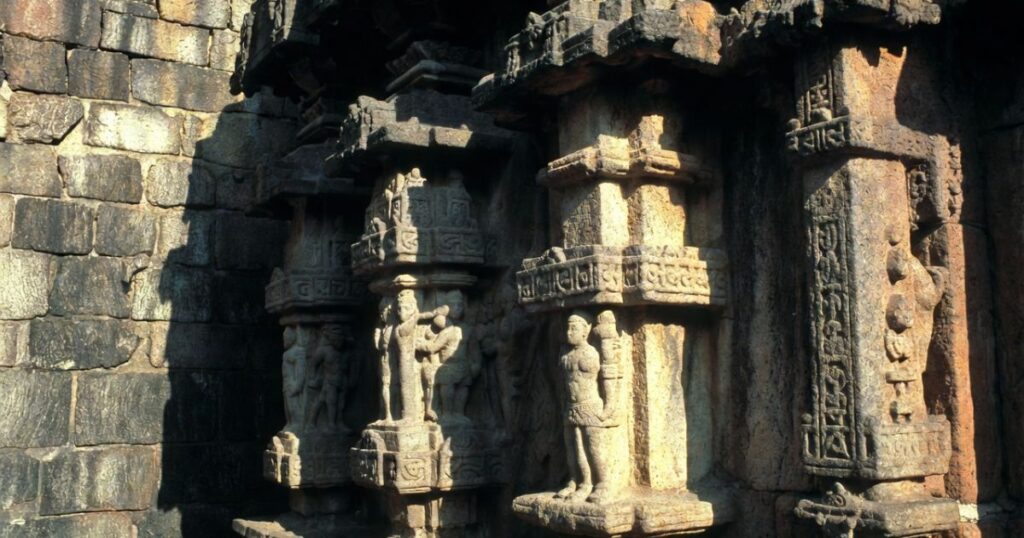
As Hindu temples grew larger and more elaborate, Sanskrit symbols were carved into every surface. Every doorway, pillar, and ceiling carried symbolic meaning. Visiting a Hindu temple was like walking through a living encyclopedia of sacred wisdom.
This is where the visual form of many symbols we recognize today was established. Artists developed precise guidelines for how each symbol should look, what colors to use, and what proportions to maintain. These were not just aesthetic choices — they were spiritual requirements.
The Spread Across Asia (600 – 1400 AD)
Along trade routes and with Buddhist missionaries, Sanskrit symbols spread far beyond India. They reached Tibet, China, Japan, Thailand, Indonesia, and Cambodia. The great temple complex of Angkor Wat in Cambodia — one of the largest religious monuments ever built — is covered in Sanskrit symbols and inscriptions.
Each culture adapted the symbols slightly, adding local meaning while preserving the core spiritual essence.
The Modern Revival (1800s – Present)
In the 19th century, Western scholars became fascinated with Sanskrit and Indian philosophy. This interest grew through the 20th century with the global spread of yoga, meditation, and mindfulness practices.
Today, Sanskrit symbols appear on millions of tattoos, jewelry pieces, and home decor items worldwide. They have become a global spiritual language.
Top 25+ Sanskrit Symbols and Their Meanings
Here is a complete guide to the most powerful and widely used Sanskrit symbols.
1. Om (Aum) — ॐ
What it looks like: A flowing, three-curved character with a semicircle and dot above it.
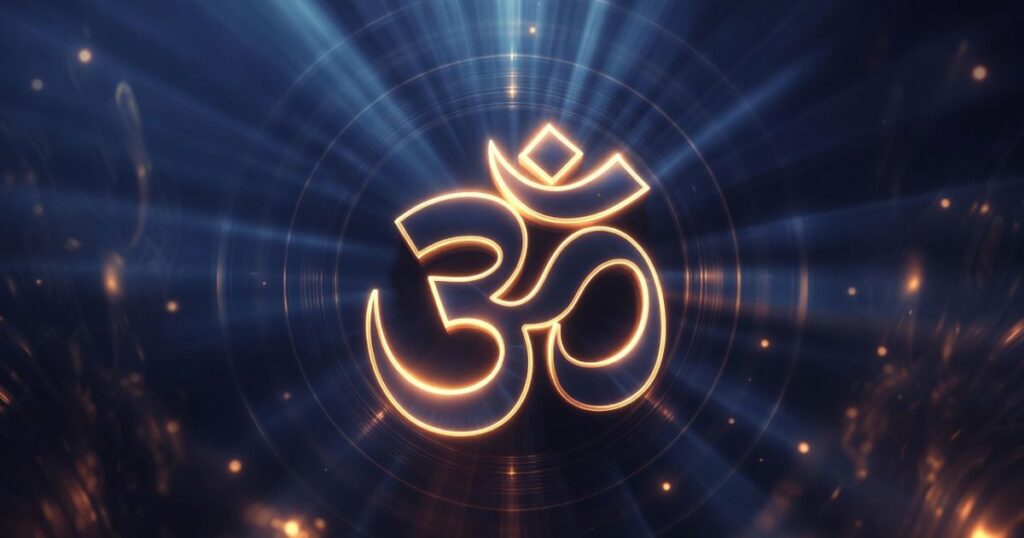
What it means: Om is the most sacred symbol in all of Sanskrit tradition. Ancient teachers described it as the original sound of the universe — the vibration from which everything was created.
The symbol has three parts, each with meaning:
- The lower curve (A) — represents the waking state, the world we see with open eyes
- The upper curve (U) — represents the dream state, the world of imagination and sleep
- The tail (M) — represents deep sleep, the quiet beneath all experience
- The semicircle above — represents maya (the veil of illusion that covers reality)
- The dot — represents the transcendent state, pure consciousness beyond all thought
Where it appears: Hindu worship, Buddhist meditation, yoga classes, tattoos, jewelry, and home shrines worldwide.
How to use it: Chanting “Om” (pronounced “Aum”) at the beginning and end of meditation is one of the most ancient practices in the world. Even 2–3 minutes of chanting Om creates a measurable shift in the nervous system, reducing stress and increasing calm.
2. The Lotus (Padma) — 🪷
What it looks like: A round flower with many layered petals opening upward from water.
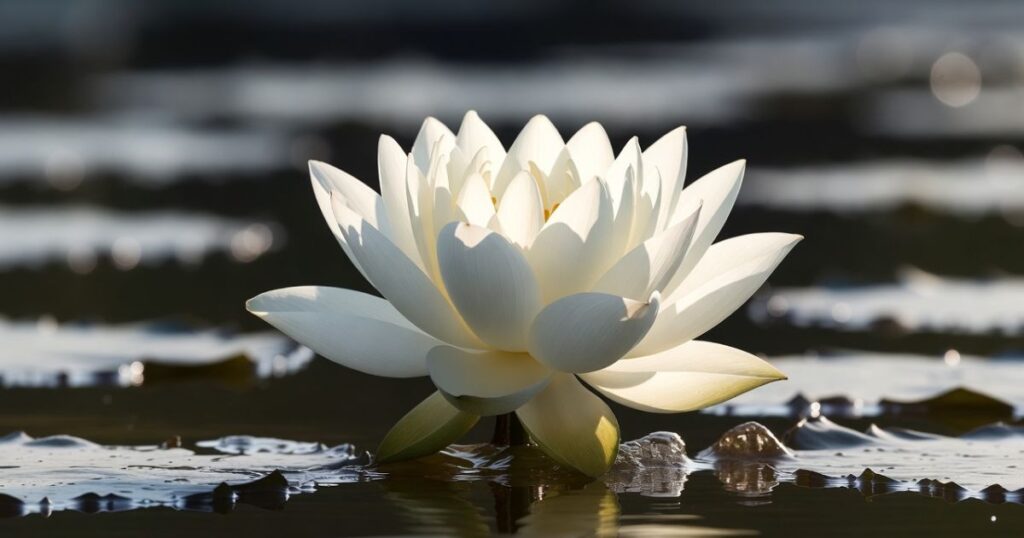
What it means: The lotus grows in muddy, murky water — but it rises clean and beautiful above the surface. This is why it became the perfect symbol for spiritual growth. No matter how difficult or “muddy” your life becomes, you can always rise and bloom.
Different colors carry different meanings:
- White lotus — purity and spiritual perfection
- Pink lotus — the highest spiritual achievement, associated with the Buddha
- Red lotus — love and compassion
- Blue lotus — wisdom and victory over ignorance
Where it appears: Nearly every major Hindu and Buddhist deity is shown sitting or standing on a lotus flower. It is also one of the most popular Sanskrit tattoo designs in the world.
3. Sri Yantra — 🔯
What it looks like: Nine interlocking triangles arranged around a central point, surrounded by lotus petals and square boundaries.
What it means: The Sri Yantra (also called Sri Chakra) is one of the most geometrically complex and spiritually powerful Sanskrit symbols ever created. It represents the goddess Tripura Sundari — the divine feminine energy that underlies all of creation.
The nine triangles represent:
- Four upward triangles — masculine energy (Shiva)
- Five downward triangles — feminine energy (Shakti)
- Together they create 43 smaller triangles — the entire spectrum of existence
What it does: The Sri Yantra is used to attract abundance, prosperity, clarity, and divine grace. Many spiritual practitioners meditate on it for focus and to align with universal energy.
4. The Swastika (Svastika) — 卐
What it looks like: A cross with four arms bent at right angles, turning clockwise.
What it means: In Sanskrit, “svastika” means “good fortune,” “well-being,” and “auspiciousness.” This symbol is 12,000 years old and appears in ancient cultures from India to Greece to Native America.
In Hindu, Buddhist, and Jain traditions, it remains a sacred symbol of prosperity and protection. It is seen on temple entrances, wedding invitations, and religious ceremonies across South and East Asia.
Important note: The Nazi appropriation of this symbol in the 20th century gave it a completely different and deeply harmful association in the Western world. The original Sanskrit symbol rotates clockwise (right-facing). The Nazi symbol was often left-facing and carried a completely different meaning. The original sacred meaning and the modern harmful association must never be confused.
5. The Seven Chakra Symbols — ☸️
What they look like: Seven circular symbols, each with lotus petals, Sanskrit letters, and geometric shapes inside.
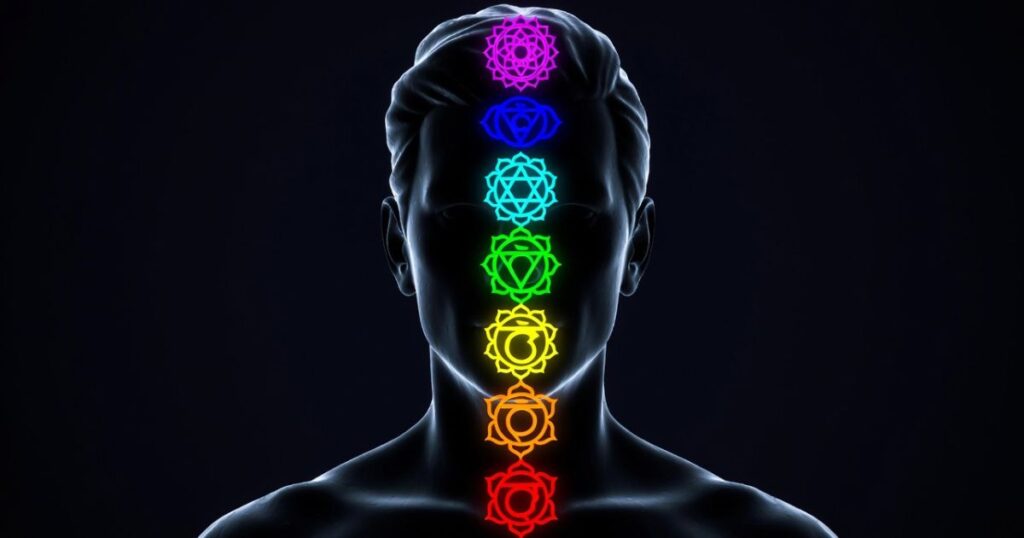
What they mean: Chakras are energy centers in the human body (the word “chakra” means “wheel” in Sanskrit). Each chakra controls a different area of physical and emotional health.
| Chakra | Sanskrit Name | Location | Color | Meaning |
| 1st | Muladhara | Base of spine | Red | Safety and survival |
| 2nd | Svadhisthana | Lower belly | Orange | Creativity and emotion |
| 3rd | Manipura | Solar plexus | Yellow | Personal power and confidence |
| 4th | Anahata | Heart | Green | Love and compassion |
| 5th | Vishuddha | Throat | Blue | Communication and truth |
| 6th | Ajna | Between eyebrows | Indigo | Intuition and wisdom |
| 7th | Sahasrara | Crown of head | Violet/White | Divine connection |
Chakra symbols appear in yoga, meditation, healing arts, and spiritual jewelry worldwide. Many people display all seven chakra symbols together as a reminder to balance every area of their life.
6. Mandala — 🌀
What it looks like: A circular, symmetrical geometric design with repeating patterns radiating from a central point.
What it means: The word “mandala” means “circle” in Sanskrit. It represents the universe, wholeness, and the cyclical nature of all life. No beginning, no end — everything connected.
Buddhist monks create elaborate sand mandalas — spending days or weeks on a single design — only to sweep it away when finished. This teaches non-attachment: the process matters more than the product.
In psychology: Swiss psychologist Carl Jung used mandalas in therapy. He believed drawing mandalas helped his patients connect with their deeper selves and find emotional healing.
In modern use: Mandala art therapy is now widely practiced worldwide as a tool for stress relief, focus, and self-expression.
7. Dharma Chakra (Wheel of Dharma) — ☸️
What it looks like: A circle with eight spokes radiating from a central hub.
What it means: “Dharma” means righteous living, duty, and cosmic law. The eight spokes represent the Buddha’s Eightfold Path — eight guidelines for living a wise and ethical life:
- Right understanding
- Right intention
- Right speech
- Right action
- Right livelihood
- Right effort
- Right mindfulness
- Right concentration
The Dharma Chakra is the national symbol of India and appears on the Indian flag. It is one of the oldest Sanskrit symbols still in active use in national government.
Read More: 90+ Hand Symbols & Their Meanings Fully Explained 2026
8. Trishula (Trident) — 🔱
What it looks like: A three-pronged fork on a long handle.
What it means: The trishula is the weapon held by the Hindu god Shiva — the destroyer and transformer. Its three prongs represent:
- Creation — the power to bring things into existence
- Preservation — the power to maintain and protect
- Destruction — the power to end things so new things can begin
The trishula teaches that all three forces — creating, maintaining, and ending — are equally sacred and necessary. Nothing in life stays the same. Change is divine.
9. Anahata (Heart Chakra Symbol) ❤️
What it looks like: A circle with 12 lotus petals, a six-pointed star inside (two interlocking triangles), and Sanskrit letters.
What it means: The Anahata is the fourth chakra, located at the heart. It governs love, compassion, kindness, and emotional healing. When your heart chakra is balanced, you give and receive love freely. When it is blocked, you feel lonely, bitter, or emotionally closed.
This symbol is widely used in yoga studios and healing spaces to encourage emotional openness and kindness.
10. Hamsa (Swan) — 🦢
What it looks like: A graceful swan in flight or resting on water.
What it means: In Sanskrit, “hamsa” means both “swan” and the sacred breath — “Ham” on the inhale, “Sa” on the exhale. The swan represents the highest self — the part of you that is pure, wise, and unaffected by the troubles of daily life.
Hindu teachers use the swan as a symbol of discrimination — the swan’s legendary ability to separate milk from water represents the spiritual skill of separating truth from illusion.
Note: This is different from the Middle Eastern Hamsa hand symbol. Both carry protective meaning, but they come from different traditions.
11. Gayatri Mantra Symbol
What it looks like: The written Sanskrit text of the Gayatri Mantra — 24 syllables arranged in three lines.
What it means: The Gayatri Mantra is considered the most powerful and sacred mantra in all of Vedic tradition. It is a prayer to the divine light of the sun to illuminate the mind. Ancient teachers said this mantra, when chanted correctly, protects the person who chants it.
Many people choose to tattoo the Gayatri Mantra as a symbol of divine protection and spiritual devotion.
12. Bindu (The Sacred Dot) — •
What it looks like: A simple dot, often placed in the center of other symbols.
What it means: “Bindu” means “point” or “drop” in Sanskrit. This tiny dot represents the moment before creation — the single point from which the entire universe expanded. It is the center of every yantra and the starting point of all consciousness.
The bindi worn on the forehead by Hindu women is derived from this sacred dot. It marks the location of the “third eye” — the seat of wisdom and spiritual insight.
13. Nataraj (Dancing Shiva) — 💃
What it looks like: A figure of Shiva dancing inside a ring of fire, one leg raised, multiple arms extended.
What it means: Nataraj literally means “King of Dance.” This symbol shows that the entire universe is Shiva’s cosmic dance — constantly moving, constantly changing, constantly creating and destroying.
The ring of fire represents the cycle of existence. The demon under Shiva’s foot represents ignorance being overcome. The raised hand gestures offer both protection and the gift of liberation.
This is one of the most recognized Sanskrit symbols in world art and is displayed in famous museums including CERN (the European physics laboratory) — where scientists see the cosmic dance as a metaphor for subatomic energy.
14. Kalachakra
What it looks like: An elaborate circular design with many layers of Sanskrit letters, geometric shapes, and symbolic figures.
What it means: “Kalachakra” means “Wheel of Time.” It represents the relationship between the cosmos, time, and the individual human being. This is one of the most complex and advanced symbols in Tibetan Buddhist tradition.
The Kalachakra ceremony, led by the Dalai Lama, is one of the largest Buddhist gatherings in the world. The symbol represents the complete path to enlightenment.
15. Rudraksha Symbol
What it looks like: A round seed with natural ridges, often shown in a string of 108 beads.
What it means: Rudraksha literally means “eye of Shiva.” According to Hindu legend, when Shiva opened his eyes after deep meditation, tears fell. Where the tears landed, Rudraksha trees grew.
The beads from this tree are considered sacred and protective. The number 108 is itself a powerful Sanskrit number — it appears in 108 Upanishads, 108 names of major deities, and 108 sacred sites in India.
16. Ganesha Symbol — 🐘
What it looks like: The head and body of the elephant-headed deity Ganesha, often shown with four arms holding symbolic objects.
What it means: Ganesha is the “Remover of Obstacles” — the deity invoked before any new beginning, journey, or project. His elephant head represents wisdom and memory. His large ears represent the importance of listening deeply. His pot belly shows contentment.
The Ganesha symbol is placed at entrances of homes and businesses to invite success and clear away difficulties.
17. Shri (श्री) — Sanskrit Symbol for Divine Grace
What it looks like: The Sanskrit letters “Shri” written in Devanagari script.
What it means: “Shri” is a Sanskrit word of respect and sacredness. It is added before the names of deities, holy texts, and respected people. It means “divine grace,” “abundance,” and “auspiciousness.”
Many Sanskrit symbols begin with or contain the Shri symbol as a way of dedicating the symbol to the divine.
18. Ahimsa Symbol — ✋
What it looks like: An open hand with a wheel in the palm, often with the word “ahimsa” written inside.
What it means: “Ahimsa” means non-violence and non-harm in Sanskrit. It is the central ethical teaching of Jainism and one of the key principles in Buddhism and Hinduism.
Mahatma Gandhi built his entire philosophy of peaceful resistance on ahimsa. This symbol says: I will not harm any living being with my thoughts, words, or actions.
19. Om Namah Shivaya — Sacred Mantra Symbol
What it looks like: The Sanskrit text of the five-syllable mantra: Na-Ma-Shi-Va-Ya.
What it means: This is one of the most widely chanted Hindu mantras. It means “I honor the divine within myself.” Each syllable corresponds to one of the five elements: earth, water, fire, air, and space.
Many people tattoo this mantra as a symbol of their spiritual devotion and connection to Shiva.
20. The Endless Knot (Shrivatsa)
What it looks like: An interlocking, looping design with no visible beginning or end.
What it means: This symbol, common in both Hindu and Buddhist traditions, represents the endless, interconnected nature of everything in the universe. It shows that cause and effect, wisdom and compassion, religion and everyday life — all are inseparably linked.
Sanskrit Symbols in Different Cultures
Sanskrit symbols have traveled far beyond India’s borders. Here is how different cultures around the world have embraced them:
| Culture / Region | How They Use Sanskrit Symbols |
| India | Daily worship, temple architecture, festivals, jewelry, rituals |
| Tibet | Buddhist meditation, prayer wheels, thangka paintings, mandalas |
| Japan | Buddhist temples, martial arts traditions, spiritual tattoos (Kanji influenced by Sanskrit) |
| Thailand & SE Asia | Temple carvings, sacred tattoos (Sak Yant), royal ceremonies |
| Cambodia | Angkor Wat and ancient temples covered in Sanskrit inscriptions |
| China | Buddhist monasteries adopted Om, lotus, and dharma wheel |
| Western World | Yoga studios, mindfulness culture, tattoos, jewelry, home decor |
| South Korea | Buddhist tradition brought many Sanskrit symbols in temple art |
The Western Yoga Connection: The global spread of yoga in the 20th and 21st centuries has been the single biggest factor in making Sanskrit symbols known worldwide. When millions of people started practicing yoga, they encountered Om, chakras, lotus, and mandala symbols in studios, books, and online communities.
Today, Sanskrit symbols are arguably the most globally recognized spiritual symbol system outside of the Abrahamic religions (Christianity, Islam, Judaism).
Sanskrit Symbols in Dreams — What Does It Mean?
Seeing Sanskrit symbols in your dreams can be deeply meaningful. Here is a guide to common dream appearances:
Dreaming of the Om symbol: Your mind is searching for peace and inner stillness. This dream often appears when your waking life feels chaotic or overwhelming. It is a message: slow down. Return to your center.
Dreaming of a lotus flower: Something beautiful is growing in your life — even if conditions around you feel difficult. This is a very positive dream. New opportunities or emotional healing are on the way.
Dreaming of chakra symbols: One or more of your life areas needs attention. Notice which chakra appears — heart chakra suggests emotional issues, throat chakra suggests difficulty expressing yourself, root chakra suggests financial or safety worries.
Dreaming of a mandala: You are in a process of deep self-discovery. Your mind is trying to make sense of complex experiences and find wholeness. This is a healing dream.
Dreaming of the Sri Yantra: Your subconscious is activating your potential for abundance and success. Pay attention to what feels blocked in your waking life — this dream says the energy is ready to flow.
Dreaming of Sanskrit text you cannot read: You have access to deep wisdom inside yourself, but something is blocking you from reaching it. Consider meditation, journaling, or talking to someone you trust.
Dreaming of Ganesha: A new beginning is coming. Obstacles that have held you back are about to be cleared. This is one of the most auspicious (favorable/lucky) symbols to see in a dream.
Dreaming of fire and Sanskrit symbols together: A purification process is happening inside you. Old patterns, beliefs, or emotions are burning away to make room for something new and better.
Spiritual Meaning of Sanskrit Symbols
Sanskrit symbols operate on a deeper level than most symbols from other traditions. Here is why.
Sound as the Foundation
In Sanskrit philosophy, the universe is made of sound. The ancient teachers said the world began with a vibration — “Om” — and everything that exists is made of that original sound moving at different frequencies.
This means that Sanskrit symbols are not just visual. Each one is linked to a specific sound (a mantra) and a specific vibration. When you look at, meditate on, or chant a Sanskrit symbol, you are connecting with a living frequency that has real effects on your mind and body.
The Science of Vibration
Modern science has begun to explore this idea. Research shows that chanting Om creates specific brainwave patterns associated with deep relaxation. The sound vibrations of Sanskrit mantras activate different parts of the brain. Hospitals in India have studied the effects of mantra chanting on stress, blood pressure, and immune function.
Yantras as Spiritual Machines
Yantras (sacred geometric Sanskrit symbols) are described in ancient texts as “machines for the mind.” When you meditate on a yantra, it gives your busy mind something to focus on. As attention steadies, deeper states of awareness become accessible.
The Sri Yantra, for example, contains 43 triangles arranged in precise mathematical proportions. Meditation on this form is said to bring the mind into alignment with universal order.
The Third Eye Connection
Many Sanskrit symbols are connected to the Ajna chakra — the “third eye” — located between the eyebrows. This is the seat of intuition, wisdom, and spiritual vision in Sanskrit tradition.
The Bindu dot, Om symbol, and many mantra symbols are placed or visualized at the third eye during meditation. This practice is said to open higher perception and deeper spiritual awareness.
The Guru Lineage
In Sanskrit tradition, the power of a symbol is also transmitted through a living lineage — from teacher to student, across generations. A mantra or symbol received from a qualified teacher carries more power than one simply read in a book. This is why traditional spiritual initiations (diksha) involve receiving a symbol or mantra personally.
Sanskrit Symbols — Common Myths vs Real Facts
There is a lot of confusion about Sanskrit symbols. Here is the truth:
| Myth | Real Fact |
| “Sanskrit symbols are only for Hindus” | False. Buddhist, Jain, and secular people worldwide use and benefit from them. |
| “The swastika is always a symbol of hate” | False. In its original form, it is a 12,000-year-old symbol of good fortune. The Nazi appropriation gave it a different meaning in modern Western context. |
| “You need to be Indian to use these symbols” | False. Many teachers from Sanskrit traditions actively teach these symbols to people of all backgrounds. |
| “Om is just a sound” | False. In Sanskrit philosophy, Om is the fundamental vibration underlying all of creation. |
| “Sanskrit tattoos are just trendy” | False for many people. Millions choose Sanskrit tattoos because of deep personal spiritual meaning. |
| “Mandala is a Buddhist symbol only” | False. Mandalas appear in Hindu, Buddhist, Jain, and even Christian traditions (rose windows in cathedrals follow mandala-like principles). |
| “These symbols are magic spells” | False. They are tools for focus, intention, and spiritual practice — not superstition. |
| “You need Sanskrit knowledge to use these symbols” | False. Understanding the basic meaning is enough to use most symbols meaningfully in daily life. |
How to Use Sanskrit Symbols in Your Life
You do not need to be a Sanskrit scholar to bring these symbols into your life. Here are simple, meaningful ways to start.
1. Begin With Om The simplest entry point is the Om symbol. Place it somewhere you see every morning — your phone wallpaper, a pendant, or a wall print. When you see it, take one deep breath and remember: underneath all the noise and rush, there is a quiet place inside you.
2. Find Your Chakra Read about the seven chakras and notice which one resonates with your current challenges. Then focus on that chakra’s symbol. If your heart feels closed — focus on Anahata. If you struggle to speak your truth — focus on Vishuddha.
3. Meditate With a Yantra Print or draw a Sri Yantra. Sit quietly and look at the center point (bindu) for 5–10 minutes. Do not try to analyze it — just gaze softly. Many people report a natural deepening of calm and clarity.
4. Choose a Meaningful Tattoo If you are considering a Sanskrit tattoo, take your time. Research the symbol deeply before committing. Make sure the meaning connects with your real values and life story — not just the visual appearance. Popular choices include Om, the lotus, Ganesha, and short mantras like “Om Namah Shivaya” or “Aham Brahmasmi” (I am the universe).
5. Creating a Mandala Mandala drawing or coloring is a recognized form of art therapy. You do not need to be artistic. Simply drawing circles and adding patterns is enough. The process of creating a mandala quiets the mind and builds focus.
6. Decorate Your Space With Intention Place Sanskrit symbol art in your home or workspace. A Sri Yantra in your home office attracts abundance. A lotus near your bed supports peaceful sleep. Ganesha at your front door invites good beginnings.
7. Chant a Simple Mantra Choose one Sanskrit mantra and repeat it 108 times (one round of mala beads). The most accessible for beginners: “Om Shanti Shanti Shanti” — meaning “peace in body, mind, and spirit.”
8. Learn Before You Use Before using any Sanskrit symbol publicly — especially in a tattoo or prominent artwork — research its complete meaning. Some symbols carry specific religious obligations when used in certain ways. Respectful understanding honors the tradition and deepens your personal connection.
FAQ — Sanskrit Symbols
Q1: What are Sanskrit symbols?
Sanskrit symbols are sacred visual signs and geometric forms from the Sanskrit spiritual tradition. They include letters, mantras, yantras, and images that carry deep philosophical and spiritual meaning. Each symbol is connected to specific sounds, energies, and qualities in Hindu, Buddhist, and Jain spiritual teachings.
Q2: What is “I love you” in Sanskrit?
The Sanskrit phrase for “I love you” is “Aham Tvam Snehayami” or more poetically “Tvam Mam Priyasi” (you are dear to me). The concept of love in Sanskrit is also expressed through the word “Prema” — which means divine, unconditional love that extends to all beings. Many people tattoo Prema as a Sanskrit love symbol.
Q3: What is 100 in Sanskrit?
The number 100 in Sanskrit is “Shata” (शत). Sanskrit has a complete numerical system. The number 108 is especially sacred — it appears in 108 Upanishads, 108 names of major deities, and Mala beads contain 108 beads for counting mantras.
Q4: What is the most beautiful Sanskrit word?
Many people consider “Svaha” (so be it), “Santosha” (contentment), “Ananda” (bliss), or “Namaste” (the divine in me recognizes the divine in you) to be the most beautiful Sanskrit words — both in sound and meaning. “Saudade” is actually Portuguese — the Sanskrit equivalent might be “Viraha” — the beautiful, aching feeling of longing for someone you love.
Q5: What is the most powerful Sanskrit symbol?
The Om (Aum) symbol — ॐ — is considered the most powerful Sanskrit symbol. Ancient teachers described it as the seed sound from which all of creation emerged. Even today, research shows that chanting Om produces measurable effects on the brain and nervous system, promoting deep relaxation and heightened awareness.
Q6: Can anyone use Sanskrit symbols?
Yes. While Sanskrit symbols have deep roots in Indian spiritual traditions, many teachers from those traditions actively invite people of all backgrounds to use and learn from these symbols. The main requests from tradition are: understand the meaning before using it, use it respectfully, and do not misrepresent its origins or meaning.
Q7: Are Sanskrit symbols for tattoos a good idea?
Sanskrit symbols make deeply meaningful tattoos when chosen thoughtfully. Research the symbol completely before tattooing. Make sure the Sanskrit is written correctly — many tattoos contain errors because the design was copied without checking. Consider consulting a Sanskrit scholar or trusted spiritual teacher for guidance on important choices.
Q8: What does the lotus Sanskrit symbol mean?
The lotus (Padma in Sanskrit) means purity, spiritual growth, and the ability to rise above difficult circumstances. Just as the lotus flower grows in muddy water but blooms clean and beautiful above the surface, human beings can go through hardship and still achieve spiritual beauty and clarity. It is one of the most universally loved Sanskrit symbols in the world.
Conclusion
Sanskrit symbols are living wisdom encoded in visual form.
They have survived thousands of years because they speak to something true inside every human being — the desire for peace, connection, love, and understanding. From ancient temples to modern tattoos, these symbols keep finding new hearts to inspire.
Whether you choose Om for your meditation practice, the lotus for your tattoo, or the Sri Yantra for your home — each Sanskrit symbol carries a gift. That gift is a reminder of the depth and beauty that lives inside you.
Now you have the knowledge to use Sanskrit symbols wisely, respectfully, and meaningfully.
Want to go deeper? Read our guides on chakra meanings, Hindu symbols, spiritual symbols from around the world, and the secrets of ancient sacred geometry.

Muhammad Shoaib is a passionate content writer and symbolism researcher at TrendyMegzine.com, where he explores the hidden meanings behind symbols, spiritual signs, ancient traditions, dream interpretations, and cultural symbolism.