93+ Taylor Swift Symbols — Hidden Meanings, Secret Codes and the Emotional Stories Behind Every Era
There is a moment every Taylor Swift fan knows.
You are listening to a song you have heard a hundred times. And then something shifts. You catch a word, an image, a color — and suddenly the whole thing opens up like a door you did not know was there.
That is what Taylor Swift symbols do.
They are not decorations placed over music to make it look interesting. They are the music’s second language — a visual and thematic vocabulary built album by album, era by era, that rewards the people paying attention with a level of emotional depth that most pop music never reaches.
This guide decodes the full symbolic universe of Taylor Swift’s work. What each symbol means, where it comes from historically, what it reveals psychologically, and why millions of people around the world feel that her symbols are — somehow — about their own lives too.
What Are Taylor Swift Symbols?
Taylor Swift symbols are recurring visual, lyrical, and thematic motifs — images, colors, objects, and numbers that appear across her albums, performances, and public persona to create layers of meaning beyond the surface.
They function as a private language between artist and audience.
Most pop artists have a logo. Taylor Swift built a mythology.
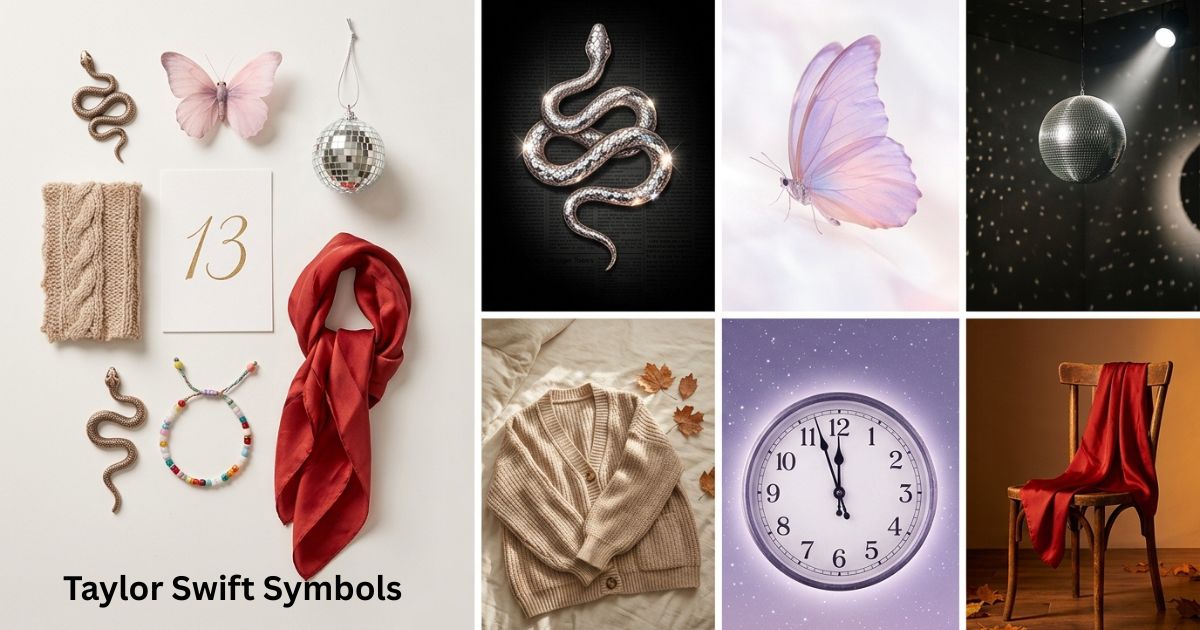
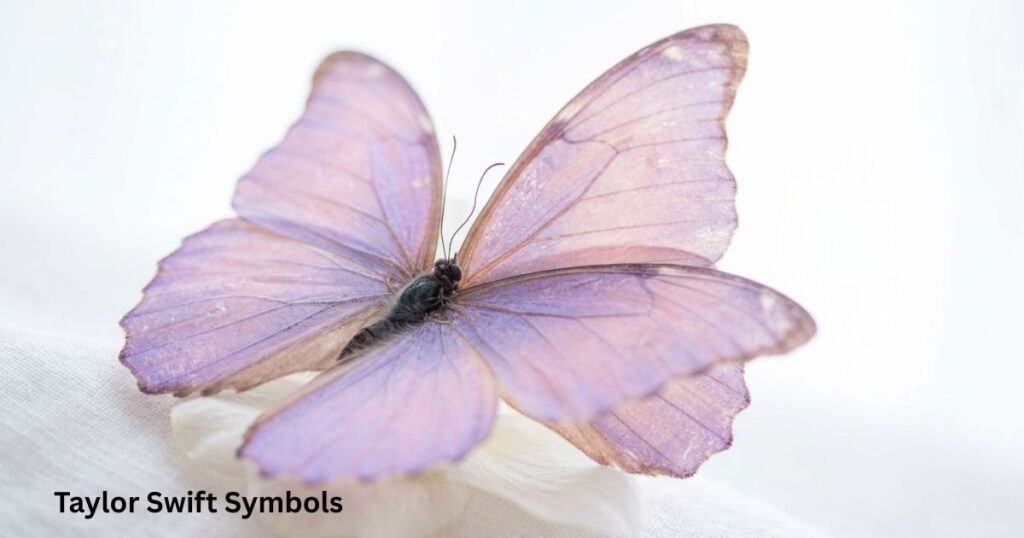
Instead of a single static brand mark, she created an evolving system of symbols tied to emotional chapters in her life. The snake in Reputation era. The butterfly in Lover. The mirrorball in Folklore era. The midnight clock in Midnights. Each one is not just visually distinctive — each one carries a specific emotional payload that connects to both her story and, crucially, to the experiences of the people listening.
Historically, artists, rulers, and spiritual traditions have always used symbols to compress complex truths into memorable images. Taylor Swift adapted that ancient human instinct for the age of streaming, social media, and stadium tours.
The result is a symbolic language that operates at multiple levels simultaneously — personal, cultural, psychological, and even spiritual.
The Psychology Behind Taylor Swift’s Symbolic Language
Understanding why Taylor Swift’s symbols work requires a brief conversation with psychology.
Carl Jung described the concept of shadow integration — the psychological process of accepting and absorbing the darker aspects of one’s own narrative rather than fleeing from them. When the public began calling Taylor Swift a snake during a period of intense media criticism, she did not retreat. She returned with the Reputation era — and she made the snake her symbol. She wore it on stage. She began her concert in a snake cage.
That is textbook shadow integration. The thing that was intended as a weapon became a crown.
This pattern runs throughout her symbolic language. She does not avoid painful associations — she consumes them, transforms them, and hands them back to her audience as art.
The mirrorball from Folklore is another psychologically precise symbol. A mirrorball has no light of its own. It reflects everyone else’s light back at them. For people who have spent years performing for others’ approval — shaping themselves to fit each room they enter — that image lands with uncomfortable accuracy.
It is this specificity of symbolic choice that elevates her work beyond pop music into something closer to modern mythology. Her symbols do not just represent her experiences. They hold a mirror to universal human experiences — heartbreak, reinvention, self-betrayal, and recovery.
Taylor Swift Symbols Era by Era — Complete Breakdown
Fearless Era
Visual language: Gold sparkles, fairy tale dresses, hearts, youth. Core symbol: The golden light — hope, first love, the uncomplicated belief that everything will work out. Emotional theme: Fearlessness as a youthful state — before the world teaches you to be afraid.
Speak Now Era
Visual language: Purple tones, ballgowns, castles, handwritten lyrics. Core symbol: The voice — the courage to say what others will not. To speak into silence. Emotional theme: Standing up for yourself in situations designed to silence you.
Red Era
Visual language: Color red, autumn leaves, scarf, red lips, fall imagery. Core symbol: The scarf — a specific object that carries the smell and feeling of someone who is gone. Objects as emotional storage. The things we cannot throw away. Emotional theme: Intense love that destroys as much as it creates. The specific color of heartbreak when it still feels like passion.
1989 Era
Visual language: Polaroid photos, seagulls, city skylines, pastel aesthetics. Core symbol: The Polaroid photograph — a captured moment that develops slowly, that you hold in your hand, that fades over time. Emotional theme: The freedom of reinvention. The decision to become someone new, unapologetically.
Reputation Era
Visual language: Black, metallic snakes, newspaper print, lightning. Core symbol: The snake — reclaimed enemy, symbolic reinvention of public humiliation into power. Emotional theme: What happens when you stop performing for people who have already decided who you are. Shedding the skin of the public narrative and emerging changed underneath.
Lover Era
Visual language: Pastels, butterflies, rainbows, hearts, carnival imagery. Core symbol: The butterfly — transformation after darkness. Emotional openness after a period of armoring. Emotional theme: Vulnerability as strength. The courage to be soft after being hard for so long.
Folklore Era
Visual language: Forest, cabin, mist, plaid, the cardigan, moonlight. Core symbol: The mirrorball — fragile, reflective, brilliant only when illuminated by others. Emotional theme: The introspective quiet that arrives when the noise stops. The self-examination that only happens in solitude.
Evermore Era
Visual language: Earthy tones, bare trees, winter, plaid, autumnal decay. Core symbol: The bare tree in winter — stripped of everything, still rooted, waiting for what comes next. Emotional theme: Grief that does not resolve neatly. Acceptance without resolution. Continuing anyway.
Midnights Era
Visual language: Stars, clocks at midnight, lavender haze, glitter, dark sky. Core symbol: The clock striking midnight — the specific psychological state of 3 AM, when defenses drop and truth surfaces. Emotional theme: The thoughts that only arrive in darkness. Self-examination that cannot happen in daylight.
The 10 Most Iconic Taylor Swift Symbols Explained
1. The Snake
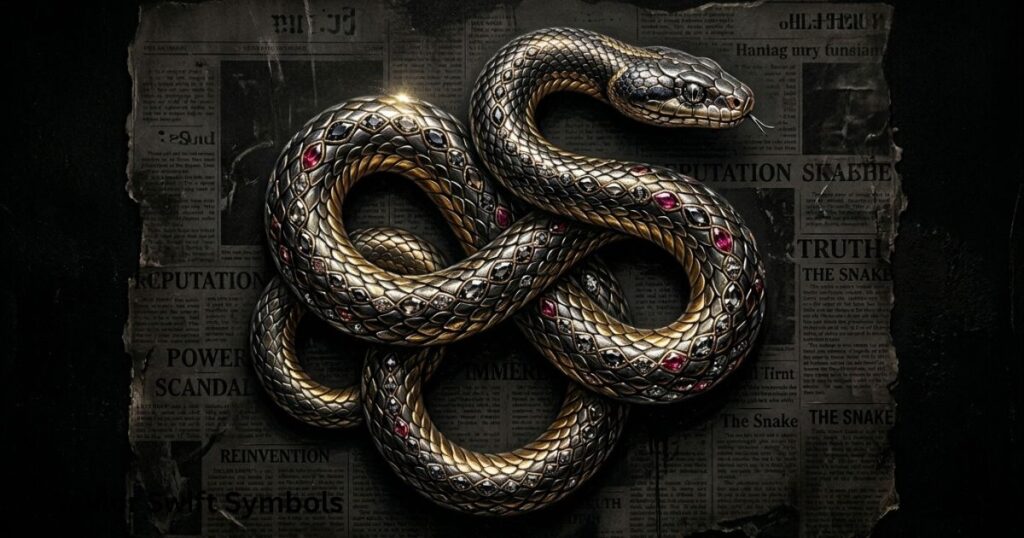
Visual: Coiled metallic serpent, often jeweled. Meaning: Symbolic reinvention — reclaiming a narrative others tried to use against you. Cultural roots: In Greek mythology, serpents represent both wisdom (Athena) and healing (Asclepius). In biblical tradition, the serpent represents both temptation and the knowledge that comes from it. In Eastern spiritual traditions, the snake shedding its skin is the most direct symbol of transformation available in the natural world. Modern use: Tattoo choice for people who have survived public humiliation or personal betrayal and emerged changed.
2. The Butterfly
Visual: Soft pastel wings, often in lavender and pink. Meaning: Transformation, emotional reopening, vulnerability after armor. Cultural roots: In Japanese tradition, the butterfly represents the soul. In Victorian mourning culture, it represented the spirit’s freedom from the physical body.
Across most world traditions, it is the most direct symbol of metamorphosis. Modern use: Chosen in tattoos and jewelry to mark personal transformation — particularly after depression, recovery, or relationship change.
3. The Mirrorball
Visual: A glittering disco ball suspended in light. Meaning: Reflecting everyone else’s expectations. Brilliant but dependent on external light to shine. Psychological depth:

The mirrorball is one of her most psychologically complex symbols because it describes a specific internal state most people recognize but rarely name — the exhaustion of performing constant adaptability. Modern use: Referenced by fans as a symbol for people-pleasing, anxiety, and the recovery of authentic self.
4. The Cardigan
Visual: An oversized knitted sweater. Meaning: Nostalgia, comfort, the physical object that holds the memory of a person. Cultural roots: In literature, clothing has long been used as a symbol of identity and memory.

The specific choice of a cardigan — soft, enveloping, worn — suggests a love that felt safe before it felt lost. Modern use: The cardigan became a literal fashion item with symbolic meaning for an entire generation of fans.
5. The Number 13
Visual: The numeral 13, often written on her hand before performances. Meaning: Personal luck, identity, defiance of superstition. Cultural context: In most Western traditions, 13 is considered unlucky. Taylor Swift made it her signature number, her birthday being December 13, and famously writing it on her hand before shows. The number 13 is perhaps her most personal symbol — a private talisman made public.
6. The Clock at Midnight
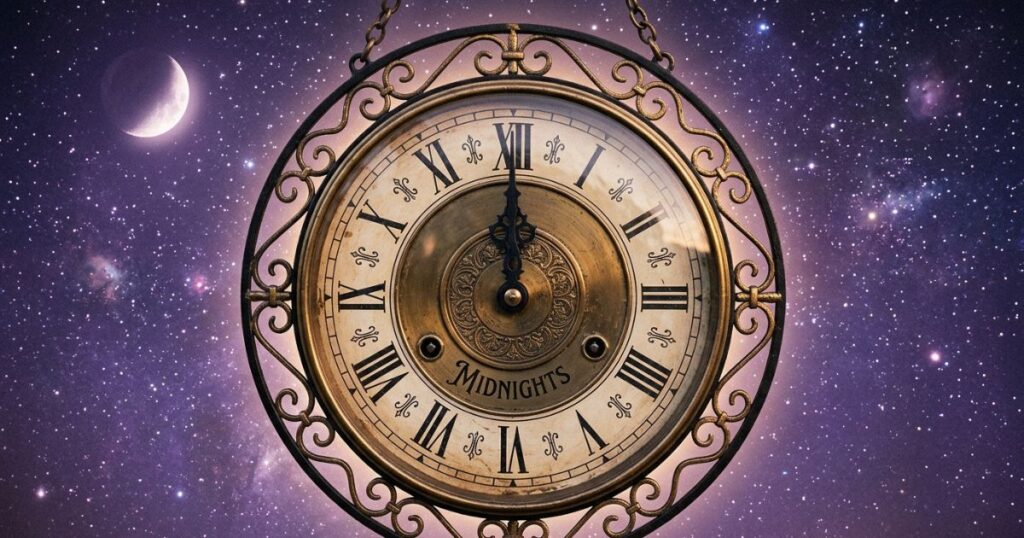
Visual: A vintage clock face showing 12:00. Meaning: The psychological threshold of night — when performance stops and truth begins. Cultural roots: Midnight holds symbolic weight across cultures. In fairy tale tradition (Cinderella), midnight ends the magic. In spiritual traditions, it is the hour between days — a liminal threshold. Modern use: Referenced by fans experiencing late-night anxiety, intrusive thoughts, and the specific vulnerability of sleeplessness.
7. The Scarf (Red Scarf)
Visual: A red or burgundy scarf. Meaning: The specific object that carries the sensory memory of someone lost. The thing you cannot return and they cannot forget. Cultural roots: Objects as emotional containers appear across literature from Proust’s madeleine to Hamlet’s father’s portrait. Modern use: Fans gift red scarves to each other at concerts as symbols of shared heartbreak and emotional recognition.
8. The Color Red
Visual: Bold crimson used across album art, costumes, and visuals. Meaning: Emotional extremes — love so intense it contains its own destruction. Cultural roots: Red carries the widest symbolic range of any color across world cultures — love and danger in equal measure in Western tradition, luck and celebration in Chinese culture, sacrifice in Christian symbolism. Modern use: The color red has become cultural shorthand for a specific intensity of romantic feeling — dangerous, consuming, unforgettable.
9. The Friendship Bracelet
Visual: Handmade beaded bracelet. Meaning: Community, the tangible exchange of belonging. Origin: The friendship bracelet tradition at the Eras Tour — fans making and trading bracelets before concerts — transformed a personal symbol into a collective ritual. Modern use: A single friendship bracelet now carries the weight of an entire community’s shared experience.
10. The Easter Egg
Visual: Not a single visual — rather, a systematic pattern of hidden clues embedded in lyrics, visuals, and public appearances. Meaning: The relationship between artist and audience as an active collaboration. The invitation to look closer. The reward for paying attention. Cultural significance: The Easter egg tradition in her work transformed passive listening into active participation — turning fans from audience into codebreakers.
Taylor Swift Symbols Across Cultures and History
The staying power of Taylor Swift symbols comes partly from the fact that they tap into symbolic traditions that long predate her.
The snake she used in the Reputation era echoes serpent symbolism found in Greek mythology, Hindu iconography, Norse legend, and biblical narrative. Every culture that has observed a snake shedding its skin has understood it as a symbol of transformation. She did not invent the association — she activated it.
The butterfly of Lover reflects Japanese and Victorian traditions where the butterfly represented the soul in transition — moving between states of being with effortless beauty.
The midnight clock of Midnights connects to a symbolic tradition found from Cinderella to Shakespeare to Gothic literature — the threshold hour when ordinary rules suspend and deeper truths surface.
Victorian England offers another parallel: in the tradition of floriography, flowers carried hidden emotional messages that only those who knew the code could decode. A bouquet was a secret letter. Taylor Swift’s lyrics function identically — songs as symbolic bouquets, their full meaning available only to those paying close enough attention.
Read More: 41+ Puerto Rican Symbols That Reveal the Island’s True Soul
Taylor Swift Symbols in Fan Culture and the Eras Tour
Something extraordinary happened when the Eras Tour began.
The symbols stopped belonging only to the artist and became communal property.
Fans arrived at concerts wearing the colors of specific eras — gold for Fearless, black for Reputation, pastel for Lover, plaid for Folklore. Without a single instruction, thousands of people self-organized into a living visual representation of the symbolic language they had been learning for years.
The friendship bracelet tradition became the most tangible expression of this. Fans spent hours making bracelets before each show — not to keep, but to trade with strangers. In the trading of a bracelet, two people who had never met exchanged a physical symbol of everything the music had meant to them.
That is not fandom. That is ritual.
It mirrors the function of symbols in ancient culture — objects exchanged between people as proof of shared belief, shared identity, shared experience.
Positive vs Shadow Meanings — The Full Truth
| Symbol | Light Meaning | Shadow Meaning |
| Snake | Reinvention, reclaimed power | Betrayal, danger, public humiliation |
| Butterfly | Transformation, freedom | Fragility, impermanence |
| Mirrorball | Brilliance, connection | People-pleasing, loss of self |
| Color Red | Passionate love | Consuming obsession, destruction |
| Cardigan | Comfort, warm memory | Clinging to what is already gone |
| Clock at Midnight | Honest self-reflection | Anxiety, sleeplessness, intrusive thoughts |
| Number 13 | Personal luck, defiance | Superstition, the fear that luck will run out |
| Friendship Bracelet | Community, belonging | The gap between connection and true intimacy |
The duality in each symbol is not a flaw in the symbolic system. It is the system. Every symbol holds both possibilities because every human experience holds both. The same love that warms also burns. The same reinvention that frees also leaves behind a version of yourself.
Taylor Swift Symbols in Dreams
When Taylor Swift symbols appear in dreams, they often carry psychological weight beyond their surface association.
Dreaming of a snake frequently signals transformation — the psyche’s recognition that something in the dreamer’s life is ready to be shed. It is worth noting whether the snake in the dream feels threatening or powerful. The answer reveals whether the transformation feels dangerous or liberating.
Dreaming of a butterfly typically indicates a transition in progress — the dreamer is in the middle of changing, not at the end of it.
Dreaming of a mirrorball may reflect a period of excessive self-monitoring or social anxiety — the psyche showing you the exhaustion of performing for approval.
Dreaming of midnight or a clock striking twelve frequently surfaces during periods of unresolved emotional processing — the symbolic threshold asking: what are you not letting yourself think about in daylight?
FAQ — Taylor Swift Symbols
What is the most famous Taylor Swift symbol?
The snake from the Reputation era is widely considered the most iconic Taylor Swift symbol. It represents a dramatic public reinvention — the transformation of public criticism into personal power.
Why does Taylor Swift use so many symbols?
She uses them as a layered storytelling system — symbols divide her career into distinct emotional eras, reward attentive fans with deeper meaning, and connect her personal experiences to universal human themes.
What does the mirrorball symbolize in Taylor Swift’s work?
The mirrorball represents the experience of reflecting everyone else’s expectations while having no steady light of your own. Many fans interpret it as a symbol of people-pleasing and the exhaustion of performing constant adaptability for social approval.
What is the significance of the number 13 in Taylor Swift’s symbolism?
The number 13 is her personal lucky number, rooted in her December 13 birthday. She famously wrote it on her hand before performances. It represents defiance of superstition and personal identity — the private belief that what others call unlucky can be the source of your own power.
What does the snake symbol mean in Taylor Swift’s Reputation era?
The snake represented symbolic reinvention — the act of taking an insult and wearing it as armor. In ancient traditions, the serpent represents transformation through shedding. She activated that meaning by making it the visual centerpiece of her most confrontational era.
What do the friendship bracelets at the Eras Tour symbolize?
The friendship bracelet tradition represents communal belonging — the physical exchange of a handmade object between strangers as proof of shared experience, shared love for the music, and shared identity as part of something larger than themselves.
How do Taylor Swift’s symbols connect to ancient cultural traditions?
Her symbols tap into symbolic traditions found across world cultures and centuries — the snake’s transformation in Greek and Hindu mythology, the butterfly as the soul in Japanese tradition, the midnight threshold from fairy tale and Gothic literature, and the coded message tradition of Victorian floriography.
Are Taylor Swift’s symbols planned in advance?
Many appear carefully constructed within album concepts, with visual, lyrical, and promotional elements all reinforcing the same symbolic language. The Easter egg tradition confirms intentionality — hidden details require deliberate placement.
Taylor Swift Symbols Are Modern Mythology
What Taylor Swift built with her symbolic language is not simply a branding system.
It is a mythology.
Mythology — in its original function — was a system of symbolic stories that helped communities process fear, loss, transformation, and hope. It gave shape to experiences too large for ordinary language. It said: your suffering has a name, your transformation has a shape, your survival has a story.
Taylor Swift did that. In stadiums. On streaming platforms. Through snakes and butterflies and friendship bracelets and midnight clocks.

Muhammad Shoaib is a passionate content writer and symbolism researcher at TrendyMegzine.com, where he explores the hidden meanings behind symbols, spiritual signs, ancient traditions, dream interpretations, and cultural symbolism.