80+ Best Sleep Token Symbols | Hidden Meanings, Sacred Geometry and the Dark Poetry Behind the Mask
Some symbols you look at. Others look back.
Sleep Token symbols belong to the second category. They sit at the intersection of ancient ritual and modern grief, of sacred text and tattooed skin, of music that sounds like it was composed somewhere between a cathedral and a wound. From the moment you encounter them — on an album cover, on a stage backdrop, on the forearm of a stranger on the subway — something activates inside you that you cannot quite name.
That feeling is not accidental. It is the whole point.
This guide decodes the complete visual language of Sleep Token: the sigil, the runic alphabet, the cipher that fans have spent years translating, the album-specific symbols from Sundowning to Take Me Back to Eden, and the psychological machinery that makes it all work. By the end, you will understand not just what these symbols mean — but why they hit the way they do.
What Are Sleep Token Symbols?
Sleep Token symbols are the system of sigils, runes, ciphers, and visual emblems created by and associated with the British band Sleep Token — a masked collective that presents itself as devotees of a mysterious entity known as Sleep (the deity).
Formed in the UK in 2016, Sleep Token operates in a space that deliberately resists categorization. The music moves between ambient metal, R&B, and cinematic orchestration. The visual identity — masks, robes, anonymous figures, sacred typography — does the same. Every element of their presentation is part of a single continuous mythology.
The symbols are not decoration. They are the mythology’s written language.
They appear in album artwork, stage designs, merchandise, tattoos worn permanently on human skin, and a dedicated fan community that has spent years decoding them with the same obsessive care archaeologists give to ancient inscriptions. For many fans, engaging with Sleep Token symbols feels less like following a band and more like participating in a living, evolving sacred text.
The Complete Sleep Token Symbol System — Full Breakdown
| Symbol Type | Visual | Core Meaning | Where It Appears |
| The Sleep Token Sigil | Symmetrical rune-like central emblem | Devotion, surrender, divine identity | Albums, merch, tattoos, stage |
| Runic Alphabet / Cipher | Stylized character set replacing English letters | Secrecy, coded sacred text | Album art, Take Me Back to Eden |
| Vessel’s Mask | Blank, bone-white face covering | Ego death, anonymity, spiritual channeling | Live shows, promo visuals |
| Alchemical Motifs | Geometric fire, water, celestial forms | Transformation, purification, rebirth | Visualizers, stage lighting |
| Album Sigils | Track and album-specific emblems | Narrative markers, emotional chapters | Sundowning, Even in Arcadia |
| Elemental Symbols | Circle, triangle, cross-based geometry | Balance, the sacred feminine/masculine | Merchandise, fan decoding |
1. The Sleep Token Sigil — The Heart of the Mythology
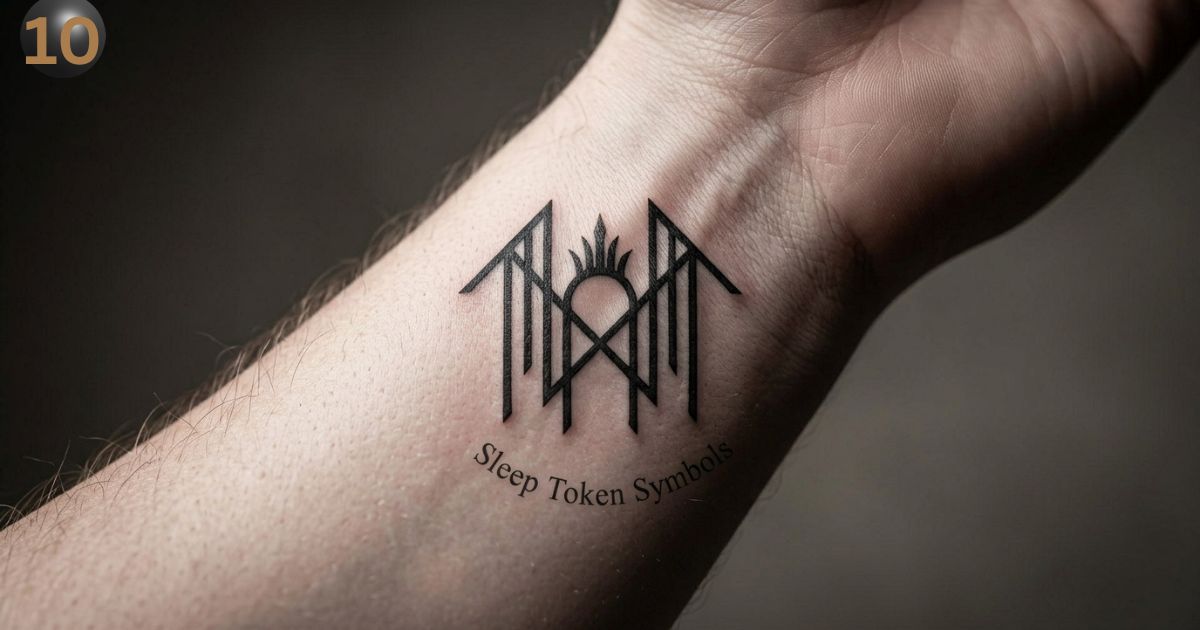
The central sigil is Sleep Token’s most recognizable symbol, and it works the way all great sigils work: it means something even before you know what it means.
Visually, it resembles a fusion of Nordic rune and alchemical seal — symmetrical, contained, radiating a kind of formal severity that places it closer to a religious mark than a band logo. It does not announce itself the way traditional band imagery does. It invites you to stare.
As a Sleep Token symbol, the sigil carries:
- Devotion — the offering of self to something beyond ego
- Surrender — not weakness, but the particular courage of letting go
- Divine presence — the sense that the symbol itself is inhabited by something
In occult tradition, a sigil is a physical anchor for an intention — a shape that encodes meaning in a compressed, almost wordless form. Sleep Token’s sigil operates precisely this way. Fans do not just recognize it. They feel recognized by it.
The sigil appears on every piece of Sleep Token’s official visual output. It functions as a signature, a prayer, and a territorial marker — the sign that whatever you are about to enter is governed by different rules.
2. The Runic Alphabet and Cipher — Decoding the Sacred Script
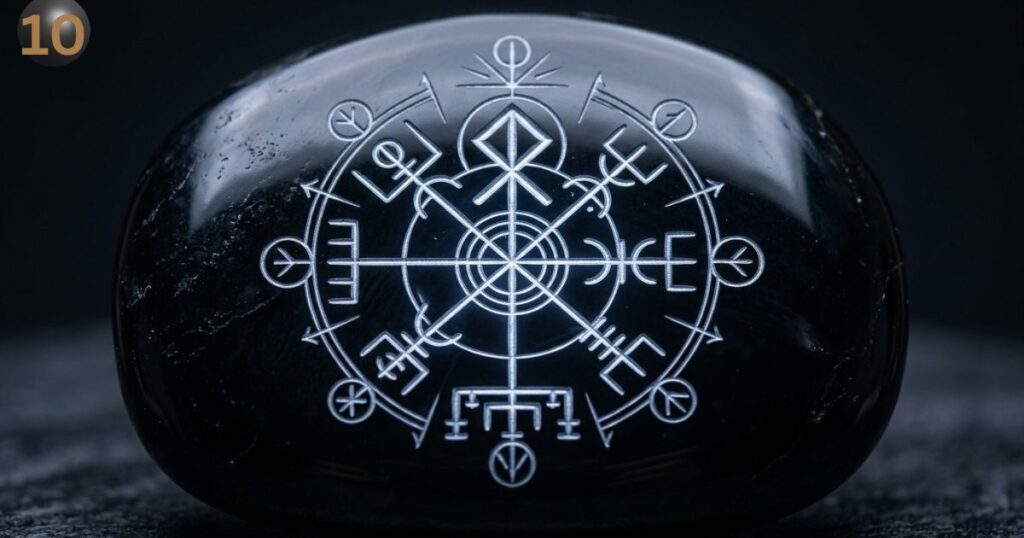
Sleep Token uses a stylized runic alphabet — a cipher — in which each character represents a letter of the English alphabet. This system appears most prominently in the artwork for Take Me Back to Eden and has been systematically decoded by the fan community over years of careful comparison.
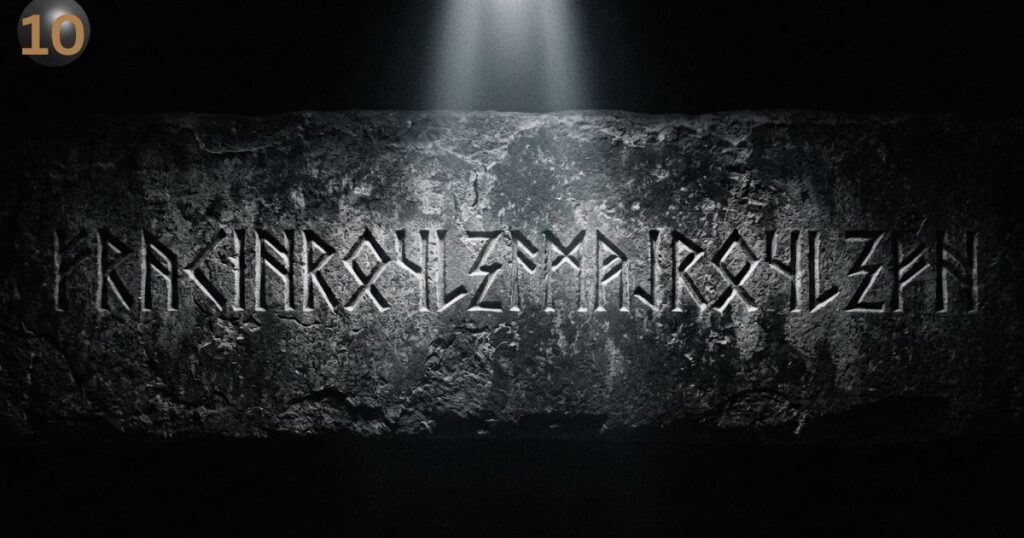
The Norse runes of ancient Scandinavia were never just letters. They were magical symbols believed to hold power in their shape alone — writing something in runes was an act of invocation. Sleep Token’s cipher carries that same logic into the modern era. When you see text rendered in their script, the visual complexity is the message before you translate a single word.
What fans have decoded through the cipher includes song titles, album themes, and what appear to be direct addresses from Sleep (the deity) to the listener. The experience of decoding feels less like solving a puzzle and more like reading a letter that was left specifically for you.
This is intentional. Anonymity in Sleep Token’s mythology is not about hiding — it is about making space. When the sender has no face and no name, the message belongs entirely to the receiver.
3. Vessel’s Mask — The Most Psychologically Complex Symbol
The lead vocalist of Sleep Token is known only as Vessel — a word that means a container, something that holds something else. His masked identity, maintained across every public appearance, is the most psychologically layered of all Sleep Token symbols.
The mask achieves ego death without requiring the audience to theorize about it. By removing the human face — the primary surface on which we project identity, emotion, and social meaning — Vessel becomes an archetype rather than a person. The music comes through him. It is not his.
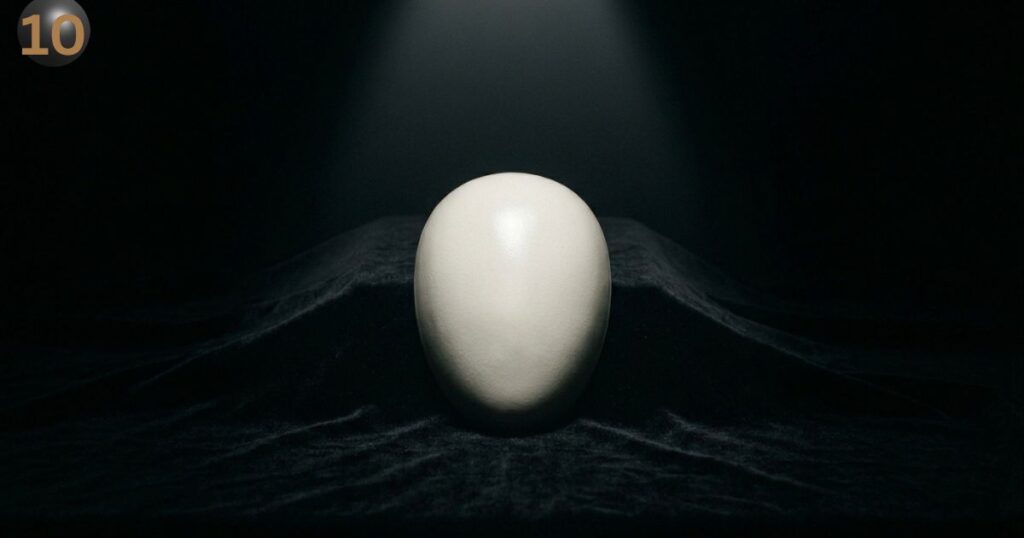
This matters enormously for how listeners receive the experience. When you watch a face perform grief, you are watching someone’s particular grief. When a mask performs grief, you are watching grief itself. The mask universalizes.
In Jungian psychology, this connects to the concept of the collective unconscious — the layer of human experience beneath individual identity where archetypes live. The mask drops Vessel below personality and into archetype, which is why fans often describe Sleep Token performances as feeling genuinely sacred.
The mask is not concealment. It is an invitation to a project. To bring your own darkness and your own longing and hear it sung back to you.
4. Alchemical and Elemental Motifs — Sacred Geometry in the Margins
Throughout Sleep Token’s visual work — in album visualizers, stage lighting design, merchandise — geometric shapes appear that draw directly from alchemical and sacred geometry traditions.
The triangle pointing upward — fire, masculine energy, ascension. The triangle pointing downward — water, the feminine, depth and mystery. The circle that contains both — the self, the whole, the universe observing itself.
In medieval European alchemy, these geometric forms were not decorative. They were the language of transformation. The alchemist believed that matter could be changed — that lead could become gold — through processes that were as much spiritual as chemical. Sleep Token’s use of these motifs connects their mythology to that tradition of transformation through pressure and heat.
Their music often works exactly this way. The heaviest songs press hardest on the most painful places. The geometric symbols signal: this pressure has a purpose. What comes out the other side will be different from what went in.
Sleep Token Symbols Across Albums — Chapter by Chapter
Sundowning (2019)
Sundowning introduced the symbolic system at its rawest. The visual language here is stripped — darkness, single light sources, celestial imagery, the aesthetic of something descending. Sundowning symbols reflect time running out, the particular grief of watching something beautiful end before you are ready.
The symbols on this album feel like they are reaching. Hands outstretched toward something already moving away.
Even in Arcadia (2022)
By Even in Arcadia, the mythology had deepened. The title itself references the Latin phrase “et in Arcadia ego” — even in paradise, there is death. The symbols here are more complex, more nested, reflecting a worldview that has absorbed grief and is now building something from it.
The Sleep Token symbols across this album balance darkness with architecture. They do not resolve the tension — they inhabit it.
Take Me Back to Eden (2023)
Take Me Back to Eden is the fullest deployment of the cipher system. Album artwork, tracklist, liner notes — the runic script appears throughout. Fans who had spent years decoding the cipher finally had an entire album to work through.
The symbols here are not just aesthetic. They carry narrative — questions about origin, about paradise lost, about whether return is possible. They work simultaneously as music theory, as theology, and as poetry addressed directly to whoever is listening.
The Cultural and Historical Roots of Sleep Token Symbols
Sleep Token’s visual language is not invented from nothing. It is assembled from several deep cultural traditions.
Ancient Norse tradition — The runic script visually echoes Elder Futhark runes, the Germanic writing system whose characters were believed to hold magical properties. Viking cultures inscribed runes on weapons, graves, and runestones as acts of blessing and protection. Sleep Token’s cipher inherits that visual authority.
Medieval occult traditions — European grimoires and magical manuscripts used sigils as focal points for spiritual practice. A sigil encoded an intent, compressed it into a shape, and gave it material form. Sleep Token’s central sigil operates within this lineage.
Japanese minimalism — The restraint in Sleep Token’s visual palette — the stark white masks, the negative space, the refusal of excess — echoes the Japanese aesthetic principle of ma, the power of emptiness and interval. Less is not emptiness. Less is presence that has been carefully curated.
Modern Western subculture — Within contemporary music culture, the band logo has always functioned as tribal identification. Sleep Token’s symbols perform that function but add a spiritual dimension that separates them from branding. You do not wear this symbol because you like the band. You wear it because the band’s mythology articulates something you have been carrying that had no shape until now.
Why Sleep Token Symbols Hit Differently — The Psychology
There is a specific mechanism at work in how these symbols function emotionally, and it explains why they have inspired such intense loyalty and personal identification.
Ambiguous symbols activate curiosity. When an image does not declare its meaning, the brain fills the gap — and the meaning it fills the gap with comes from the viewer’s own interior landscape. Sleep Token symbols are carefully designed to be evocative rather than declarative. They do not tell you what to feel. They create space for what you already feel to become visible.
Carl Jung described this as the power of the collective unconscious — the shared layer of human experience from which archetypes emerge. Sleep Token’s sigil, their mask, their cipher, their elemental geometry: all of these are archetype-adjacent. They feel older than the band. They feel like you have seen them before in a dream you cannot quite remember.
This is why the connection fans form with these symbols is so often described not as fandom but as recognition. Not “I like this band” but “this band found me.”
Sleep Token Symbols in Tattoos, Art, and Fan Culture
The intensity of fan engagement with Sleep Token symbols has produced one of the most active communities of visual interpretation in contemporary music.
Tattoos are the most permanent measure of that engagement. Fans tattoo Sleep Token symbols for reasons that span the full emotional spectrum:
- The sigil — representing personal transformation, the moment when something shifted
- The cipher characters — encoding a private word or name in the sacred script
- Vessel’s mask — ego death, the decision to become something other than what others expected
- Alchemical motifs — the geometry of change, the proof that pressure becomes purpose
In fan art, the symbols are reinterpreted constantly — rendered in watercolor, ink, digital illustration, sculpture. Each interpretation adds a layer of meaning to the original, which is itself a form of collective mythology-building.
Read More: 100+ Powerful Holy Thursday Symbols That Reveal the True Meaning of the Last Supper
Merchandise featuring Sleep Token symbols functions differently from conventional band merch. Wearing it does not signal allegiance to a celebrity. It signals membership in a private language — the satisfaction of carrying a meaning that not everyone can read.
What Sleep Token Symbols Mean Spiritually
For many fans, the engagement with Sleep Token symbols is explicitly spiritual — not in a doctrinal sense, but in the sense that these symbols touch something that organized religion is supposed to touch and sometimes does not.
The band’s framework — devotion to Sleep (the deity), the offering of oneself through music, the practice of surrendering ego — mirrors the structure of contemplative religious practice. The symbols function as focal points for that practice.
Seeing Sleep Token symbols in dreams is reported frequently in fan communities. Interpretations cluster around:
- Surrender to a process already in motion
- The need to release an identity that has become a cage
- Transformation available on the other side of grief
- Being witnessed by something that does not require explanation
These are not trivial psychological experiences. They are the experiences that humans have historically sought from the sacred. The fact that a band is providing the container for them does not make them less real.
Are Sleep Token symbols connected to real ancient traditions?
Yes — visually and conceptually. The runic cipher echoes Norse Elder Futhark. The central sigil draws from medieval European occult sigil traditions. The elemental geometric motifs reference alchemical and sacred geometry traditions. Sleep Token synthesizes these into a modern mythological system that feels ancient because it is drawing from genuinely ancient visual languages.
Conclusion
There is a reason people stare at Sleep Token symbols the way they stare at things that feel true.
These symbols do not explain themselves. They do not need to. They work the way the best sacred art has always worked: by creating a space where your own interior life becomes legible. Where the thing you have been carrying with no words for it suddenly has a shape.
The sigil. The cipher. The white mask. The geometry of fire and water. Every Sleep Token symbol in this system is an act of precise intention — designed by people who understand that mystery is not the absence of meaning but the presence of more meaning than any single explanation can hold.
Explore the Sleep Token symbols that stop you. Study the cipher. Decode the albums. But also — let some of it remain undecoded. Because the feeling that something is just beyond your understanding is not frustration. It is the feeling of standing at the edge of something real.
That is the whole point. That has always been the whole point.

Muhammad Shoaib is a passionate content writer and symbolism researcher at TrendyMegzine.com, where he explores the hidden meanings behind symbols, spiritual signs, ancient traditions, dream interpretations, and cultural symbolism.